

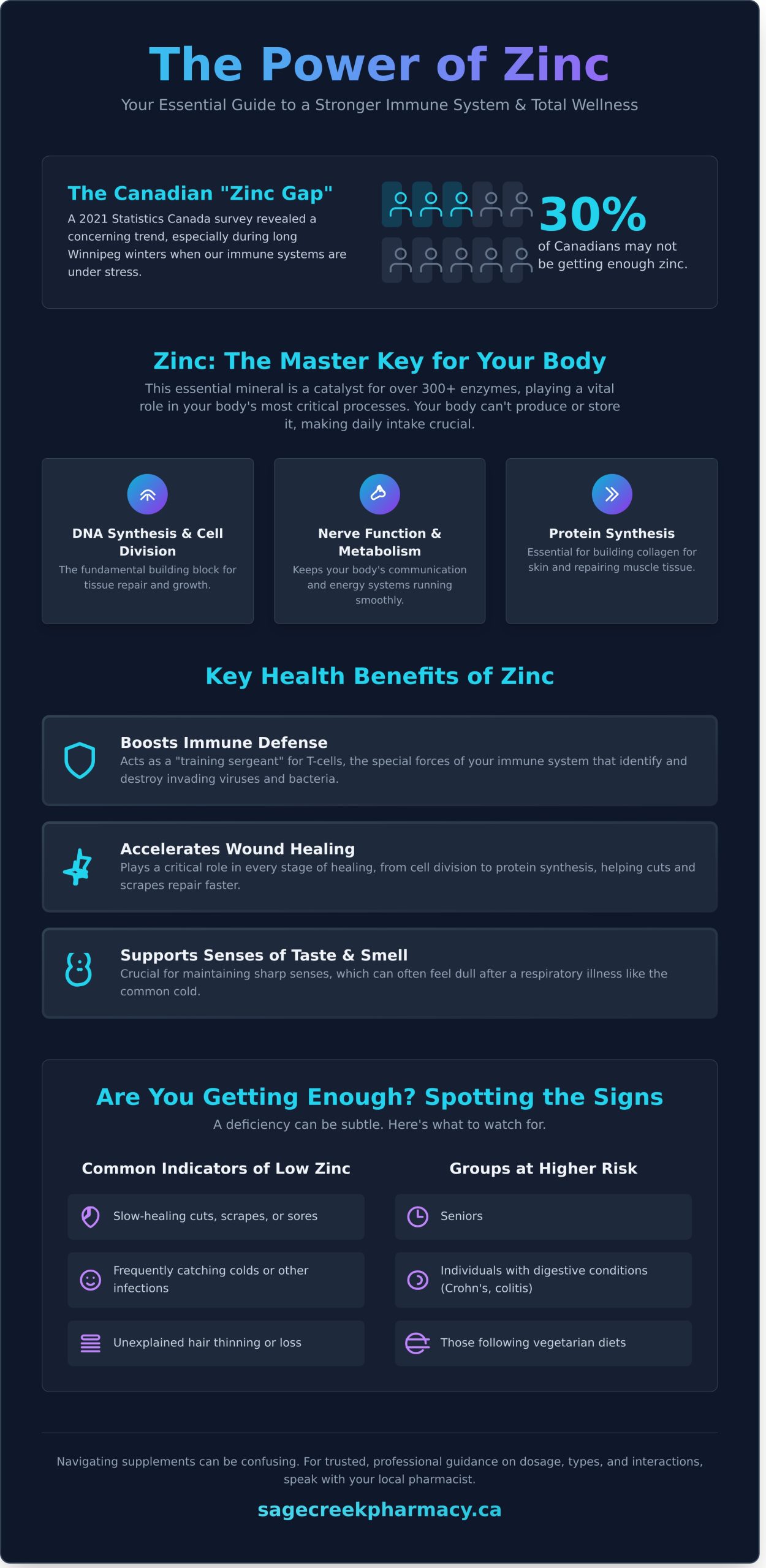
Did you know that a 2021 Statistics Canada survey revealed that up to 30% of Canadians may not be getting enough zinc? Here in Winnipeg, where our long winters demand our immune systems work overtime, that number is a real concern for us at Sage Creek Pharmacy. It’s a small mineral, but its impact on your daily wellness is significant.
We understand you want to protect your family’s health, especially when the first coughs of the season appear, but navigating the supplement aisle can be confusing. You see different types, like gluconate and picolinate, and you’re not sure which is right for you or if it’s safe with your current prescriptions. That’s why we’re here to provide clear, professional advice on the powerful zinc benefits for your health, from strengthening your immune response to supporting your overall well-being.
Consider this your personal guide from your neighborhood pharmacists. We’ll walk you through the correct dosages for your needs and explain how zinc can be a key part of keeping our Sage Creek community healthy all year round.
Key Takeaways
- Understand why your body requires a daily intake of zinc and how this essential mineral functions as a vital catalyst for your overall health.
- Discover the key zinc benefits for your immune system, including how it may help shorten the duration of the common cold when taken correctly.
- Find out which zinc-rich foods you can easily find in Winnipeg grocery stores and learn why some sources are more easily absorbed by your body than others.
- Learn the recommended daily zinc allowance to avoid common side effects and the risks of toxicity, ensuring you supplement safely and effectively.
Understanding Zinc: The Essential Mineral for Every Winnipegger
Here in Winnipeg, we know how to prepare for the seasons. We stock up on essentials, look out for our neighbours, and prioritize our health, especially as the days get shorter. One of the most important, yet often overlooked, essentials for your body’s wellness toolkit is zinc. It’s what’s known as an essential trace element, which means your body needs it to function but cannot produce or store it on its own. You must get it regularly through your diet or supplements.
Think of zinc as a master key for your body’s biochemistry. It acts as a catalyst, helping to kickstart more than 300 different enzymes that are vital for everything from digestion to nerve function. This tiny mineral plays a massive role in keeping you healthy. Unfortunately, zinc levels can often take a hit during our long Manitoba winters due to dietary changes. Compounding this is the “Zinc Gap” found in many modern, processed diets, which can lack this crucial nutrient. Exploring the full range of zinc benefits starts with understanding its fundamental role in your daily health.
Why Your Body Can’t Live Without Zinc
Your body relies on a steady supply of zinc for some of its most basic and critical processes. Every time you get a cut or your muscles need to recover after a workout at the gym, zinc is on the front lines. It’s essential for DNA synthesis and cell division, the very building blocks of tissue repair. Without enough zinc, your body’s natural healing abilities can slow down. It’s also responsible for:
- Maintaining Your Senses: Have you ever noticed your sense of taste or smell felt dull after a cold? Zinc is crucial for maintaining these senses, a common concern for many people recovering from respiratory illnesses.
- Building Proteins: From creating collagen for healthy skin to synthesizing protein for muscle growth and repair, zinc is an indispensable partner in your body’s construction crew.
Identifying the Signs of Zinc Deficiency
Because zinc is involved in so many bodily functions, a deficiency can show up in several ways. It’s important to recognize these signs, though they can often be subtle and mistaken for other issues. Some common indicators that your zinc levels might be low include:
- Slow Wound Healing: Scrapes, cuts, or sores that seem to take forever to heal.
- Frequent Infections: Constantly catching colds or other bugs going around. This is a key reason why understanding the zinc benefits for your immune system is so important.
- Hair Loss: Unexplained thinning of your hair.
Certain groups in our Winnipeg community may be more at risk, including seniors, individuals following a vegetarian diet, and those with digestive conditions like Crohn’s or colitis that impair nutrient absorption. While it’s helpful to know the signs, self-diagnosing can be misleading. A simple blood test and a conversation with a healthcare professional are the best ways to confirm a deficiency. If you have any concerns, please don’t hesitate to talk to our pharmacists. We are here to provide you with trusted, professional guidance for your family’s wellness.
5 Key Health Benefits of Zinc for Your Immune System and Beyond
While often celebrated for its immune-boosting power, zinc is a hardworking mineral that supports your well-being in countless ways. Your body uses it for hundreds of essential processes, from creating DNA to helping your senses of taste and smell function properly. Because your body doesn’t store zinc, getting a consistent daily supply is critical for everything from cell growth to metabolic function. For a detailed overview of this vital nutrient, the U.S. National Library of Medicine’s guide to dietary zinc is an excellent resource. Here at Sage Creek Pharmacy, we want you to understand the full scope of zinc benefits for your daily health.
Zinc is fundamental to the development and function of your immune cells. Think of it as a training sergeant for your body’s special forces. It’s crucial for the growth of T-cells, a type of white blood cell that identifies and destroys invading pathogens like viruses and bacteria. Without enough zinc, your T-cells can’t mature or activate properly, leaving your defenses weakened. It also supports the activity of natural killer cells, which are your first line of defense against abnormal cells.
Winnipeg Winter Wellness: Zinc and Immunity
During a long Manitoba winter, your immune system is constantly challenged. Zinc acts as a gatekeeper, helping to maintain the integrity of your skin and mucous membranes to prevent pathogens from entering. Research strongly supports its role in fighting the common cold. A 2017 analysis of several studies found that taking zinc lozenges (providing over 75 mg of elemental zinc per day) within 24 hours of the first sniffle can shorten the duration of a cold by up to 33%. For comprehensive winter protection, we often see a powerful synergy between Zinc, Vitamin C, and Vitamin D, which is especially important for Manitobans who get less sun exposure.
Zinc for Chronic Disease Management
Beyond seasonal wellness, zinc plays a quiet but critical role in managing long-term health. For patients with Type 2 Diabetes, zinc is essential for the healthy production and storage of insulin in the pancreas, which helps support blood sugar stability. Its anti-inflammatory properties may also contribute to better cardiovascular health by reducing certain markers of inflammation in the body. Oxidative stress is cellular damage caused by unstable molecules called free radicals, and zinc acts as a powerful antioxidant to help neutralize them.
The advantages of this mineral extend to other key areas of your health:
- Skin Health and Healing: Zinc’s anti-inflammatory properties can help calm irritation associated with acne and rosacea. It also plays a vital role in collagen production, making it essential for accelerating the healing of cuts, scrapes, and other wounds.
- Eye and Cognitive Health: Zinc is highly concentrated in the eye, particularly the retina. The landmark Age-Related Eye Disease Study (AREDS) found that a specific supplement formula containing 80 mg of zinc reduced the risk of advanced age-related macular degeneration (AMD) progression by about 25% in high-risk individuals. It also supports healthy neurotransmitter function, which is key for memory and cognitive performance.
Understanding how these incredible zinc benefits can support your personal health journey is the first step. If you have questions about supplementation or how to best support your immune system, we’re here for you. You can always talk with our Sage Creek Pharmacy team to create a personalized wellness plan that fits your life.
Zinc Sources: Comparing Manitoba Whole Foods and Pharmaceutical Supplements
Understanding where to get your zinc is the first step toward reaping its immune-boosting rewards. For our community in Winnipeg, your options range from locally sourced foods at your neighbourhood grocery store to precisely formulated supplements right here at Sage Creek Pharmacy. A balanced diet should always be your foundation, but knowing how your body absorbs zinc from different sources is key to maximizing its effects.
A Winnipegger’s Guide to Zinc-Rich Foods
You don’t have to look far to find excellent sources of zinc. Manitoba-raised beef is one of the most bioavailable options available. A single 3.5-ounce (100-gram) serving of ground beef provides approximately 4.8 mg of zinc, which is about 44% of the Daily Value (DV). Animal-based zinc is more easily absorbed by the body because it doesn’t contain compounds that interfere with uptake.
For Winnipeg’s vibrant vegan and vegetarian communities, plant-based foods offer great alternatives. Top choices include:
- Lentils: One cooked cup contains about 2.5 mg (23% of the DV).
- Pumpkin Seeds: Just one ounce provides 2.2 mg (20% of the DV).
- Chickpeas: One cooked cup offers 2.5 mg (23% of the DV).
However, plant-based sources contain ‘phytates’, natural compounds found in grains, legumes, and seeds that can bind to zinc and reduce its absorption. A simple and effective tip is to soak your beans or lentils in water for at least 4-6 hours before cooking. This process can reduce phytate content by over 50%, significantly improving your body’s ability to access the zinc within.
Choosing the Right Supplement Form
When your diet isn’t quite enough to meet your needs, especially during cold and flu season, a high-quality supplement can bridge the gap. But not all zinc supplements are created equal, and understanding the different forms helps you get the most zinc benefits with the fewest side effects.
Different forms of zinc are chelated, or bound, to other molecules to improve stability and absorption. As detailed in Harvard’s guide to zinc and your health, ensuring your body can actually use the zinc you consume is critical for its role in immune defense. Here at the pharmacy, we often recommend:
- Zinc Picolinate: Often considered one of the most absorbable forms, it’s an excellent choice and typically very gentle on the stomach.
- Zinc Gluconate: This is one of the most common over-the-counter forms, found in many cold lozenges. It’s effective and affordable for general use.
- Zinc Citrate: A well-absorbed form that has a less bitter, more appealing taste than gluconate, making it a good option for general wellness.
Choosing a ‘pharmacy-grade’ supplement ensures you’re getting a product that meets strict standards for purity, potency, and dosage. This means it has been rigorously tested to confirm it contains the exact amount of zinc stated on the label and is free from harmful contaminants. This level of quality control gives you peace of mind that you’re supporting your health safely and effectively. If you’re unsure which form or dosage is right for you, please talk to our pharmacists. We are here to provide personalized advice for your wellness journey.
Safety First: Dosage, Side Effects, and Medication Interactions
Harnessing the full power of zinc for your immune system begins with understanding how to use it safely. While it’s a vital mineral, more isn’t always better. For most adults, Health Canada’s Recommended Dietary Allowance (RDA) is a perfect guide: 11 mg per day for men and 8 mg for women. Sticking to these levels helps you achieve your wellness goals without unnecessary risk.
Exceeding the Tolerable Upper Intake Level of 40 mg per day from all sources can lead to zinc toxicity. Early signs are often digestive, including nausea, vomiting, and stomach cramps. This is why our Sage Creek pharmacists always give one simple piece of advice: take your zinc supplement with a meal. Taking it with food can significantly reduce the chance of an upset stomach. Over the long term, excessive zinc intake can cause more serious problems, like a deficiency in another essential mineral, copper.
Important Drug Interactions to Watch For
Your medications work best when there’s nothing interfering with them. Zinc can interact with several common prescriptions, so it’s crucial to be aware of how they affect each other. We always recommend spacing your doses to ensure both your medication and your supplement work as intended.
- Antibiotics: Zinc can bind to certain antibiotics, specifically quinolones (like Cipro) and tetracyclines, in your digestive tract. This prevents your body from fully absorbing both the medication and the mineral. To avoid this, take zinc at least 2 hours before or 4-6 hours after your antibiotic dose.
- Diuretics: Some blood pressure medications, particularly thiazide diuretics, can increase the amount of zinc you lose through urine, potentially leading to lower levels over time.
- Metformin: For our diabetes patients here in Winnipeg, it’s helpful to know that some research indicates long-term metformin use may modestly impact zinc levels. It’s a point of awareness worth discussing with your pharmacist.
The Long-Term Impact on Copper Balance
Inside your body, zinc and copper are in a delicate biological tug-of-war. They compete for the same absorption pathways in your gut. When you supplement with high doses of zinc (typically over 50 mg daily for weeks), it can win this battle too often, effectively blocking copper from being absorbed. This can lead to a copper deficiency, with signs like fatigue, weakness, pale skin, and even neurological problems. If you need long-term, higher-dose zinc therapy, look for a supplement that includes copper to maintain this essential balance.
Understanding these safety details is key to unlocking the powerful zinc benefits for your health. Your wellness plan is as unique as you are, and managing supplements alongside prescriptions requires a careful, personalized approach. To ensure zinc is a safe and effective part of your routine, we are here to help. Get the clarity you need with our professional Medication Reviews and personalized safety checks.
Personalized Nutrition at Sage Creek Pharmacy: Your Partners in Winnipeg Health
Understanding the powerful role minerals play in your health is the first step. The next is finding the right, high-quality supplement that works for you. The vitamin aisle can be an overwhelming place, with countless brands, dosages, and formulations. You’ve just learned about the many zinc benefits, but now you’re faced with a wall of options: zinc gluconate, picolinate, or citrate? 15mg or 50mg? This is where professional guidance makes all the difference.
As an independent, community-focused pharmacy, we believe that healthcare should be personal. We’re not just here to dispense medication; we’re here to be your dedicated wellness partners. Our commitment is to the health of our Sage Creek neighbours and the greater Winnipeg community, offering expert advice that is always tailored to your unique needs, not to corporate sales targets.
Talk to a Sage Creek Pharmacist Today
While a quick search online can provide general information, it can’t replace a conversation with a healthcare professional who knows you. “Dr. Google” doesn’t understand your specific health history, current medications, or potential drug interactions. Our pharmacists do. We take the time to provide personalized recommendations, ensuring the supplement you choose is safe and effective for your body. We invite you to walk in or schedule a one-on-one consultation at our Winnipeg pharmacy to discuss your wellness goals.
Convenient Wellness Delivered to Your Door
We know life gets busy. That is why we are committed to making your health journey as simple as possible. To support you, we offer Free Medication Delivery in Winnipeg, covering the entire city. You can easily combine your prescriptions, supplements, and other wellness essentials into one convenient delivery right to your doorstep. Simply add your zinc supplement to your next prescription refill, and we’ll handle the rest.
From clarifying the right form of zinc for optimal absorption to managing your family’s prescriptions, we are here to provide clear, compassionate support. The health of our community is our highest priority. Whether you have questions about specific zinc benefits or need a trusted partner for your healthcare journey, we are here for you. We are proud to support the Sage Creek community and beyond.
Your Next Step to a Healthier Winnipeg Winter and Beyond
It’s clear that zinc is more than just a mineral; it’s a fundamental component of your wellness toolkit, especially here in Winnipeg. From strengthening your immune defenses against seasonal challenges to promoting healthy skin and metabolism, the full scope of zinc benefits is vital for your health. You have options, whether through Manitoba whole foods or carefully selected supplements.
But getting it right matters. The correct dosage and form can make all the difference, and expert guidance ensures your choice is safe and effective. As your trusted community partner in Sage Creek, our experienced team of Winnipeg pharmacists is here to provide that personalized advice. We take the time to understand your health needs to find the solution that works for you.
Don’t leave your health to guesswork. We make it simple with services like our free, city-wide prescription and supplement delivery. Talk to our pharmacists about the right zinc supplement for you and take confident control of your wellness journey. We’re always here to help.
Frequently Asked Questions About Zinc
Is it safe to take zinc every day?
Yes, it’s generally safe for most adults to take a daily zinc supplement, as long as you stay within the recommended dosage. Health Canada sets the tolerable upper intake level for adults at 40 mg per day from all sources, including food and supplements. Consistently exceeding this amount can lead to adverse effects. If you’re unsure about the right dose for your wellness needs, our pharmacists are always here to help you make a safe choice.
Can zinc help me get over a cold faster?
Yes, studies show that zinc can help you recover from a common cold more quickly. A 2017 analysis found that taking zinc lozenges (over 75 mg per day) could shorten the duration of a cold by up to 33%. For the best results, you should start taking zinc within the first 24 hours of noticing symptoms like a sore throat or runny nose. It’s one of the most well-known zinc benefits for seasonal wellness.
What is the best time of day to take a zinc supplement?
You can take your zinc supplement whenever it’s most convenient, but taking it with a meal can help prevent potential stomach upset. For optimal absorption, some people prefer to take it at least one hour before or two hours after eating. It’s also best to avoid taking zinc at the same time as calcium or iron supplements, as they can compete for absorption in your body. We can help you schedule your supplements effectively.
Does zinc interact with my blood pressure medication?
Yes, zinc can interact with certain medications, including some blood pressure drugs like thiazide diuretics and ACE inhibitors. For example, thiazide diuretics can increase the amount of zinc you lose through urine. It’s very important to talk to your pharmacist or doctor before starting a new supplement. We can review your current medications to ensure there are no potential interactions, keeping your health and safety our top priority.
Can I get enough zinc from a vegetarian diet?
Yes, you can meet your zinc requirements on a well-planned vegetarian diet. Excellent plant-based sources include legumes like chickpeas and lentils, nuts, seeds, and whole grains. However, plant foods contain phytates, which can reduce zinc absorption by up to 50%. Soaking or sprouting your grains and legumes before cooking can help increase the amount of zinc your body can use. Our team can offer more personalized dietary advice.
What are the symptoms of taking too much zinc?
Taking too much zinc can cause immediate symptoms like nausea, vomiting, loss of appetite, and stomach cramps. These often occur shortly after taking a high dose (over 40 mg). Over the long term, consuming excessive zinc can lead to more serious problems, such as a copper deficiency and a weakened immune system. Always follow the dosage instructions on the label or the advice given by your healthcare provider.
Should I take zinc if I am pregnant or breastfeeding?
You should always speak with your doctor or pharmacist before taking zinc supplements during pregnancy or while breastfeeding. Zinc is vital for your baby’s development, but your prenatal vitamin may already provide the recommended amount. Health Canada advises a daily intake of 11 mg for pregnant individuals and 12 mg for those breastfeeding. We are here to support you and your family’s health during this important time.
Does Sage Creek Pharmacy offer delivery for vitamins and supplements?
Yes, we do! Sage Creek Pharmacy is happy to offer convenient local delivery for all our products, including vitamins and supplements. We can bring your order right to your doorstep in Sage Creek and the surrounding neighbourhoods. You can add supplements to your prescription delivery or place an order by calling us directly. We’re committed to making it easier for our community to access everything they need for their health and wellness.