

Choosing an osteoporosis medication is only part of treatment. Knowing how to take it correctly and stay on schedule can matter, too. If you’re concerned about stomach upset, rare jaw complications, or what long-term treatment could mean for your bones, those questions deserve clear answers. This pharmacist guide to osteoporosis medications explains the main treatment options and the practical details that can make them easier to manage.
We’ll compare medication classes, including bisphosphonates, denosumab, and bone-building therapies. We’ll also explain why the right option depends on your health history and fracture risk, what administration instructions to follow, and which side effects to discuss with your healthcare provider. Some treatments require a plan before they are stopped or delayed.
For Winnipeg patients, medication coverage can also affect which options are accessible. Sage Creek Pharmacy offers personalized medication reviews to help you understand how your prescriptions fit together and support consistent use over time. Read on for a practical overview to bring to conversations with your doctor and pharmacist, so you can approach your bone health with greater confidence.
Key Takeaways
- This pharmacist guide to osteoporosis medications helps you compare treatment approaches and prepare informed questions for your healthcare provider.
- Follow the instructions for your specific medication carefully. Ask your pharmacist if timing or administration directions are unclear.
- Keep track of side effects and changes to your treatment plan so you can discuss concerns with your healthcare team.
- A personalized medication review can help you understand how your prescriptions fit together and identify questions to raise with your doctor or specialist.
- For Winnipeg residents, Sage Creek Pharmacy offers free city-wide prescription delivery to support continuity with long-term medication routines.
Understanding Osteoporosis and the Role of Medication
Osteoporosis weakens bones by reducing bone density and changing their structure, making fractures more likely. It can develop without pain or obvious symptoms, so a fracture may be the first sign that bone strength has declined. For a foundational overview of risk factors and how the condition affects bone, see Understanding Osteoporosis.
Weight-bearing activity, adequate nutrition, and reducing fall risks can all support bone health. For someone at high risk of fracture, however, lifestyle measures alone may not provide enough protection. Osteoporosis medications can slow bone breakdown, encourage new bone formation, or do both, depending on the treatment. Starting an appropriate plan before a serious fracture may help protect mobility and independence. The right timing and medication depend on your individual risk and health history, so discuss decisions with your healthcare provider.
Who Should Consider Osteoporosis Medication?
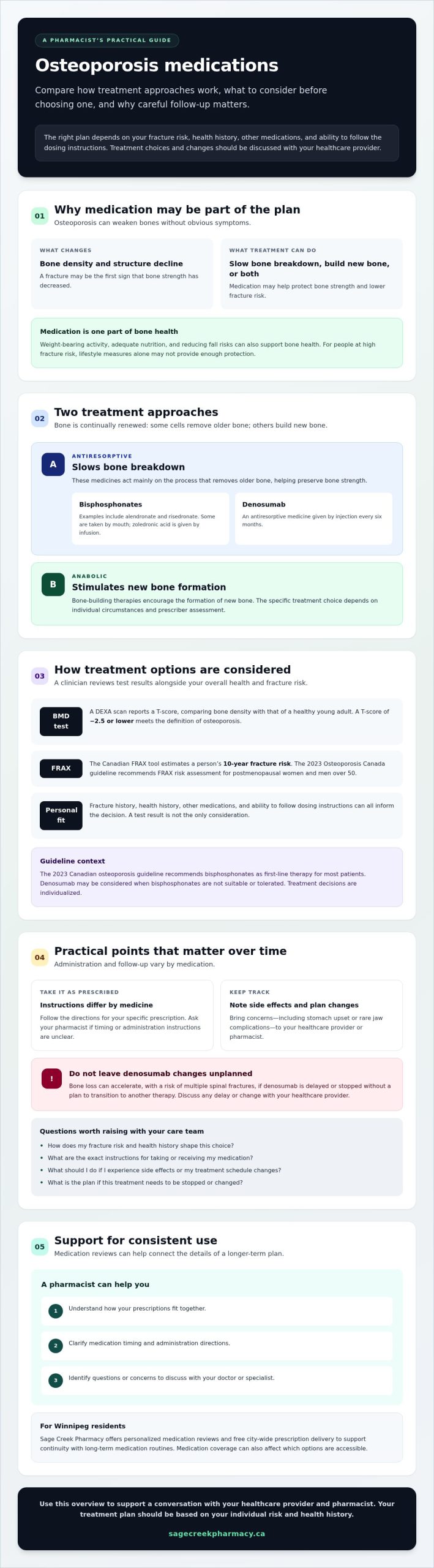
A clinician may consider medication after reviewing your Bone Mineral Density (BMD) test and other risk factors. A DEXA scan reports a T-score, which compares your bone density with that of a healthy young adult. A T-score of -2.5 or lower meets the definition of osteoporosis, though treatment decisions may also take fracture history and overall risk into account.
The Canadian FRAX tool estimates a person’s 10-year fracture risk. The 2023 Osteoporosis Canada guideline recommends FRAX risk assessment for postmenopausal women and men over 50. Aging and menopause can contribute to bone loss, but they don’t determine an individual’s risk on their own. If you live in Winnipeg and have concerns about your bone health, ask your doctor whether a risk assessment or BMD test is appropriate.
The Consequences of Untreated Bone Loss
Osteoporosis is often called a silent condition because bone loss can progress without noticeable symptoms. A fracture, especially in the hip or spine, can lead to pain, reduced mobility, and difficulty managing everyday tasks. For seniors, recovery may also affect confidence and independence. Discuss a fracture or diagnosis with your healthcare team rather than assuming it was an isolated event.
Prescription medication may form part of a longer-term care plan, alongside monitoring and practical support. Your doctor or specialist chooses and oversees treatment. A pharmacist can help you understand your prescription and review how it fits with your other medications. Learn more about prescription medication in Winnipeg. Next, this pharmacist guide to osteoporosis medications explains how different treatment classes work and what to know about taking them.
Primary Classes of Osteoporosis Medications: How They Work
Osteoporosis treatments generally fall into two groups: antiresorptive medicines, which slow bone breakdown, and anabolic medicines, which stimulate new bone formation. Bone is continually renewed by cells that remove older bone and cells that build new bone. Many treatments act mainly on the bone-clearing process, helping preserve bone strength and lower fracture risk. For a plain-language overview of medication types, see MedlinePlus’ Osteoporosis medicines.
The best fit depends on your fracture risk, health history, other medications, and ability to follow dosing instructions. The 2023 Canadian osteoporosis guideline recommends bisphosphonates as first-line therapy for most patients. Denosumab may be considered when bisphosphonates aren’t suitable or tolerated. These decisions are individualized, not a simple progression from one drug to another. Planning for what happens if treatment needs to change is also important.
Antiresorptive Agents: Bisphosphonates and Denosumab
Bisphosphonates such as alendronate and risedronate slow the cells that break down bone. They’re commonly used as initial treatment, though the choice depends on your circumstances and the prescriber’s assessment. Some are taken by mouth, while zoledronic acid is given by infusion. Dosing schedules and instructions differ, so follow the directions for your specific prescription.
Denosumab is an antiresorptive medicine given by injection every six months. It may be an option when other treatment isn’t appropriate, but it requires consistent follow-up. Bone loss can accelerate, with a risk of multiple spinal fractures, if denosumab is delayed or stopped without a plan to transition to another therapy. Ask your prescriber before changing or missing a dose.
Anabolic Agents: Building New Bone
For some people at very high fracture risk, a prescriber may consider bone-building treatment such as teriparatide or romosozumab. These medicines stimulate bone formation rather than relying only on slowing bone breakdown. Anabolic treatment is generally prescribed for a defined course, with duration depending on the specific medicine and your clinical plan. Your prescriber may recommend follow-up antiresorptive treatment to help maintain gains.
Osteoporosis therapy may continue for several years, but treatment isn’t necessarily unchanged throughout that time. Your prescriber can reassess benefits, risks, and next steps based on your response and health history. A pharmacist can help clarify how your medicines fit together and support consistent use. To discuss your prescriptions, ask the Sage Creek Pharmacy team about a personalized medication review.
Administration and Timing: A Pharmacist’s Practical Tips
Taking an osteoporosis medicine correctly can affect how well it’s absorbed and how safely you tolerate it. Oral bisphosphonates are a clear example: food, drinks other than plain water, and other medicines can interfere with absorption. Instructions vary by medication, so follow your prescription label and ask your pharmacist to clarify anything that’s unclear. This pharmacist guide to osteoporosis medications can help you build a routine, but it doesn’t replace the directions for your specific prescription.
The 30-Minute Rule for Oral Bisphosphonates
For many oral bisphosphonates, the standard instructions are to take the tablet first thing in the morning, before eating or taking other medicines. Swallow it with a full glass of plain water, then remain sitting or standing for at least 30 minutes. During that period, avoid food, coffee, other drinks, and other medications. Follow your own product’s instructions, since directions can differ.
A simple morning checklist can make the routine easier:
- Prepare: Keep the medicine where you’ll remember it, while storing it as directed.
- Take: Swallow the prescribed dose with a full glass of plain water on an empty stomach.
- Stay upright: Sit or stand for the full period specified on your label, commonly at least 30 minutes.
- Wait: Hold off on breakfast, coffee, and other medicines until the required interval has passed.
- Check: If you miss a dose or aren’t sure what to do, consult the medication instructions or contact your pharmacist rather than doubling up.
Managing Injectable Bone Medications
Denosumab is typically administered once every six months. Keeping doses on schedule matters: delaying or stopping treatment without a prescriber’s plan can lead to rapid bone loss and an increased risk of multiple spinal fractures. Don’t change the timing or discontinue it on your own. If an appointment may be delayed, contact your prescriber promptly to discuss next steps.
Set a calendar reminder for the next dose and confirm the date with your healthcare team. A personalized medication review at Sage Creek Pharmacy can help clarify your medication schedule and instructions. If you use online refills or Winnipeg prescription delivery for ongoing medications, plan ahead to keep your routine organized. A pharmacist can explain medication directions, and Sage Creek Pharmacy also offers medication reminders.
Managing Side Effects and Long-Term Bone Health
Side effects can be unsettling, especially when you’re weighing treatment against risks you’ve read or heard about. Oral bisphosphonates may cause heartburn or stomach upset. Follow the directions on your specific prescription, and tell your pharmacist or prescriber about symptoms that persist or interfere with taking it. Don’t stop treatment or change your dose without discussing it with your healthcare team.
Rare complications such as osteonecrosis of the jaw (ONJ) and atypical thigh-bone fractures are important to understand, but they don’t affect everyone. Health Canada warns of a small increased risk of atypical femur fractures with bisphosphonates. Report new thigh or groin pain, or jaw pain, swelling, or slow healing after dental work, to your healthcare provider. Before starting certain bone medications, discuss your dental health and upcoming dental procedures with your prescriber and dentist. Keep routine dental check-ups, and make sure your dental team knows which medications you take.
The Role of Calcium and Vitamin D
Calcium and vitamin D support bone health: vitamin D helps your body absorb calcium. Adequate intake supports an overall treatment plan, but supplements don’t replace prescribed osteoporosis medication. Total calcium needs can vary with age, sex, diet, and health. Health Canada’s recommended daily calcium intake is 1,000 mg for men aged 51 to 70, and 1,200 mg for women in that age group and adults over 70. Count food and supplements together, and ask your healthcare provider whether you need a supplement.
Calcium can interfere with absorption of some oral osteoporosis medicines. Don’t take it in the same dosing window as an oral bisphosphonate. Follow your prescription instructions and ask a pharmacist how to space calcium from your other medicines. For practical information, see our guides to vitamins and supplements and vitamin B12. The latter covers B12, not vitamin D, so check with your care team about your vitamin D needs.
Addressing Patient Fears and Misconceptions
Rare risks deserve attention, but fear alone can’t show whether treatment is right for you. Your prescriber weighs medication risks against your fracture risk and personal health history. Some people taking bisphosphonates may be reassessed after three to five years to decide whether continuing, changing treatment, or a monitored break is appropriate. A “drug holiday” isn’t suitable for everyone and doesn’t apply to every medication. Never pause denosumab without a prescriber-directed transition plan.
Bring new symptoms and supplement questions to your pharmacist. At Sage Creek Pharmacy, a personalized medication review can help you understand how your prescriptions and supplements fit together. Ask our team about a medication review to discuss your bone-health routine.
Pharmacist Guide to Osteoporosis Medications: Support in Winnipeg
Osteoporosis treatment can involve multiple prescriptions, supplements, and dosing instructions that are easy to mix up. Your pharmacist can help make the medication side of your plan clearer. At Sage Creek Pharmacy, personalized medication reviews give you time to discuss what you take, how you take it, and questions or concerns to raise with your family doctor or specialist. Your prescriber remains responsible for choosing and changing your osteoporosis treatment.
Medication Reviews and Adherence Support
During a medication review, bring a current list of prescriptions, over-the-counter medicines, and supplements. Reviewing them together can help identify potential interactions, overlapping ingredients, or instructions that need clarification. If a question requires input from your doctor or specialist, a medication review can help you understand what information to share.
A medication routine can also be easier to maintain when refills are organized. Sage Creek Pharmacy offers an online prescription refill service for Winnipeg patients, as well as medication reminders. Bring up any difficulty following a schedule, especially if you take medicines at different times of day.
For long-term prescriptions, free city-wide delivery in Winnipeg may make refills more convenient. Plan ahead and follow your prescription’s refill timing, particularly if a medicine has a strict dosing schedule. Delivery supports access to prescribed medications, but it doesn’t replace any required appointment or dose administered by your healthcare provider.
Accessible Care in Sage Creek
Sage Creek Pharmacy’s community-focused team can help you understand medication directions and feel more prepared for conversations about your bone health. This pharmacist guide to osteoporosis medications explains general treatment information, while a personal medication review can focus on how your own prescriptions fit together.
Visit Sage Creek Pharmacy in Sage Creek to speak with the team or ask about a medication review. They can help you sort through questions and understand the next steps to discuss with your prescriber.
Ask Sage Creek Pharmacy about a personalized medication review to get support managing your prescriptions.
Take the Next Step With Confidence
Your osteoporosis plan should fit your health history, daily routine, and fracture risk. The key takeaways from this pharmacist guide to osteoporosis medications are simple: treatment options work in different ways, following the correct instructions supports safe use, and side effects or missed doses are worth discussing with your healthcare team rather than managing alone.
A pharmacist can help make medication directions easier to understand and review how your prescriptions and supplements fit together. Sage Creek Pharmacy offers personalized medication reviews and free city-wide delivery in Winnipeg to make ongoing prescription care more convenient.
Transfer your prescriptions to Sage Creek Pharmacy for personalized care and free Winnipeg delivery. The team can help you ask questions, understand your medication routine, and feel supported as you care for your bone health.
Frequently Asked Questions
How long do I need to stay on osteoporosis medications?
It depends on the medication, your fracture risk, and how you respond to treatment. Some people take osteoporosis medication for several years, with their prescriber periodically reviewing benefits, risks, and bone health. After about three to five years of bisphosphonate therapy, some patients may be assessed for a monitored treatment break, but this isn’t suitable for everyone. Denosumab needs special planning before stopping. Don’t change or stop treatment without speaking with your prescriber.
Can I take my osteoporosis pill with juice or coffee?
No, don’t take an oral bisphosphonate with juice or coffee unless your prescription instructions specifically say otherwise. These medicines are generally taken with a full glass of plain water on an empty stomach because other drinks and food can interfere with absorption. Stay upright and wait before eating or taking other medicines for the period stated on your label. Instructions differ by medication, so check with your pharmacist if you’re unsure.
What happens if I miss a dose of my bisphosphonate?
What to do depends on the specific bisphosphonate and how often you take it. Check the patient instructions that came with your prescription or contact your pharmacist for advice based on your medication and schedule. Don’t take an extra dose or double up to make up for a missed one unless a healthcare professional specifically tells you to. If you’ve missed doses repeatedly, ask your prescriber how to get back on track safely.
Are there natural alternatives to osteoporosis medications?
Exercise suited to your abilities, balanced nutrition, enough calcium and vitamin D, and steps to reduce fall risks can all support bone health. They may not provide enough fracture protection on their own for someone at high risk. Don’t replace or delay prescribed treatment in favour of supplements or lifestyle changes without discussing it with your prescriber. This pharmacist guide to osteoporosis medications can help you understand treatment options, while your healthcare team can assess your individual needs.
Do osteoporosis medications cause jaw problems?
Osteonecrosis of the jaw is a rare potential complication associated with some osteoporosis medicines, including certain antiresorptive treatments. Tell your prescriber and dentist about your medications, especially before dental procedures, and keep up with routine dental care. Report jaw pain, swelling, or a wound that doesn’t heal to your healthcare provider. Don’t stop your osteoporosis medication because of a dental concern without first discussing the risks and next steps with your prescriber.
Is it safe to take Vitamin D and Calcium at the same time as my medication?
Vitamin D and calcium may be part of a bone-health plan, but calcium can interfere with the absorption of some oral bisphosphonates. Don’t take calcium in the same dosing window as these medicines. Follow the instructions for your specific prescription and ask your pharmacist how to space supplements from your medication and other prescriptions. Your need for supplements depends on your diet and health, so check with your healthcare provider before starting or changing them.
Will my insurance or Manitoba Pharmacare cover these medications?
Coverage depends on the medication, your plan, and whether you meet any applicable eligibility or approval requirements. As of March 2026, Manitoba lists alendronate and risedronate as Regular Benefits, while coverage for other options may be limited or require Exception Drug Status. Coverage can change, and private insurance terms vary. Ask your pharmacist to check the current Manitoba formulary and your plan before assuming a prescription will be covered.
Can I stop taking the medication once my bone density improves?
No, don’t stop solely because a bone density result has improved. Your prescriber considers your overall fracture risk, treatment history, and the specific medication when deciding whether to continue, change, or pause treatment. Some people taking bisphosphonates may be assessed for a treatment break after several years, but denosumab shouldn’t be delayed or stopped without a transition plan. Discuss your scan results and next steps with your prescriber. A Winnipeg pharmacist can help clarify medication instructions.