

Did you know that clinical trials in 2026 reported a 20% to 30% reduction in serum cortisol levels for individuals taking standardized ashwagandha extract over eight to twelve weeks? If you’re feeling the heavy weight of chronic stress or the foggy exhaustion of burnout, you aren’t alone. Many of our neighbors here in Sage Creek visit us looking for ways to quiet a racing mind and finally get some restful sleep. While ashwagandha is a powerful tool for resilience, it’s important to understand the clinical science behind it rather than just following a trend.
We’ve created this guide to help you move past the confusion surrounding supplement quality and dosages. You’ll discover how this ancient adaptogen works to reduce daily anxiety and what the latest 2026 safety reviews from Health Canada say about its use. We will also explain why looking for a Natural Product Number (NPN) is vital for your safety. Our goal is to provide the professional clarity you need to make informed choices for your health, ensuring you feel supported by your local pharmacy team every step of the way.
Key Takeaways
- Understand how the ancient herb ashwagandha acts as an adaptogen to help your body naturally resist the physical and mental effects of daily stress.
- Learn why standardized clinical dosages, typically between 300mg and 600mg, are essential for achieving measurable improvements in sleep quality and anxiety levels.
- Identify critical safety factors, including common side effects and why certain groups, such as those who are pregnant, should avoid this supplement.
- Discover the difference between basic root powders and high-quality standardized extracts like KSM-66 to ensure you’re getting a potent, effective product.
- Gain peace of mind by learning why a professional medication review at your local pharmacy is the safest way to integrate new supplements into your wellness routine.
What is Ashwagandha? Understanding the Ancient Adaptogen
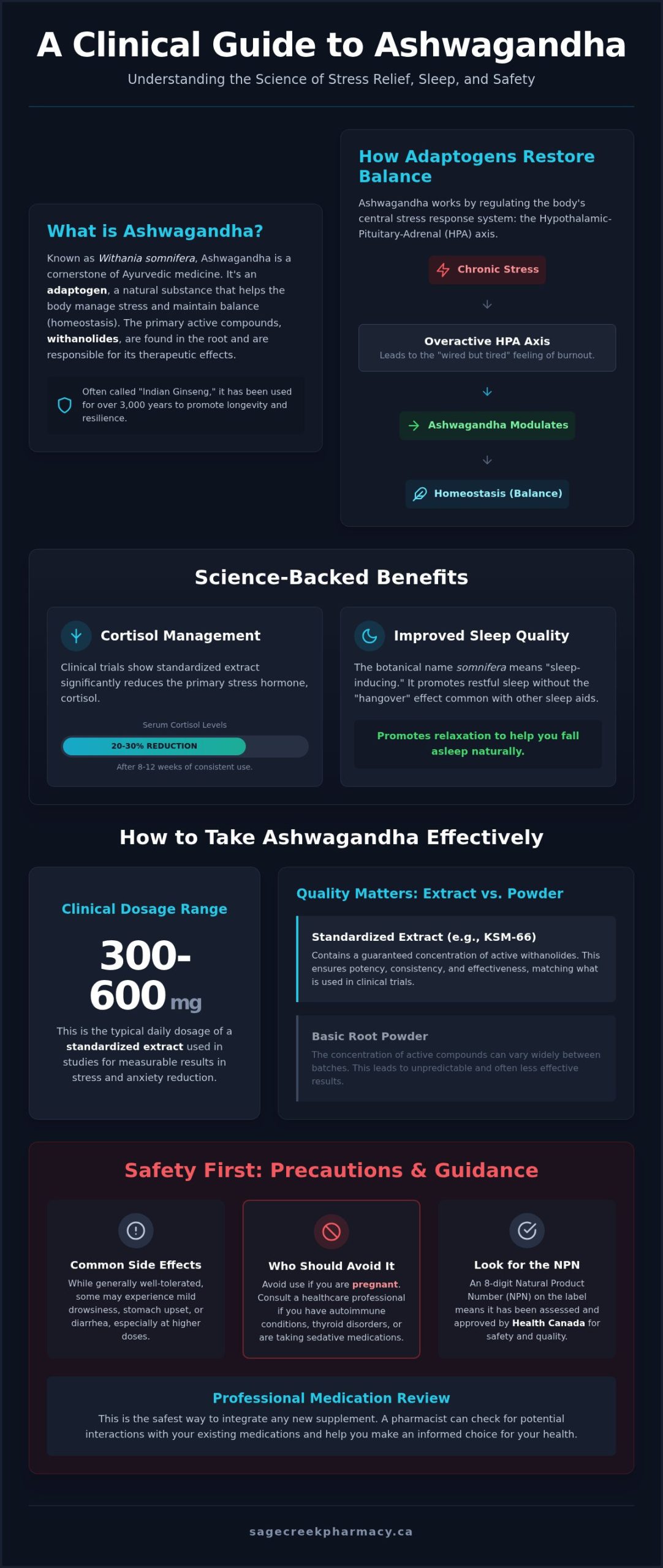
Ashwagandha, known scientifically as Withania somnifera, is a small woody shrub that has served as a cornerstone of Ayurvedic medicine for millennia. If you’ve been exploring natural ways to manage stress, you’ve likely come across this powerful plant. To answer the fundamental question, What is Ashwagandha?, it’s a member of the Solanaceae family, native to the dry regions of India, northern Africa, and the Middle East. While the entire plant has value, it’s the root extract that contains the highest concentration of withanolides. These naturally occurring steroidal lactones are the primary active compounds responsible for the herb’s therapeutic effects.
The History and Origin of Indian Ginseng
How Adaptogens Work in the Body
The true power of this herb lies in its classification as an adaptogen. This isn’t just a marketing buzzword. In clinical terms, an adaptogen is a substance that helps your body maintain homeostasis, or internal balance, when faced with physical, chemical, or biological stressors. It works primarily by modulating the Hypothalamic-Pituitary-Adrenal (HPA) axis. Think of this axis as your body’s central command center for stress. When you’re overwhelmed, the HPA axis can become overactive, leading to that “wired but tired” feeling many people describe.
Adaptogens help level out this response. They prevent the body from overreacting to stress while also providing a gentle lift when energy levels are low. This systemic approach to wellness is quite different from many other vitamins and supplements in Winnipeg that might target a single deficiency. Instead of just fixing one part of the machine, ashwagandha helps the entire system run more smoothly under pressure.
The Science-Backed Benefits for Stress, Anxiety, and Sleep
While history tells a compelling story of traditional use, modern clinical research provides the evidence we need to recommend this herb with confidence. Exploring the science-backed benefits of ashwagandha reveals why it has become a staple in integrative medicine. Recent studies have moved beyond anecdotal claims, focusing on how the plant’s active compounds interact with our nervous system to produce measurable results. Whether you’re dealing with the pressure of a demanding job or the quiet frustration of a restless night, the data suggests that ashwagandha offers a reliable path toward better balance.
Cortisol Management and Stress Resilience
Cortisol is often called the “fight or flight” hormone. It’s essential for survival, but when your levels stay high due to chronic stress, it can lead to anxiety, weight gain, and fatigue. Clinical trials in 2026 reported a 20% to 30% reduction in serum cortisol levels for individuals taking standardized root extract over eight to twelve weeks. Ashwagandha modulates the stress response by downregulating the activity of the HPA axis and balancing the output of cortisol from the adrenal glands. This reduction helps you feel more “even” throughout the day, preventing the sharp spikes in tension that lead to burnout.
Better Sleep Without the “Hangover” Effect
If you’ve ever looked at the botanical name Withania somnifera, you’ve seen a hint of its primary benefit; “somnifera” literally translates to sleep-inducing. Unlike some over-the-counter sleep aids or even melatonin, which can sometimes leave you feeling groggy the next morning, ashwagandha works by promoting a sense of calm that makes it easier to fall asleep naturally. It improves sleep latency, which is the time it takes to drift off, and enhances overall sleep quality. For the best results, consistency is key. It isn’t a “knock-out” pill for a single night, but rather a tool to help regulate your natural sleep cycle over several weeks of use.
Beyond stress and sleep, we often see patients benefit from improved cognitive focus and physical endurance. Research indicates that by reducing the “background noise” of daily anxiety, your brain can focus more effectively on the task at hand. Some studies even show a boost in VO2 max, which helps your body use oxygen more efficiently during physical activity. If you’re considering adding this to your routine, we recommend a medication review with our team. We’ll help you determine if it’s the right fit for your specific health goals and ensure it won’t interfere with any of your current prescriptions.
Safety First: Side Effects and Critical Drug Interactions
While we often celebrate the benefits of this ancient herb, our clinical team always reminds patients that “natural” does not mean “risk-free.” For most people, ashwagandha is safe when used appropriately, but some individuals may experience mild digestive upset, nausea, or slight drowsiness. Understanding ashwagandha safety and side effects is the first step in ensuring your wellness journey remains a positive one. We specifically advise those who are pregnant or breastfeeding to avoid this supplement, as there isn’t enough clinical data to guarantee safety for the baby. Additionally, a July 2026 safety review by Health Canada noted that while a definitive link to liver injury hasn’t been proven, a possible link couldn’t be ruled out, so we continue to monitor this research closely.
If you live with an autoimmune condition like lupus or rheumatoid arthritis, exercise extra caution. Because this herb can act as an immunostimulant, it might theoretically worsen symptoms by making the immune system more active. This is exactly why we prioritize a professional medication review before you start any new herbal regimen. We want to ensure your supplements work in harmony with your prescriptions, not against them.
Interactions with Thyroid and Diabetes Medications
Ashwagandha can influence how your body produces thyroid hormones. If you have hyperthyroidism, taking this could push your levels too high, leading to heart palpitations or anxiety. Similarly, because this herb may naturally lower blood glucose, it can have a synergistic effect with medications like insulin or metformin. We monitor these levels for our patients in Sage Creek to prevent hypoglycemia, which can cause dizziness, shakiness, or confusion. If you’re managing diabetes, your dosage might need careful adjustment when adding adaptogens to your routine.
Sedatives and Blood Pressure Concerns
Because of its calming nature, this supplement can increase drowsiness if you already take benzodiazepines or other sleep medications. It may also slightly lower blood pressure. If you’re on antihypertensive drugs, this combination could lead to your blood pressure dropping lower than intended, causing lightheadedness when you stand up. Before you add this to your cabinet, consider this list of medications to discuss with us:
- Thyroid replacement therapy (e.g., Synthroid)
- Diabetes medications (e.g., Metformin, Glyburide, or Insulin)
- Prescription blood pressure pills
- Sedatives or anti-anxiety medications (e.g., Lorazepam)
- Immunosuppressants used for autoimmune disorders
Our team is here to help you navigate these complexities. We don’t just see you as a transaction; we see you as a neighbor whose safety is our top priority. By looking at your full health history, we can help you decide if ashwagandha is a safe addition to your life.
How to Take Ashwagandha: Dosage, Timing, and Quality
Finding the right way to use ashwagandha can feel overwhelming with so many options on the market. In clinical settings, the most effective dosage for a standardized root extract typically ranges from 300mg to 600mg daily. We often see better results when patients stick to this range, as it aligns with the levels used in trials that showed significant cortisol reduction. It’s also important to remember the “cumulative effect.” Unlike a quick fix, this adaptogen needs time to work with your body’s systems. You likely won’t feel the full benefits on day one; most people notice a real difference after eight to twelve weeks of consistent use.
When you’re choosing a supplement, the source material matters. There’s a big difference between simple whole root powder and standardized extracts like KSM-66 or Sensoril. Whole root powder is just the ground-up plant, which can vary wildly in potency. Standardized extracts are concentrated to ensure you get a specific amount of the active compounds every time. If you’re looking for a reliable source for high-quality supplements in Sage Creek, we invite you to chat with our pharmacy team about the professional-grade options we keep in stock.
Capsules vs. Powders vs. Tinctures
Each delivery method has its own pros and cons. Powders are traditional and can be mixed into smoothies, but they have a very distinct, earthy taste that isn’t for everyone. Tinctures offer fast absorption but often contain alcohol. For most of our neighbors, standardized capsules are the preferred choice because they offer the most convenient and consistent dosing. Standardized withanolide content is the most important metric on a label because it guarantees you’re getting the active ingredients needed for health benefits.
The Importance of Cycling and Consistency
Consistency is the secret to success with adaptogens. However, some clinical experts suggest “cycling” your supplements, such as taking them for eight weeks followed by a two-week break. This helps your body remain sensitive to the herb’s effects. We also suggest pairing your supplement routine with healthy lifestyle habits. For example, managing your energy levels might involve looking at this herb alongside our Vitamin B12 and energy programme to address fatigue from multiple angles. We’re here to help you build a tailored plan that fits your unique health history and goals.
Your Local Winnipeg Resource for Safe Supplementation
Choosing the right supplement often feels like trying to find a path through a dense jungle. With so many unverified online sources and big-box retailers offering generic options, it’s hard to know which products actually deliver on their promises. When it comes to a potent adaptogen like ashwagandha, quality control is everything. At our Sage Creek location, we take the guesswork out of the process by sourcing only professional-grade, third-party tested products. We believe that your health is too important for “mystery” ingredients, so we only stock supplements that meet rigorous Health Canada standards and carry a verified Natural Product Number (NPN).
Our commitment to your well-being goes beyond just what’s on the shelf. We view ourselves as your dedicated wellness partners, not just a retail outlet. By choosing a local pharmacy for your natural health needs, you gain access to clinical experts who can cross-reference your supplements with your existing prescriptions. This level of oversight is something you simply won’t find at a large corporate chain or an online marketplace. We’re here to help you navigate the complexities of herbal medicine with clarity and confidence.
The Sage Creek Pharmacy Difference
Our neighborly approach to healthcare is what sets us apart in the Winnipeg community. We pride ourselves on being more agile and attentive than large corporate entities, ensuring that you feel recognized as a person rather than just a transaction number. This personal connection is vital because it allows us to understand your full health history. When we recommend a supplement, we do so with a complete picture of your health in mind.
We also know that your time is valuable. Between work, family, and managing your health, your schedule is likely full. To make staying healthy easier, we offer free city-wide delivery for your wellness needs. Whether you’re at home or at the office, we can bring your prescriptions and professional-grade supplements directly to you, ensuring you never have to miss a dose of the support you need.
Start Your Wellness Journey Today
If you’re ready to take a more proactive, safe approach to managing stress and sleep, we invite you to join our pharmacy family. Transferring your prescriptions to our local centre is a simple, stress-free process that our team handles on your behalf. Once you’ve made the switch, we can schedule a medication review or a personalized supplement consultation to discuss how ashwagandha or other natural tools might fit into your life.
Our team is always available to answer your questions and provide the reassurance you need to make informed choices. We don’t just provide medicine; we provide a stable, dependable fixture in the neighborhood that you can rely on for years to come. We are here to ensure your natural health choices are safe and effective.
Taking the Next Step Toward Better Balance
Ashwagandha offers a promising, science-backed path for those of us struggling with the heavy pressures of modern life. By helping to lower cortisol and improve sleep quality, this ancient herb can be a transformative addition to your wellness routine. Success with any supplement relies on two things: choosing high-quality, standardized extracts and ensuring they harmonize with your unique health profile. As we’ve explored, professional oversight is the best way to navigate these choices safely.
Our team at Sage Creek Pharmacy is here to help you move forward with confidence. As an independently owned and community-focused pharmacy, we prioritize your long-term well-being over simple transactions. We invite you to visit Sage Creek Pharmacy for a personalized supplement consultation where our experienced Winnipeg pharmacists can conduct thorough medication reviews. To make your journey even easier, we also provide free city-wide prescription and supplement delivery. We’re ready to help you find the balance and peace of mind you deserve. Your health is our priority, and we look forward to seeing you soon.
Frequently Asked Questions
How long does it take for ashwagandha to start working?
It typically takes between eight and twelve weeks of consistent daily use to feel the full therapeutic effects of this adaptogen. While some people might notice a subtle shift in their stress levels within a few days, the clinical benefits for cortisol reduction and sleep quality are cumulative. We recommend staying consistent with your daily dose to allow the herb to properly modulate your body’s stress response over time.
Can I take ashwagandha every day or do I need to take breaks?
You can take it daily, but many practitioners suggest “cycling” the supplement to maintain your body’s sensitivity to its effects. A common approach involves taking the herb for eight weeks followed by a two-week break. Our team can help you decide if a continuous or cycled approach is best for your specific needs based on your personal health history and current wellness goals.
Does ashwagandha interact with my thyroid medication?
Yes, this herb can interact with thyroid medications by potentially increasing the production of thyroid hormones. If you are being treated for hyperthyroidism or take replacement hormones like Synthroid, it’s vital to consult with us before starting. We monitor these levels closely for our Sage Creek patients to ensure the supplement doesn’t push your thyroid activity into an unsafe or uncomfortable range.
Is it better to take ashwagandha in the morning or at night?
The best time to take your supplement depends on whether you’re targeting daytime stress or nighttime rest. If you want to manage daily anxiety and improve focus, a morning dose is often most effective. However, if your primary goal is to improve sleep quality and fall asleep faster, taking it about an hour before bed is the better choice for most of our neighbors.
Can I take ashwagandha if I am pregnant or breastfeeding?
We advise against using this supplement if you are currently pregnant or breastfeeding. There is currently insufficient clinical evidence to guarantee that it’s safe for developing babies or infants. To ensure the safety of both you and your child, it’s best to stick with prenatal vitamins and supplements that have been rigorously tested and approved for use during pregnancy and lactation.
What is the difference between KSM-66 and regular ashwagandha?
KSM-66 is a branded, standardized root extract that ensures a consistent concentration of active withanolides in every dose. Regular ashwagandha powder is simply the ground-up root, which can vary significantly in potency from one bottle to the next. We generally recommend standardized extracts like KSM-66 because they provide the reliable, clinical-strength results seen in most modern research studies and clinical trials.
Can ashwagandha cause liver damage?
While generally considered safe, a July 2026 safety review by Health Canada noted that a possible link between oral use and liver injury could not be definitively ruled out. Although these cases are extremely rare, we encourage anyone with pre-existing liver conditions to speak with us first. We stay updated on all Health Canada advisories to ensure your natural health choices remain as safe as possible.
Does ashwagandha help with weight loss or muscle growth?
This herb can indirectly support weight loss by reducing cortisol, the hormone often responsible for stubborn abdominal fat during times of chronic stress. It also shows promise for muscle growth by improving physical endurance and VO2 max during exercise. While it isn’t a magic pill for fitness, it can be a helpful tool when paired with a balanced diet and regular physical activity.