

Have you ever wondered if that persistent bloating is just a result of a heavy meal, or if you need professional pharmacist advice for digestive health Winnipeg residents can trust? It’s a common concern, especially when the discomfort starts to interfere with your daily routine and leaves you feeling sluggish. We understand how frustrating and even anxious it feels when your digestive system isn’t moving as it should, and the wall of over-the-counter options only adds to the confusion.
You deserve to feel comfortable in your own skin, and we’re here to help you get there. In this article, we’ll help you identify the signs of constipation and understand the specific “why” behind your discomfort. We’ll walk you through gentle relief options available right here in our community and provide a clear plan for home care. You’ll also learn exactly which symptoms mean it’s time to call a Winnipeg doctor, giving you the peace of mind you need to manage your health with confidence.
Key Takeaways
- Learn why your personal “normal” matters more than a fixed schedule when identifying constipation symptoms and signs of discomfort.
- Understand how the “Food First” strategy and the “Rule of Threes” for hydration can help restart your digestive system naturally.
- Access professional pharmacist advice for digestive health Winnipeg residents can use to spot if their current medications are causing side effects.
- Know the exact red flags that signal when digestive discomfort requires a prompt visit to a healthcare provider rather than home care.
- Discover how a tailored medication review helps you choose the safest and most effective over-the-counter options for your specific health history.
Identifying Common Constipation Symptoms and Signs
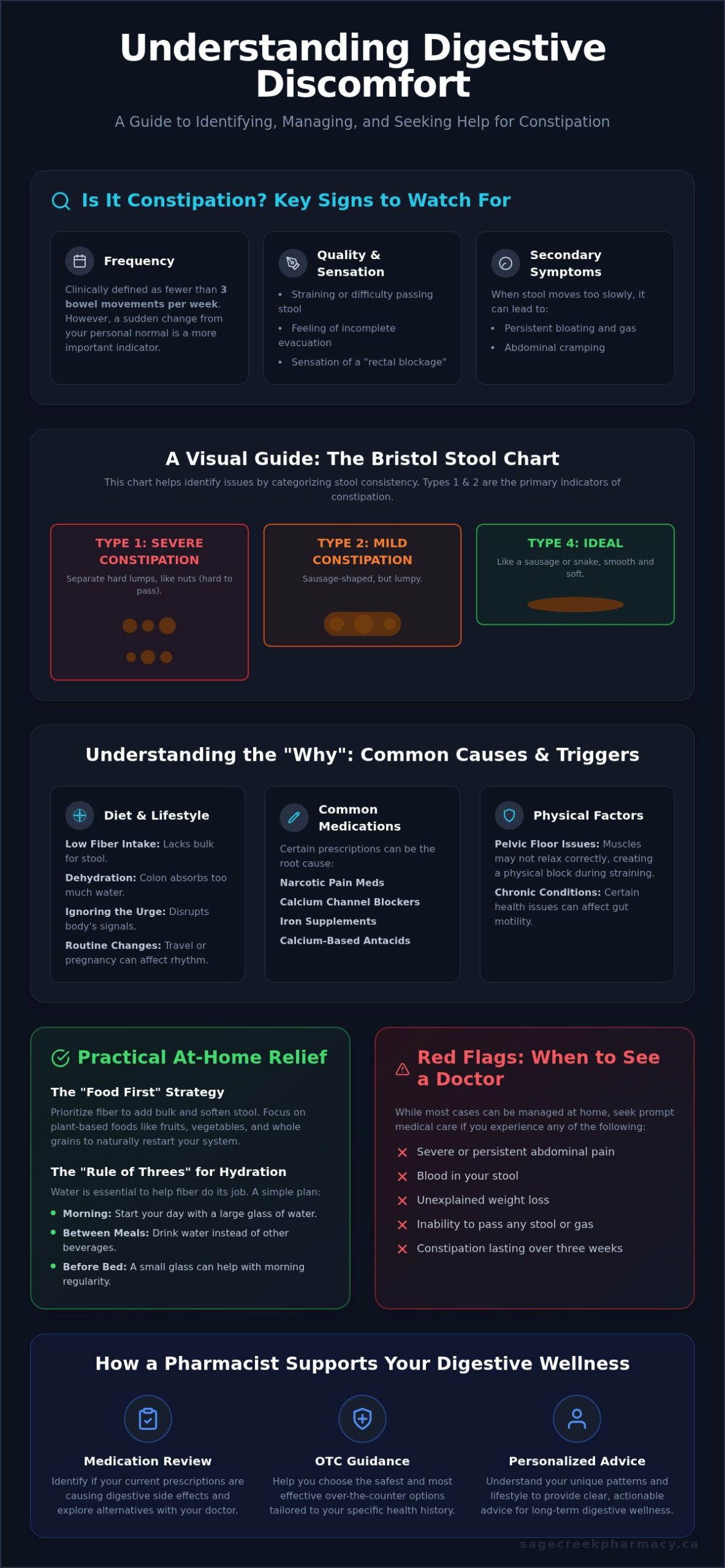
Identifying constipation isn’t always as simple as checking the calendar. While many people think it’s just about how often you go, Constipation is actually defined by the quality and ease of your bowel movements too. If you’re looking for pharmacist advice for digestive health Winnipeg residents can rely on, it’s helpful to start by looking at your own unique patterns rather than a rigid schedule.
Clinically, having fewer than three bowel movements a week is a primary marker. However, “normal” is a sliding scale. If you usually go twice a day and suddenly switch to once every two days, you’re likely experiencing symptoms. We often see patients in our community who feel perfectly fine on three movements a week, while others feel intense physical discomfort if they miss even a single day. Your baseline is the most important metric we use to determine if something is wrong.
Beyond frequency, pay close attention to how your body feels during the process. Are you spending a long time straining or feeling like the process is incomplete? You might also experience a persistent sense of abdominal pressure or a “rectal blockage.” This last sign is a specific clinical indicator where it feels like something is physically in the way, even after you’ve finished. These are the specific details we look for when providing pharmacist advice for digestive health Winnipeg families need to stay comfortable and well.
The Bristol Stool Chart: A Visual Guide to Your Symptoms
Medical professionals use the Bristol Stool Chart to take the guesswork out of physical descriptions. It categorizes stool into seven types based on shape and consistency. Types 1 and 2 are the primary red flags for constipation. Type 1 looks like hard, separate nut-like lumps that are difficult to pass. Type 2 is sausage-shaped but lumpy. If your movements consistently fall into these categories over a week, your body is telling you that waste is moving too slowly through your colon and losing too much moisture along the way.
Secondary Symptoms: Bloating, Gas, and Cramping
Constipation rarely travels alone. When stool sits in the colon for too long, bacteria have more time to ferment the waste, which leads to excessive gas and that tight, “stretched” feeling of bloating. This is different from the temporary gas you might get after a large meal. Constipation-related discomfort often includes abdominal cramping. These cramps are actually your colon muscles contracting harder than usual, trying to push the hardened stool forward. Recognizing these secondary signs helps us build a more complete picture of your digestive wellness.
Why Do Constipation Symptoms Occur? Understanding the Causes
Once you recognize the physical signs of discomfort, the next step is identifying the triggers. Understanding the “why” behind your symptoms is essential for finding the right relief. Many factors contribute to a sluggish system, but most cases stem from a combination of lifestyle habits and biological signals. Getting pharmacist advice for digestive health Winnipeg families can rely on often begins with a look at your daily routine and any recent changes to your health.
Dietary habits are usually the primary culprits. Stool consistency relies heavily on a balance of water and fibre. Fibre provides the necessary bulk to move waste through the colon, while water keeps that waste soft enough to pass easily. When you’re dehydrated or your diet lacks plant-based foods, the colon absorbs too much moisture, leading to the hard, painful stools we discussed earlier. Changes in your routine, such as travelling or the hormonal shifts of pregnancy, can also disrupt your body’s natural rhythm. Even ignoring the “urge to go” because you’re busy or away from home can create a chronic cycle of discomfort. Over time, the rectum becomes less sensitive to these signals, making it harder to maintain regularity.
It’s also worth considering physical coordination. Your pelvic floor muscles must relax at the right time to allow stool to pass. If these muscles are tense or uncoordinated, you might feel like you’re straining against a physical wall. For a deeper look at these biological triggers, the NIDDK provides an excellent overview of the Symptoms & Causes of Constipation.
Prescription Medications That Can Cause Constipation
As pharmacists, we often see patients who don’t realize their prescriptions are the root cause of their digestive issues. Narcotic pain medications are well-known for slowing down gut motility. Certain blood pressure medications, particularly calcium channel blockers, can also relax the muscles in the intestinal wall too much. We also frequently flag iron supplements and calcium-based antacids as common triggers for harder stools. Some neuropathic medications used for nerve pain can interfere with the signals that tell your bowels to move. If you’ve started a new medication recently and noticed a change, we can help you identify if it’s the cause.
Lifestyle Factors Specific to Winnipeg Residents
Living in Manitoba presents unique challenges for digestive health. During our long, cold winters, many people naturally drink less water because they don’t feel the thirst that comes with summer heat. This hidden dehydration is a major factor in seasonal constipation. Our sedentary indoor lifestyles during peak winter months also play a role; physical activity is a natural stimulant for the gut. When we move less, our bowels move less. Additionally, local diet shifts toward heavier, “comfort” foods in the winter often mean we’re eating fewer fresh, high-fibre vegetables compared to the garden season.
Red Flags: When Constipation Symptoms Require Urgent Care
Many of our neighbors in Sage Creek come to us when they feel backed up, looking for a way to get things moving again. Most of the time, the solution involves simple adjustments or gentle over-the-counter aids. However, we also have a responsibility to tell you when home care isn’t enough. Providing pharmacist advice for digestive health Winnipeg residents can trust involves setting clear boundaries between a minor digestive hiccup and a situation that requires a doctor’s intervention.
We also want you to consider your family history. If colorectal cancer or inflammatory bowel disease runs in your family, any sudden or persistent change in your digestive patterns carries more weight. Don’t let symptoms linger out of embarrassment or hope that they’ll just go away. If left too long, you risk fecal impaction. This happens when stool becomes so dry and packed that the body can’t move it at all, which can lead to serious complications if not treated by a medical professional.
The Warning Signs You Should Never Ignore
If you notice bright red blood in the toilet or find that your stools have become black and tarry (melena), please don’t wait. These signs can indicate internal issues that need a professional diagnosis. Similarly, if you’re experiencing abdominal pain so intense that you can’t go about your day, you need to seek help. Another critical red flag is the inability to pass gas, especially if it’s accompanied by nausea or vomiting. These symptoms could be signs of a bowel blockage that requires more than just home remedies for constipation.
Chronic vs. Acute Symptoms
We define chronic constipation as symptoms that persist for three months or longer. While acute constipation might happen after a weekend of heavy meals or a stressful work week, chronic issues suggest an underlying cause that needs a deeper look. This is often the point where we suggest a personal health consultation to review your medications and lifestyle. One final detail to track is your weight. If you’re losing weight without trying while also dealing with constipation, that’s a combination that always requires a physician’s evaluation. Keeping a simple log of your symptoms for a week can be incredibly helpful when you do speak with a healthcare provider.
Practical Relief: Managing Constipation Symptoms at Home
If you’ve determined that your symptoms don’t require urgent medical care, there are several effective ways to find relief using a “Food First” approach. We believe that the best way to support your body is by giving it the natural tools it needs to function. This starts with a strategic look at fibre. We recommend a mix of soluble fibre, found in foods like oats and beans, which turns into a gel-like substance to soften stool, and insoluble fibre from whole grains and vegetable skins, which adds necessary bulk. When you need personalized pharmacist advice for digestive health Winnipeg experts can provide, we often start by reviewing these dietary foundations to ensure your system has the right fuel.
Water acts as the engine of the colon, and without it, even the best high-fibre diet won’t help. We often suggest the “Rule of Threes” for hydration: aim for three significant periods of water intake throughout the day to ensure a steady supply of moisture to your digestive tract. This prevents the colon from stealing water from your waste, which is what leads to hardness. Alongside hydration, light physical activity is a powerful tool. A simple twenty-minute walk around your neighborhood can stimulate the natural contractions of your gut muscles, helping to move things along more efficiently.
Choosing the Right OTC Solution
Sometimes, lifestyle changes need a little extra support from the pharmacy aisle. When selecting an over-the-counter option, it helps to understand how different categories work. Bulk-forming laxatives are generally the gentlest, acting much like dietary fibre. Osmotic laxatives work by drawing water into the colon to make stool easier to pass. We usually reserve stool softeners for those who need to avoid straining, while stimulant laxatives are meant for very short-term use to “kickstart” a sluggish system. For a deeper look at safety and selection, you can refer to our Guide to OTC Medications.
Natural Lifestyle Adjustments
Consistency is your body’s best friend. Try to establish a regular bathroom routine, visiting at the same time each day to train your system to expect a movement. You can find excellent high-fibre options at local Winnipeg markets, such as Manitoba-grown flaxseeds or seasonal root vegetables. Probiotics can also be a helpful tool for maintaining a healthy gut balance over the long term. If you’re feeling overwhelmed by the choices, visit our pharmacy in Sage Creek to speak with our team about which approach fits your health history best.
How Sage Creek Pharmacy Supports Your Digestive Wellness
At Sage Creek Pharmacy, we believe that healthcare is most effective when it feels like a conversation between neighbors. We know that the wall of products in the laxative aisle can be overwhelming, often leaving you more confused than when you arrived. Our goal is to strip away that clinical coldness and provide the personalized pharmacist advice for digestive health Winnipeg residents can count on. We don’t just want to help you treat a one-time symptom; we want to act as your wellness partner to ensure your system stays balanced through every season of the year.
Being an independent pharmacy allows us to be more agile and attentive than large corporate entities. We take pride in our local roots and our ability to understand your specific health history. Instead of just handing you a bottle of pills, we encourage a proactive approach to your health. This means we’re always available for a quick chat to discuss how your lifestyle, diet, and current medications interact to affect your digestive comfort.
Medication Reviews: Identifying the Root Cause
One of the most valuable services we offer is a comprehensive medication review. If you’re managing multiple health conditions, there’s a strong possibility that one of your prescriptions is contributing to your constipation. We sit down with you to review your entire medication list, looking for common culprits like certain blood pressure treatments or supplements. By identifying these root causes, we can work with you to suggest companion treatments or discuss alternative options with your doctor to better manage side effects. You can explore our Prescription Medication Guide to learn more about how we manage these complex health needs.
Convenient Solutions for Winnipeg Families
We understand that when you’re feeling unwell, the last thing you want to do is navigate traffic. That’s why we offer free city-wide delivery for both your prescriptions and any over-the-counter digestive aids you might need. Whether you’re a busy parent in Sage Creek or a senior across the city, we make sure your relief arrives at your door without extra cost. For those on maintenance medications, our online prescription refills provide a fast and easy way to stay on top of your health. We’ve created a welcoming, inclusive environment right here in the neighborhood, and we’re always ready for walk-in consultations to help you feel your best again.
Taking Control of Your Digestive Comfort
Managing your digestive health doesn’t have to be a solo journey or a source of anxiety. We’ve discussed how identifying your personal “normal” and recognizing specific red flags can help you decide when to use home relief or seek professional medical care. Whether it’s adjusting your hydration during a cold Manitoba winter or understanding how your current prescriptions affect your system, small changes make a significant difference. Our team is dedicated to providing the pharmacist advice for digestive health Winnipeg families need to feel their best every day.
At Sage Creek Pharmacy, we pride ourselves on being your local wellness partner. Our experienced team offers specialized medication reviews to help you spot potential side effects and find safer alternatives for chronic discomfort. We also provide free city-wide prescription delivery in Winnipeg to ensure you get the support you need without any extra stress. You’re a person, not just a transaction number, and we’re here to provide the neighborly, professional care you deserve. Speak with a Sage Creek Pharmacist today for personalized digestive health advice. We look forward to helping you regain your comfort and confidence.
Frequently Asked Questions
How often should a healthy person have a bowel movement?
A healthy range for bowel movements is typically between three times per day and three times per week. Everyone’s body follows a unique rhythm, so we focus more on changes to your personal baseline rather than a specific number. If you’ve noticed a sudden shift in your usual frequency or consistency, it’s a good time to seek pharmacist advice for digestive health Winnipeg residents trust to ensure things stay on track.
Can constipation symptoms cause back pain or headaches?
Yes, it’s possible for severe constipation to cause referred pain in your lower back or even headaches. Large amounts of stool in the colon can put physical pressure on the nerves in the pelvic and lumbar regions. Headaches are often a secondary symptom of the dehydration or stress that frequently accompanies digestive backup. If these pains persist even after your bowels move, you should consult a healthcare provider to rule out other causes.
Is it safe to take laxatives every day for constipation symptoms?
It’s generally not recommended to use stimulant laxatives every day because your body can become dependent on them to function. While bulk-forming fiber supplements are typically safe for long-term use, other types like osmotic laxatives should be used with caution. We suggest a medication review to see if a different approach might work better for you. Regular use of any laxative over two weeks warrants a conversation with our team or your doctor.
What is the fastest way to relieve constipation symptoms at home?
The fastest relief at home often comes from a combination of increased water intake, gentle movement, and potentially a glycerin suppository for immediate needs. Drinking a warm liquid in the morning can also trigger the “gastrocolic reflex” which encourages the colon to contract. If these quick steps don’t help within 24 hours, come see us for pharmacist advice for digestive health Winnipeg families can use to select a more effective over-the-counter option safely.
Can certain vitamins or supplements cause me to feel constipated?
Iron and calcium supplements are the most common culprits behind supplement-induced constipation. Iron can be particularly tough on the digestive tract, often causing stools to become harder and darker. Some multivitamins also contain enough of these minerals to slow down your system. If you suspect your vitamins are the cause, we can help you find a different formulation or suggest a companion treatment to keep your digestion moving smoothly.
When does constipation become a medical emergency?
Constipation becomes an emergency if you experience severe abdominal pain, a fever, or persistent vomiting. These symptoms, especially when you’re also unable to pass gas, can signal a bowel obstruction or an infection. If your abdomen feels hard to the touch or appears visibly distended and painful, you should seek immediate care at an emergency room. Don’t wait for home remedies if you’re in significant distress or showing these specific warning signs.
Does drinking coffee help or hurt constipation symptoms?
Coffee can be a double-edged sword for your digestive system. For many, the caffeine acts as a natural stimulant that encourages the muscles in your gut to contract and move waste along. However, coffee is also a diuretic, which means it can lead to dehydration if you aren’t balancing it with plenty of water. If your stools are already hard and dry, the dehydrating effect of too much coffee might actually make your symptoms worse.
Are there specific foods I should avoid when I am constipated?
You should try to limit highly processed foods, heavy dairy products, and refined grains like white bread or white rice when you’re feeling backed up. These foods are often low in fiber and high in fat, which can slow down the digestion process even further. Fried foods and processed meats can also be difficult for your system to process during a bout of constipation. Focusing on whole, plant-based options will give your gut the best chance to recover.