

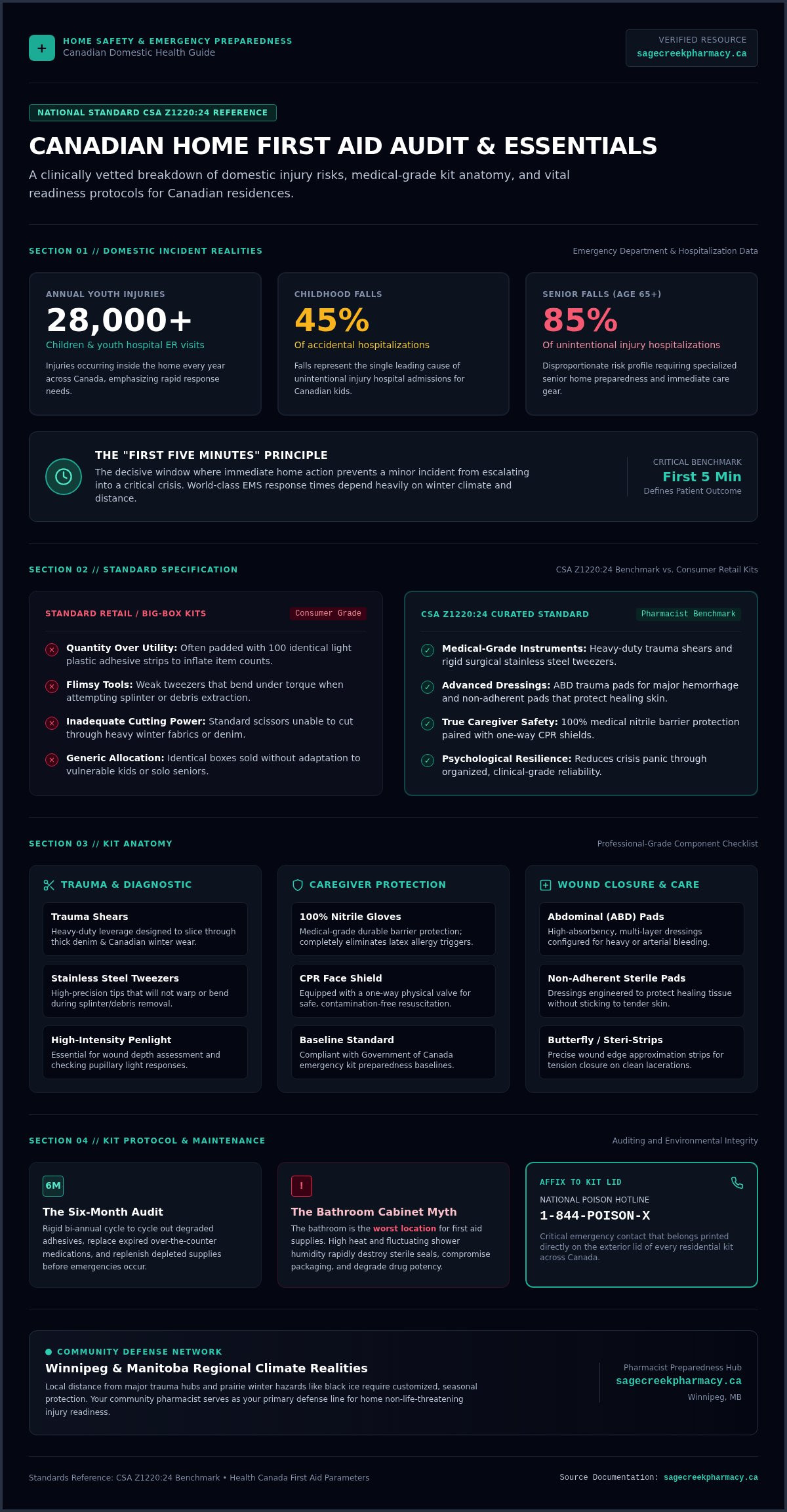
Did you know that over 28,000 Canadian children and youth visit emergency departments every year for injuries that happen right inside their own homes? It’s a staggering statistic that highlights how quickly a quiet afternoon can turn into a medical crisis. Finding the best first aid kit for home Canada isn’t just about grabbing the biggest box on the shelf; it’s about ensuring you have the right tools to act fast when your family needs you most.
We understand the confusion of sorting through marketing claims versus Health Canada requirements. Most of us have felt that flash of anxiety, wondering if our supplies are actually up to the task or if they’ve expired in a cupboard. You deserve to feel confident in your ability to handle an injury without wasting money on low-quality gear that fails under pressure.
This guide provides a definitive checklist of essential supplies, from basic wound care to winter-specific gear for our local climate. We’ll show you how to maintain your kit according to the latest CSA Z1220:24 standards and explain why your bathroom cabinet is actually the worst place for storage. We’ll even share critical details like the 1-844-POISON-X hotline that belongs on every kit lid. By the end, you’ll have a professionally vetted plan to keep your loved ones safe throughout 2026.
Key Takeaways
- Learn why the first five minutes of a medical emergency are the most critical and how professional supplies bridge the gap until help arrives.
- Identify the medical-grade tools and advanced dressings that define the best first aid kit for home Canada, moving beyond standard plastic bandages.
- Compare the convenience of pre-made kits against the personalized protection of a pharmacist-curated setup tailored to your family’s specific needs.
- Master the “Six-Month Audit” to ensure your supplies haven’t expired or been compromised by improper storage in humid areas like bathrooms.
- Discover how to access personalized kit consultations and free delivery for all your first aid refills right here in Winnipeg.
Why Every Canadian Home Needs a Professionally Curated First Aid Kit
When an accident happens at home, time is your most valuable resource. We often talk about the “first five minutes,” that critical window where your immediate actions can prevent a minor injury from becoming a major medical crisis. While Canada has world-class emergency services, response times can vary depending on your location and the weather. Having the best first aid kit for home Canada ensures you aren’t just waiting for help; you’re actively managing the situation.
Domestic hazards are more common than many realize. Falls are the leading cause of accidental home injury across the country, accounting for 45% of all unintentional injury hospitalizations in children and a staggering 85% for seniors aged 65 and over. From a simple kitchen burn to a slip on a patch of black ice in the driveway, your home needs to be equipped for the specific realities of Canadian life. A basic box of bandages often isn’t enough to handle these diverse scenarios effectively.
The Local Winnipeg Context: Why We Care
At Sage Creek Pharmacy, we see our neighbors every day and understand the unique challenges of living in Manitoba. Whether you’re in a growing community like Sage Creek or further out in the surrounding areas, distance from emergency centers matters. We believe your pharmacist should be your first line of defense for non-life-threatening injuries. We’re here to help you move beyond the “one-size-fits-all” approach found in big-box stores. A kit designed for a suburban family with young children looks very different from one curated for a senior living alone, and that personal touch makes all the difference when stress levels are high.
Health Canada Standards vs. Consumer Grade
It’s easy to get distracted by marketing fluff, but professional preparedness relies on the national benchmark, CSA Z1220:24. This standard categorizes standard first aid kit supplies into specific “Types” based on the environment and the number of people they serve. While many retail kits are labeled as basic, they often prioritize the quantity of items over their actual utility. You don’t need 100 identical plastic bandages. Instead, you need high-quality trauma shears that can cut through heavy clothing and stainless steel tweezers that won’t bend when you’re trying to remove a splinter.
True preparedness also provides a massive psychological benefit. When you know your kit is stocked with professional-grade tools and current over-the-counter medications, you’re less likely to panic during a family crisis. That sense of order helps you stay calm, providing the stability and confidence needed to care for your loved ones until the situation is resolved.
The Anatomy of the Best First Aid Kit for Home Canada
Building the best first aid kit for home Canada requires moving beyond a simple box of plastic strips. While basic bandages have their place, a truly effective kit is built on professional-grade components that don’t fail when you’re under pressure. We recommend starting with high-quality tools like stainless steel tweezers, which provide the precision needed for splinter removal, and heavy-duty trauma shears capable of cutting through thick denim or winter layers. A high-intensity penlight is another essential, helping you see clearly when assessing a wound or checking for pupil response in low light.
Safety for the caregiver is just as important as care for the patient. Personal Protective Equipment (PPE) should never be an afterthought. We advocate for 100% medical-grade nitrile gloves in every home kit to avoid latex allergy triggers and provide a durable barrier. A CPR face shield with a one-way valve is also non-negotiable, ensuring you can provide life-saving assistance safely. You can cross-reference these essentials with the Government of Canada emergency kit checklist to ensure your baseline preparedness is met.
Wound Management Essentials
Effective wound care involves more than just covering a cut. Your kit should include a variety of sterile dressings, such as non-adherent pads that won’t stick to a healing wound and large abdominal (ABD) pads for significant bleeding. For minor closures, butterfly bandages or steri-strips are vital for holding wound edges together. We always suggest using a sterile saline wash for cleaning injuries rather than harsh hydrogen peroxide, which can actually damage healthy tissue. To prevent infection, we’ve curated a specific range of over-the-counter medications and topical antiseptics that are gentle yet effective for all ages.
Medications and Topical Treatments
The “Pharmacist’s Corner” of your kit is where customization truly happens. Oral rehydration salts are a must-have, especially for families with young children prone to dehydration from stomach bugs or Manitoba’s summer heat. Antihistamines for sudden allergic reactions and basic analgesics like acetaminophen or ibuprofen should be clearly labeled. It’s vital that these medications don’t interfere with your family’s existing prescriptions. We suggest booking a medication review to ensure your emergency supplies are safe and appropriate for your household’s specific health history. If you’re unsure which topical cream is best for a particular skin type, our team is always here to help you select the right products.
Pre-Made vs. DIY First Aid Kits: Which Is Right for You?
Choosing the best first aid kit for home Canada often starts with a simple choice: should you buy a ready-made box or build one from scratch? Pre-made kits from organizations like the Canadian Red Cross or St. John Ambulance offer a convenient, sterile baseline. They’re designed to meet national standards and provide a cost-effective way to get your basic supplies in one go. However, many retail kits rely on “filler” items to boost their piece count. You might find a box promising 100 items that actually contains 80 identical tiny plastic bandages but lacks a single pair of medical-grade shears or a proper splint.
Building your own kit allows for total control over quality, but the hidden costs can add up quickly. Buying individual boxes of high-end sterile gauze, professional tweezers, and various medications often costs more than a bundled kit. We usually recommend a “Hybrid Approach” for our neighbors. Start with a solid, high-quality base kit and then let us help you customize it. This strategy ensures you have the best first aid kit for home Canada without the unnecessary clutter of a generic retail box. It focuses your budget on the tools that actually matter during a high-stakes emergency.
The Pharmacist’s Verdict on Pre-Made Kits
When we audit standard kits at the pharmacy, we often find “missing links” that could complicate an emergency. Most standard kits lack adequate burn care supplies or specialized medical tape that can withstand a humid environment or a Manitoba winter. Professional-grade supplies last longer and perform better when you’re under pressure. We invite you to bring your current kit into Sage Creek Pharmacy for a quick check. We can help you spot what’s expired or identify where a higher-quality tool would serve you better, ensuring your setup is truly ready for a crisis.
Customizing for Your Household
A kit that works for a young couple won’t be sufficient for a family with a newborn or a household with seniors. For those with infants, your kit needs digital thermometers, pediatric dosing syringes, and nasal aspirators. Seniors benefit from additions like medical history cards, easy-open medication packaging, and extra supplies for chronic condition management. Don’t forget your pets; while some items like gauze are universal, pets require their own antiseptic washes and specific tick-removal tools. You can find more detailed clinical guidance on these essential components in this Mayo Clinic first-aid kit guide. This tailored approach is the most reliable way to protect your loved ones based on their unique health needs.
Maintenance and Seasonal Readiness for Canadian Homes
Even the best first aid kit for home Canada is only as reliable as its most recent update. We suggest performing a “Six-Month Audit” to keep your household safe. A simple way to remember this is to check your supplies every time the clocks change for Daylight Saving Time. During this review, look for compromised packaging, yellowing tape, or brittle plastic. Sterile wound dressings typically carry a 3 to 5 year sterility horizon, but adhesive integrity often fails sooner if the kit isn’t stored correctly.
Storage location is a common mistake. Most people default to the “medicine cabinet” in the bathroom, but this is actually one of the worst places for medical supplies. Chronic spikes in heat and relative humidity from your shower can ruin the active ingredients in OTC analgesics and cause antiseptic wipes to dry out in as little as 12 months. Instead, choose a cool, dry spot like a hallway linen closet or a high pantry shelf where temperatures stay consistently between 15°C and 25°C. This protects the chemical stability of your ointments and the stickiness of your bandages.
The Canadian Winter Add-On
Manitoba winters present unique challenges that standard retail kits don’t always address. When temperatures drop to −30°C or lower, your home needs to be ready for power outages or secondary injuries like frostbite. We recommend adding heavy-duty instant thermal warming packs and mylar space blankets to your primary kit. These are vital for maintaining core body temperature during an indoor emergency if the furnace fails. As the seasons shift, you should also refine your supplies for the Winnipeg allergy season by ensuring your antihistamines are fresh and correctly dosed for every family member.
Location and Accessibility
Accessibility is the final pillar of preparedness. Every family member, including the babysitter and older children, must know exactly where the kit is located and how to use the basic tools inside. We often suggest keeping a primary “home base” kit and smaller satellite versions in the kitchen or garage for quick access. If you discover expired items during your audit, finding a pharmacy near me makes restocking your best first aid kit for home Canada a simple task. Our team can help you identify high-quality replacements that meet the latest 2026 Health Canada standards. If you’re ready to refresh your emergency supplies, contact Sage Creek Pharmacy to ensure your family stays protected year-round.
How Sage Creek Pharmacy Helps Winnipeg Families Stay Prepared
At Sage Creek Pharmacy, we believe that the best first aid kit for home Canada isn’t just a product you buy once and forget. It is a vital resource that needs to grow and change alongside your family. As your local wellness partner, we take a neighborly approach to your safety. We don’t want you to feel like just another transaction; we want you to feel recognized and supported. Whether you are managing a busy household with young children or caring for an aging parent, we are here to ensure your emergency supplies are up to the task.
Our team offers personalized kit consultations right here in the heart of Sage Creek. If you’re feeling overwhelmed by the options we’ve discussed, simply bring your current kit into the pharmacy. We will sit down with you to audit your supplies, identify what has expired, and help you fill the gaps with professional-grade tools. This tailored approach is especially important if you have chronic conditions. By conducting regular medication reviews, we can ensure that the over-the-counter treatments in your kit are safe to use alongside your daily prescriptions.
Refilling Your Kit stress-Free
We know that life in Winnipeg is busy, and driving across the city for a box of sterile gauze or a fresh bottle of antiseptic isn’t always convenient. That is why we offer free prescription delivery for all your first aid replenishments and medications throughout the city. You can use our straightforward online refill system to request the supplies you need from the comfort of your home. Choosing a local, independent pharmacy means you have a dedicated team that understands your specific health history. We can alert you if a new product might better suit your needs or if a manufacturer has updated the safety guidelines for an item in your kit.
Your Next Steps for Home Safety
Preparedness starts with a single, simple action. We encourage you to do a “5-minute audit” of your current supplies today. Open your kit, check the dates on your bandages, and see if your tweezers are still in good working order. If you find that your setup is lacking, don’t wait for an emergency to happen. Visit us in Sage Creek for a professional consultation. We will help you build or refine the best first aid kit for home Canada for your unique situation. Being prepared is a gift of safety and stability you give to your family, and we are honored to help you provide it. Our doors are always open, and our team is ready to help you stay protected through every season.
Empowering Your Home Safety Strategy
True preparedness is a continuous journey of care rather than a one-time purchase. We’ve explored how professional-grade tools and a strict six-month audit schedule transform a simple box of bandages into a life-saving resource. By focusing on high-quality components over piece count and accounting for Manitoba’s unique seasonal shifts, you’ve taken the most important step toward building the best first aid kit for home Canada. This proactive approach ensures you’re ready to act with confidence during those critical first five minutes of an emergency.
Our team is here to help you navigate these choices with clinical expertise and neighborly care. As a community-focused, independent pharmacy, we pride ourselves on providing expert pharmacist advice on all your over-the-counter supplies. We also offer the convenience of free city-wide delivery in Winnipeg for all your first aid refills and medications. Please visit Sage Creek Pharmacy for a personalized first aid consultation to ensure your household is fully protected. Taking these small steps today provides a lasting foundation of safety and stability for the people you love most.
Frequently Asked Questions
What is the most important item in a home first aid kit for Canadians?
High-quality trauma shears are arguably the most vital tool because they allow you to reach an injury quickly by cutting through heavy winter layers. For the best first aid kit for home Canada, you should also include the national poison control number (1-844-POISON-X) clearly on the inside lid. Having the right tools to access a wound is just as important as the bandages you use to cover it.
Do first aid kits expire, and how often should I check mine?
Yes, first aid supplies carry expiration dates that you must monitor to ensure safety. Sterile dressings usually last 3 to 5 years, while antiseptic wipes and ointments often degrade within 1 to 3 years. We recommend a formal audit every 6 months, ideally when the clocks change. This ensures your supplies haven’t dried out or lost their adhesive integrity before you actually need them in a household crisis.
Is it cheaper to build my own first aid kit or buy a pre-made one?
Pre-made kits from the Red Cross or St. John Ambulance are generally more affordable up-front, often ranging from C$35 to C$50 for a basic setup. Building a custom kit can cost between C$75 and C$120 because you’re purchasing full boxes of professional-grade items. However, a DIY approach allows you to avoid “filler” items and include specific medications tailored to your family’s history, which provides better long-term value for Winnipeg households.
What medications should I definitely include in my home first aid kit?
Every kit should include basic analgesics like acetaminophen or ibuprofen for pain and fever, alongside oral antihistamines for allergic reactions. Antiseptic wipes and antibiotic ointments are essential for preventing infection in minor cuts. We also suggest adding oral rehydration salts for stomach bugs and saline washes for wound irrigation. Always consult with us at Sage Creek Pharmacy to ensure these over-the-counter choices don’t interact with your existing daily prescriptions.
Does Health Canada have specific requirements for home first aid kits?
While Health Canada doesn’t mandate a specific kit for private homes, the CSA Z1220:24 standard is the national benchmark for quality. This standard categorizes kits into Type 1, 2, and 3 based on the level of risk and number of people. Following these guidelines ensures your kit contains medical-grade supplies that meet rigorous safety requirements. It’s the most reliable way to ensure you have the best first aid kit for home Canada.
Where is the best place to store a first aid kit in a typical house?
The best storage location is a cool, dry place that stays between 15°C and 25°C, such as a hallway linen closet or a high pantry shelf. Many people use the bathroom medicine cabinet, but the high humidity and heat from showers can ruin medication stability and cause bandages to lose their stickiness. Ensure the kit is easily accessible to all adults and older children while remaining out of reach for toddlers.
Can Sage Creek Pharmacy help me customize a kit for my family’s specific health needs?
Absolutely, we specialize in helping Winnipeg families build or audit their emergency supplies. Our pharmacists can provide personal health consultations to identify specific items your family might need, such as pediatric doses or senior-focused supplies. We can also perform medication reviews to ensure your kit’s over-the-counter items are safe for your specific health profile. We even offer free city-wide delivery for any replacement supplies you might need to restock.
How do I handle a minor injury if I don’t have a full kit yet?
If you’re caught without a kit, the first step is to clean the wound with cool, potable water or sterile saline if available. Apply firm pressure with a clean cloth to stop any bleeding and keep the area protected from dirt. Once the situation is stable, visit us in Sage Creek for a professional assessment. We can advise on proper wound care and help you assemble the basic supplies needed to handle future minor injuries safely.