

You just left your doctor’s office here in Winnipeg with a lab report full of confusing numbers and a new prescription you aren’t quite sure about. It’s a common scene: one moment you’re focused on your daily routine, and the next, you’re searching for reliable pharmacist advice for high cholesterol to understand the difference between “good” and “bad” levels. We know how overwhelming it feels to balance conflicting diet tips with the fear of starting a new medication. You aren’t alone in this, and you don’t have to manage these health decisions by yourself.
We’ve created this guide to help you understand your results, master your medication schedule, and discover how personalized support from a local health partner makes a difference. We’ll explore practical lifestyle changes that actually work for Manitobans and show you how a dedicated medication review can provide the peace of mind you deserve. Our goal is to help you transform that clinical lab report into a clear, manageable plan for your long-term wellness. Let’s start building a clearer path toward a healthier heart together.
Key Takeaways
- Decipher your cholesterol lab results by understanding the critical balance between “good” HDL and “bad” LDL levels for your heart health.
- Receive professional pharmacist advice for high cholesterol to help you manage statins or non-statin medications while minimizing potential side effects.
- Identify which supplements and dietary strategies, like the Portfolio Diet, are backed by clinical evidence and safe for your unique health profile.
- Learn how a personal medication review with your Winnipeg pharmacist can streamline your heart health plan and improve coordination with your family doctor.
- Discover the benefits of choosing a local, independent pharmacy for tailored support and free city-wide prescription delivery in Winnipeg.
The Cholesterol Basics: Understanding Your Numbers in Canada
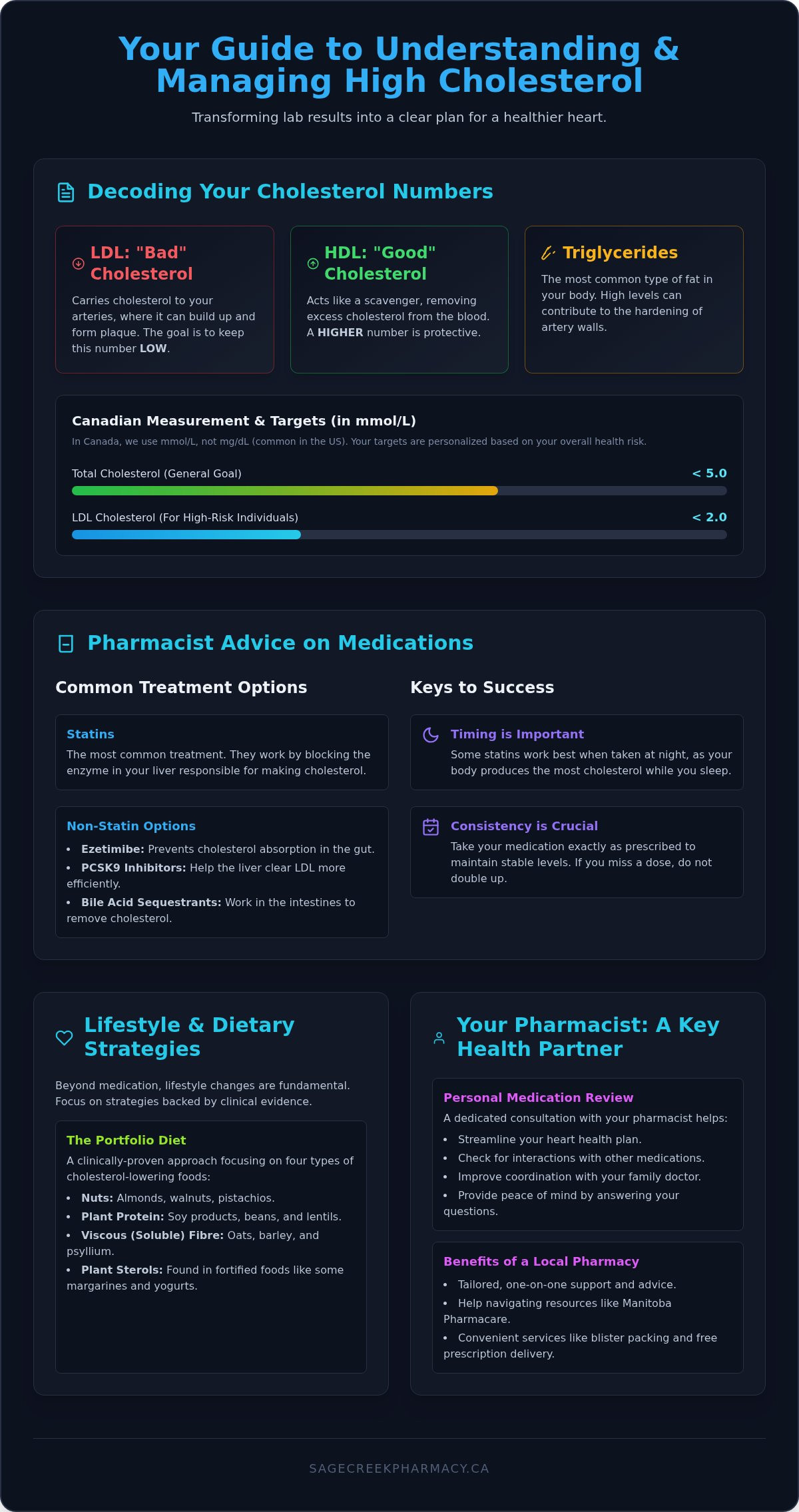
Think of cholesterol as a necessary building block, not just a problem on a piece of paper. It is a vital lipid, a fat-like substance your body uses to produce hormones, vitamin D, and the membranes that surround your cells. While it’s essential for life, having too much of certain types in your blood can lead to health challenges. In the context of Canadian health standards, dyslipidemia is defined as having unhealthy levels of one or more kinds of lipid in your blood, which can lead to narrowed or blocked arteries. When we provide pharmacist advice for high cholesterol, we start by looking at your entire lipid panel, which includes triglycerides. Triglycerides are the most common type of fat in the body; they store excess energy from your diet and can contribute to the hardening of artery walls if levels stay too high.
LDL vs. HDL: What Your Lab Results Actually Mean
Your lab report likely lists several different types of lipoproteins. These are the “packages” that carry cholesterol through your bloodstream. Low-density lipoprotein (LDL) is often called “bad” cholesterol because it carries cholesterol to your arteries. If you have too much LDL, it can build up and form plaques. This is why LDL is the primary target for most cholesterol-lowering therapies we discuss during a consultation. On the other hand, high-density lipoprotein (HDL) is known as “good” cholesterol. It acts like a scavenger, picking up excess cholesterol from your blood and carrying it back to the liver to be broken down and removed from your body. A healthy balance means keeping your LDL low and your HDL at a protective level.
The Canadian Standard: Measuring in mmol/L
If you’ve been researching your numbers online, you might see values in the hundreds, like 200 or 240. Those are likely American units (mg/dL). Here in Winnipeg, we use millimoles per litre (mmol/L). It’s a different scale, and it’s vital to use the correct context when reading your results. For a generally healthy adult with no other risk factors, a total cholesterol level below 5.0 mmol/L is typically the goal. However, targets aren’t one-size-fits-all. Your healthcare partners might set a much lower LDL target, such as below 2.0 mmol/L, if you have other conditions like diabetes or high blood pressure. We use these personalized targets to provide the most accurate pharmacist advice for high cholesterol, ensuring your plan fits your specific risk profile rather than just an average range.
Pharmacist Advice on Cholesterol Medications and Statins
Starting a new medication can feel like a big step. We’re here to help you understand how these tools work within your body. Statins are the most common treatment because they effectively block the enzyme in your liver responsible for making cholesterol. By slowing this production, your liver starts pulling more “bad” LDL out of your blood. If statins aren’t the right fit for you, our team provides pharmacist advice for high cholesterol regarding non-statin options. These include Ezetimibe, which prevents cholesterol absorption in the gut, or newer PCSK9 inhibitors that help your liver clear LDL more efficiently. We also help patients navigate bile acid sequestrants, ensuring every option is considered for your specific heart health needs.
Adherence is the secret to success. Taking your pills exactly as prescribed keeps your blood levels stable and your heart protected. Many of our neighbors in Winnipeg find that using blister pack medication simplifies their routine, especially when managing multiple prescriptions. If you have questions about your coverage, we can help you understand how Manitoba Pharmacare supports your treatment plan. We want to ensure you feel confident and supported as you manage your heart health, so don’t hesitate to reach out to our pharmacists with any questions.
When and How to Take Your Medications
Timing matters for certain cholesterol drugs. Some statins have a short half-life, meaning they work best when taken at night because your body produces the most cholesterol while you sleep. Others are more flexible and can be taken at any time. If you miss a dose, don’t double up; simply take your next dose at the regular time. We can help you set up a consistent schedule that fits your daily life in Sage Creek and provides the best pharmacist advice for high cholesterol for your routine.
Navigating Side Effects and Drug Interactions
We often hear concerns about “statin fear,” particularly regarding muscle aches. While mild soreness can happen, serious complications are very rare. It’s important to distinguish between general fatigue and persistent, localized muscle pain. Another key factor is the “Grapefruit Rule.” Certain citrus fruits can interfere with the enzymes that break down statins, potentially leading to higher levels of the drug in your system. We monitor your health history and lab results closely to ensure your liver and kidneys are functioning perfectly while on these medications. Our team is always available to discuss your symptoms and help you find a medication that feels right for your body.
Lifestyle and Supplement Guidance: What Really Works?
Medication works best when it’s part of a broader, holistic plan. Our pharmacist advice for high cholesterol often focuses on the “Portfolio Diet.” This isn’t a restrictive fad but a collection of heart-healthy foods that have been shown to lower LDL levels. The approach involves choosing foods rich in soluble fiber, like oats and beans, as well as soy protein and plant sterols. These ingredients work together to physically block cholesterol absorption in your gut. We also look at daily habits like smoking and alcohol consumption. Quitting smoking is one of the most effective ways to raise your “good” HDL levels, while limiting alcohol helps keep your triglycerides from spiking. These changes don’t just improve your lab results; they strengthen your entire cardiovascular system.
Heart-Healthy Habits for the Winnipeg Climate
Staying active in Winnipeg during a deep freeze requires a bit of creativity. We often recommend moving your exercise routine indoors when the temperature drops. Walking the halls of local shopping centers or visiting community fitness centers keeps your heart healthy without the risk of frostbite. You can also find heart-healthy options at local farmers’ markets during our growing season or by choosing fiber-rich Canadian grains like barley year-round. Reducing stress is another key factor in your heart health journey. High stress levels can lead to poor sleep and dietary choices that indirectly impact your lipid profile, so we encourage finding small, daily ways to unwind and recharge.
The Truth About Over-the-Counter Supplements
Many people turn to over-the-counter options, but it’s vital to know what you’re actually putting in your body. Omega-3 supplements are widely available, but they aren’t all created equal. Some store brands lack the purity or concentration found in the clinical-grade versions we might discuss during a consultation. We’re particularly careful with Red Yeast Rice. Since it’s an unregulated supplement, it can contain unpredictable amounts of active ingredients that might clash with your prescribed statins. If you’re experiencing muscle discomfort, you might have heard about Coenzyme Q10 (CoQ10). While it’s a popular suggestion for statin-related aches, we’ll help you look at the evidence to see if it’s a worthwhile addition to your specific routine. Always remember that “natural” doesn’t automatically mean “safe,” especially when mixed with other medications. We’re here to help you vet these products so you can make informed, safe choices for your heart.
Optimizing Your Heart Health with a Medication Review
Managing multiple prescriptions shouldn’t feel like a burden. A Personal Health Consultation allows us to sit down together and look at the big picture of your heart health. This service is a game-changer because it moves beyond the transaction of dispensing pills to providing real pharmacist advice for high cholesterol tailored to your specific life. We act as a bridge between your doctor’s office and your home. Our team coordinates directly with your Winnipeg family physician to ensure every medication you take is necessary, safe, and effective. By identifying “pill burden,” we can often find ways to simplify your daily routine. This might involve synchronizing your refills or adjusting the timing of doses to better fit your busy schedule. We also ensure your treatment plan aligns perfectly with current Manitoba health guidelines, giving you total confidence in the care you receive.
What to Expect During Your Consultation
The process is designed to be straightforward and stress-free. We start by reviewing your full medical history and your most recent lab results from Shared Health. We’ll talk openly about your lifestyle goals, your diet, and any concerns you have about potential side effects from your medications. From there, we create a personalized “Heart Health Action Plan.” This document serves as your personal roadmap, helping you track your progress and stay organized between visits. It’s about making you the expert on your own health with our team standing right beside you as your dedicated wellness partners. We want you to leave feeling empowered rather than overwhelmed by your diagnosis.
Questions to Ask Your Pharmacist About Cholesterol
We always encourage you to bring a list of questions to our meeting. Many patients ask how long it takes to see a change in their numbers. Usually, we look for trends over a period of three to six months to see how your body is responding to changes. You might also wonder about your budget. We can check if there are effective, lower-cost generic versions of your medication covered by Manitoba Pharmacare to help manage your family’s expenses. Another common concern is the interaction between prescriptions and daily vitamins. Getting pharmacist advice for high cholesterol means knowing if certain supplements interfere with how your body absorbs your cholesterol pill. We’ll help you time everything perfectly for the best results. If you’re ready to simplify your heart health routine, schedule a medication review with our Winnipeg team today.
Personalized Support at Sage Creek Pharmacy in Winnipeg
Choosing a local pharmacy means you’re more than just a barcode or a transaction number. At Sage Creek Pharmacy, we pride ourselves on our independent agility. This allows us to be more attentive and flexible than large corporate chains. We believe that managing your heart health should be a collaborative effort. When you receive pharmacist advice for high cholesterol from our team, it comes from professionals who truly know your health history and your family. Our commitment to prescription medication safety goes beyond just filling bottles; we take the time to educate you on why each pill matters and how it fits into your life. To make daily routines even easier, our free medication delivery in Winnipeg ensures you never have to worry about missing a dose because of a busy schedule or a typical Manitoba winter storm. We are currently accepting new patients and would love to welcome you to our community.
Stress-Free Prescription Management
We know your time is valuable, especially when you’re balancing work and family. Our online refill system allows you to request what you need with just a few clicks from your phone or computer. If you’re currently using a different pharmacy, don’t let the thought of a move stress you out. We handle all prescription transfers for you by contacting your previous provider directly. This ensures the transition is seamless and your records are up to date. We also offer automatic reminders to help you stay on top of your heart medication. This proactive approach reduces the stress of last-minute refills and keeps your treatment plan moving forward without interruption.
Your Partners in Long-Term Wellness
Our support for your heart doesn’t stop at managing lipid levels. We provide holistic care for related conditions like high blood pressure and diabetes, ensuring all aspects of your cardiovascular health are in sync. There’s immense value in having a pharmacist who remembers your name and understands how your different medications interact over time. We’re here to offer steady, reliable pharmacist advice for high cholesterol as your health needs evolve. Getting started is simple. You can reach out to our team today to book a consultation and see how a personalized, independent approach can change the way you view your wellness. We’re ready to be your local health partners and help you achieve the heart-healthy outcomes you deserve.
Take Charge of Your Heart Health Today
Managing your cholesterol doesn’t have to be a source of confusion or stress. By understanding your mmol/L results and finding the right balance between medication and lifestyle, you’re taking control of your cardiovascular future. Professional pharmacist advice for high cholesterol provides the clarity you need to navigate side effects and supplement choices safely. At Sage Creek Pharmacy, we’re proud to be your independent, community-focused partners in this journey. We’re currently accepting new patients and offer free city-wide delivery in Winnipeg to make your care as seamless as possible.
Whether you need a detailed medication review or just a friendly face to explain your latest lab report, our team is here for you. We believe that personalized, neighborly care makes all the difference in achieving long-term wellness. Book a Personal Health Consultation at Sage Creek Pharmacy Today and start your journey toward a stronger, healthier heart. Your wellness is our priority, and we’re honored to support you every step of the way. Let’s work together to keep your heart healthy for years to come.
Frequently Asked Questions
Can I stop taking my cholesterol medication if my numbers improve?
You should not stop taking your cholesterol medication without first consulting your healthcare team, even if your lab results show significant improvement. These improved numbers are often a direct result of the medication working effectively to manage your levels. If you stop abruptly, your cholesterol will likely return to its previous high state, increasing your cardiovascular risk. We can discuss your progress during a medication review to see if a dosage adjustment is appropriate for your current health status.
Is it better to take my statin in the morning or at night?
The best time to take your statin depends on the specific type prescribed by your physician. Short-acting statins are typically most effective when taken at bedtime because the liver produces the majority of its cholesterol while you sleep. Long-acting statins offer more flexibility and can be taken at any time of day, provided you remain consistent. When providing pharmacist advice for high cholesterol, we always check your specific medication’s profile to ensure you’re getting the maximum benefit from every dose.
What are the most common side effects of cholesterol-lowering drugs?
Most patients tolerate cholesterol-lowering drugs well, but some may experience mild side effects like muscle aches, digestive upset, or headaches. These symptoms are often temporary and may resolve as your body adjusts to the new treatment. It’s important to differentiate between general soreness and persistent, localized muscle pain, which should be reported to our team immediately. We monitor your lab results and history to ensure your treatment plan remains safe and effective for your long-term heart health.
How much does Manitoba Pharmacare cover for cholesterol medications?
Manitoba Pharmacare coverage for cholesterol medications is based on your total family income and a yearly deductible. Once you’ve reached your specific deductible amount, the province covers 100 percent of the cost for eligible prescription drugs. We can help you navigate the application process and explain how your specific deductible works for the current benefit year. Our goal is to ensure you understand your coverage and can access the medications you need without unnecessary financial stress.
Can I lower my cholesterol through diet alone without medication?
It is possible for some individuals to manage mild cholesterol elevations through diet and exercise alone, but many patients require a combination of lifestyle changes and medication. Factors like genetics and overall cardiovascular risk play a major role in determining if medication is necessary. We focus on evidence-based strategies like the Portfolio Diet to support your heart health. If your levels remain high despite these efforts, our team provides pharmacist advice for high cholesterol to help you choose the safest medical options.
What happens if I forget to take my cholesterol pill for a day?
If you miss a dose of your cholesterol medication, take it as soon as you remember unless it’s nearly time for your next scheduled pill. You should never take two doses at once to make up for a missed one. Consistency is vital for keeping your blood levels stable and protecting your arteries. If you find yourself frequently forgetting, we can set up automatic reminders or discuss using blister packs to help you stay on track with your daily heart health routine.
Are there any natural supplements that actually work for high cholesterol?
Several natural supplements have clinical evidence for supporting heart health, including soluble fiber, plant sterols, and high-quality Omega-3 fatty acids. While these can be helpful additions, they should never replace prescribed treatments without professional guidance. We caution against unregulated supplements like Red Yeast Rice, which can have inconsistent amounts of active ingredients. We’re here to help you vet these products during a consultation to ensure they don’t interact poorly with your other medications or health conditions.
How often should I have my cholesterol levels checked by my doctor?
Most stable patients in Winnipeg should have their cholesterol levels checked at least once a year during a routine physical. If you’ve recently started a new medication or made significant lifestyle changes, your doctor may request blood work every three to six months to monitor your progress. These regular checks allow us to see how well your treatment plan is working and make any necessary adjustments. Keeping a consistent testing schedule is one of the best ways to track your long-term cardiovascular wellness.