
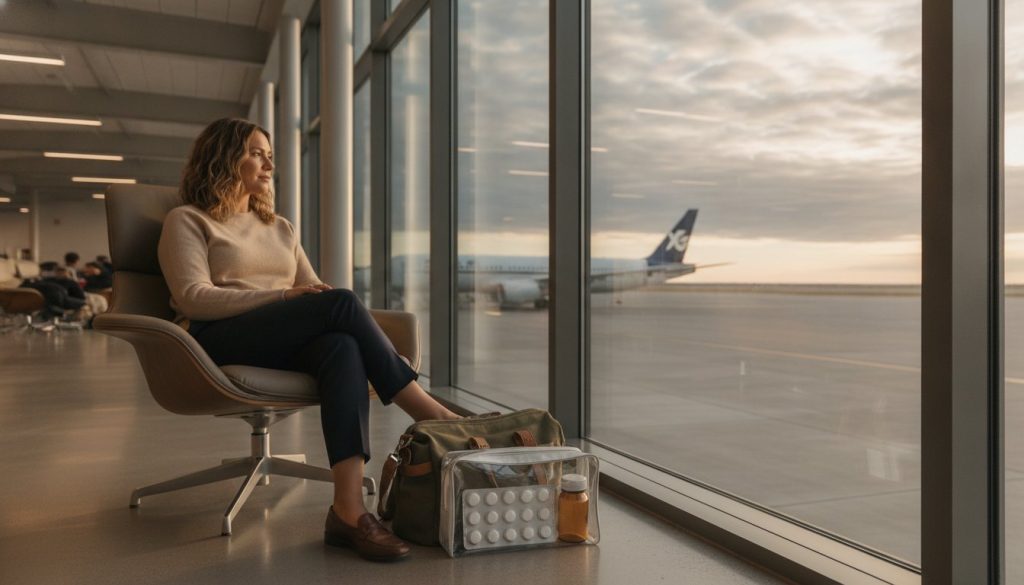
Imagine standing in the security line at the airport while a screening officer reaches for your essential health supplies. For many of our neighbors, the biggest travel stress isn’t the flight itself; it’s the anxiety of having vital prescriptions confiscated. Understanding how to pack medication for air travel Canada is the best way to replace that fear with a sense of control and calm before you even reach the gate.
We believe your health journey should be seamless, whether you’re at home or at 30,000 feet. You shouldn’t have to worry about liquid limits or lost luggage when you’re supposed to be enjoying a well-earned break. We’ve designed this guide to help you master the latest CATSA regulations and clinical packing strategies, ensuring your treatments arrive safely and ready for use.
We’ll walk you through the September 2026 rules for liquid exemptions, the total limits for powdered supplements, and the documentation you need for a smooth experience. You’ll also learn why customized blister packaging can be a superior alternative to bulky bottles for keeping your health on track while you’re away. Let’s get you ready for a safe and stress-free adventure.
Key Takeaways
- Always keep your essential medications in your carry-on bag to protect them from luggage loss and the extreme temperature fluctuations found in the cargo hold.
- Mastering how to pack medication for air travel Canada includes knowing that essential liquid, gel, and aerosol medications are exempt from the standard 100ml limit at security.
- Declare all health products to CATSA screening officers and consider using original pharmacy labels or professional blister packs to ensure a smooth, stress-free inspection.
- Use gel packs rather than ice to maintain the “cold chain” for temperature-sensitive medications like insulin, as these are the preferred cooling method for Canadian air travel.
- Simplify your travel prep by coordinating with our team for custom blister packaging and ensuring all your refills are ready well before your departure date.
Understanding CATSA Regulations for Medication in Canada
We’ve all felt that slight pinch of nerves while placing our bags on the security conveyor belt. Learning how to pack medication for air travel Canada starts with a clear understanding of the rules set by the Canadian Air Transport Security Authority (CATSA). This federal agency oversees the screening process at airports across the country. Their primary goal is safety, and they are well-trained to handle medical items with care. You are permitted to carry both prescription and over-the-counter medications in your luggage, but we always recommend keeping them in your carry-on bag so they are within reach. If an officer needs to inspect your health products, having them organized in a clear pouch helps the process move quickly. Efficiency at the checkpoint means less stress for you and a faster path to your departure gate. We believe your health should never be a barrier to your travel plans.
Prescription vs. Non-Prescription Rules
While most pills are straightforward, some categories require extra attention. If you take controlled substances, such as specific pain medications or treatments for ADHD, we suggest carrying a copy of your prescription. It isn’t a legal requirement for domestic travel, but it provides peace of mind if questions arise. Non-prescription items like vitamins and herbal supplements are also allowed. However, be aware that inorganic powders, including certain mineral supplements like calcium or magnesium, are subject to a 350 ml volume limit in carry-on bags. If your supplements are in powder form, keep them in their original tubs to help officers identify them without delay. Treating your supplements with the same organization as your prescriptions ensures a smoother transition through security.
The “Original Container” Recommendation
Health Canada and most airlines strongly suggest keeping your medicine in the original pharmacy packaging. This is about more than just security; it’s about your personal safety. If you experience a health issue during your flight, medical staff need to see the official label to provide the right care. A proper label includes your name, the drug name, the dosage, and our pharmacy’s contact details. We understand that large plastic bottles can be bulky and take up valuable space in your bag. To solve this, we offer professional blister packaging. These packs are slim, organized by date and time, and include all the necessary legal labeling. It’s a great way to stay compliant with regulations while keeping your carry-on light and organized. Our team is here to help you choose the best packaging style for your specific itinerary.
Carry-On vs. Checked Bags: Where to Pack Your Meds
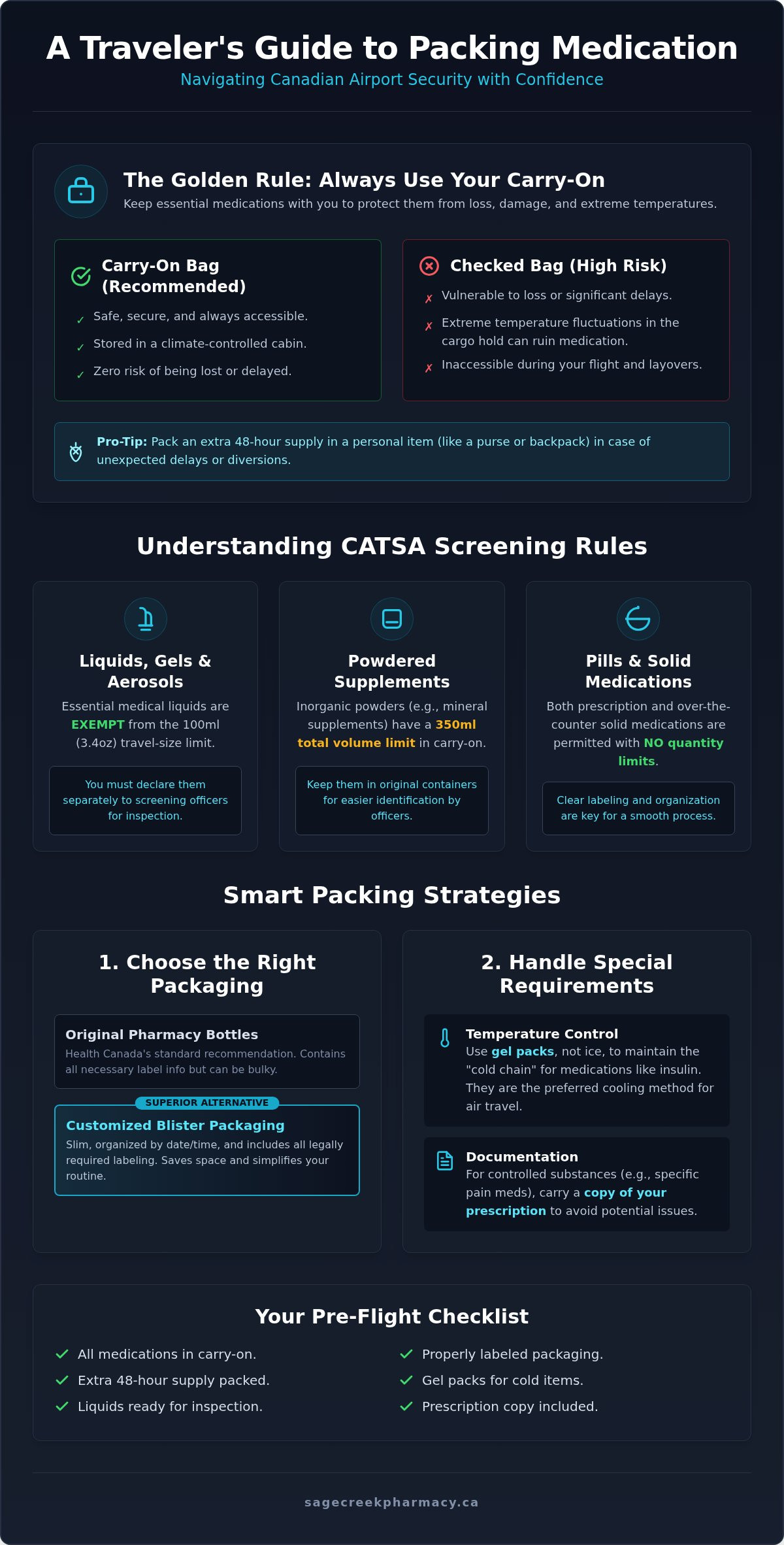
If there’s one piece of advice we share with every neighbor planning a trip, it’s this: your essential medications must stay with you in the cabin. When you’re planning how to pack medication for air travel Canada, the carry-on bag is your only guaranteed way to keep your treatments safe and accessible. Relying on checked luggage introduces unnecessary variables that can put your health at risk. Between the potential for lost suitcases and the unpredictable environment of the aircraft’s underbelly, the stakes are simply too high for life-sustaining drugs. We always recommend packing an extra 48-hour supply in your personal item, such as a purse or small backpack. This ensures that even if your overhead bin bag is gate-checked or your flight is diverted, you won’t be left without your necessary doses.
The Risks of the Cargo Hold
While the passenger cabin is climate-controlled for your comfort, the cargo hold can experience extreme temperature fluctuations. For many liquid medications or biologics, being exposed to freezing temperatures can ruin their effectiveness. Pressure changes in the hold can also cause vials to leak or seals to fail. Beyond environmental factors, checked baggage is occasionally delayed or sent to the wrong destination. Imagine being stuck in a different city while your insulin is sitting on a tarmac elsewhere. Keeping these items with you is the best way to prevent such a crisis, a point echoed in CATSA’s official guidelines. If you’re unsure about the temperature sensitivity of your prescriptions, we invite you to book a personal health consultation so we can review your specific needs together.
Organizing Your Travel Kit
A well-organized bag makes the security line much less daunting. We suggest using clear, resealable bags to house your medications. This allows screening officers to see the contents without having to handle individual bottles. It’s also helpful to separate the meds you’ll need during the flight from your backup supply. Keep your primary doses in an easy-to-reach pocket. Having a strategy for organization helps you feel prepared and calm as you move through the terminal.
- Place a printed list of all your medications at the very top of your kit.
- Include our pharmacy’s contact information on that list for emergency refills.
- Keep your backup supply in a secondary clear bag to stay organized and tidy.
This level of preparation shows security staff that you’re an informed traveler. It often leads to a much faster and more respectful screening experience. By keeping your health essentials close at hand, you’re protecting the integrity of your treatment and the success of your trip.
Handling Liquids, Gels, and Medical Supplies
Navigating the liquid restrictions at security can be confusing, but the rules are much more flexible for your health essentials. Most travelers are familiar with the 100ml limit for toiletries. However, when you’re mastering how to pack medication for air travel Canada, it’s important to know that essential liquid, gel, and aerosol medications are exempt from these volume restrictions. This means your cough syrups, saline solutions, and even distilled water for CPAP machines are permitted in larger quantities. You don’t need to squeeze these items into a one-litre plastic bag. Instead, we suggest keeping them in a separate, accessible pouch within your carry-on bag. When you reach the screening officer, simply declare these items for inspection. Being proactive helps the team at the checkpoint do their job while keeping your travel day moving forward.
The 100ml Exemption for Medical Necessity
A “medical necessity” includes any prescription or over-the-counter product required for your health during the journey. While CATSA does not strictly require a doctor’s note for these liquids, having one can significantly ease the process if you’re carrying large volumes. According to the Government of Canada’s travel advice, it’s also wise to check the regulations of your destination country if you’re flying internationally. To speed things up, place your liquid medications in their own bin at the security scanner. This allows the officer to see them clearly without digging through your other belongings. It’s a small step that demonstrates you’re prepared and respectful of the security process.
Flying with Needles and Syringes
If your treatment involves injections, you can rest easy knowing that syringes and needles are permitted in the cabin. The main requirement is that they must be accompanied by the medication they are intended for, such as insulin or biologics. We always recommend that these items have a professional pharmacy label that matches the name on your boarding pass. This clarity removes any ambiguity for the screening staff. Safety is our priority, so please remember these tips for your flight:
- Keep the needle guards or caps firmly in place when the supplies are not in use.
- Carry a small, travel-sized sharps container for safe disposal of used needles.
- If you need to administer an injection during the flight, it’s a kind gesture to inform a flight attendant so they are aware of your needs.
Our team understands that managing these supplies can feel overwhelming. Whether you’re traveling across the province or across the ocean, we’re here to help you organize your kit so you can focus on the journey ahead. If you have questions about specific medical devices or supplies, don’t hesitate to reach out for a quick chat before you head to the airport.
Special Considerations: Temperature and Documentation
Many of our neighbors rely on treatments like insulin or biologics that must stay within a specific temperature range to remain effective. When you’re looking at how to pack medication for air travel Canada, maintaining this “cold chain” is a top priority. CATSA allows gel packs and ice packs in your carry-on specifically for this purpose, even if they’re larger than the standard liquid limits. However, we always recommend using gel packs over loose ice. Gel packs stay frozen longer and don’t create a watery mess as they thaw. This keeps your supplies dry and prevents any accidental freezing of the medication itself, which can happen if a vial touches direct ice for too long. If the medication freezes, it may lose its potency, so a little extra care in packing goes a long way.
Managing Temperature-Sensitive Meds
Choosing the right insulated travel case is your first line of defense. Look for a case with high-density foam that fits comfortably in your carry-on bag. On long-haul flights, don’t rely on the plane’s refrigerator. Flight attendants often aren’t allowed to store personal medications due to strict liability and safety protocols. Instead, use a case that can hold a steady temperature for the duration of your trip. We suggest placing a small digital thermometer inside the case. This lets you monitor the environment without opening the seal and letting the cold air escape. If you have a long layover, check the status of your gel packs and consider using a lounge or airport pharmacy if you need a temporary cooling solution.
Essential Travel Documentation
While CATSA is generally accommodating, carrying the right paperwork removes any guesswork at the security gate. We recommend keeping a printed copy of your prescription medication record right with your travel documents. This list should include the generic and brand names, dosages, and our pharmacy’s contact details. If you’re crossing international borders, this documentation is even more critical for customs officials who may have different rules than we do in Canada. A quick note from your doctor or a “Travel Letter” from our team can also help explain why you’re carrying certain supplies, like needles or large volumes of liquid.
Crossing time zones can also throw off your dosing schedule, especially for medications that require strict timing. We can help you create a personalized schedule to safely transition your doses to your destination’s local time. If you have questions about adjusting your routine for an upcoming trip, please reach out to our team for a consultation. We want to ensure your health remains stable from the moment you leave Winnipeg until you return home safely.
How Sage Creek Pharmacy Simplifies Your Travel Prep
We know that planning a trip involves a long list of tasks, but your health preparation doesn’t have to be a source of stress. At Sage Creek Pharmacy, we’ve helped many of our Winnipeg neighbors navigate the complexities of how to pack medication for air travel Canada by providing tailored solutions that meet both clinical standards and airline regulations. We don’t just fill prescriptions; we act as your travel safety partner to ensure you have everything you need for a healthy journey. Our goal is to strip away the confusion of security lines and replace it with the confidence that your health is protected.
Blister Packs vs. Pill Organizers
While many travelers use plastic pill organizers, these DIY containers can sometimes cause delays at security because they lack official pharmacy labeling. We offer custom blister packaging as a superior alternative. These packs are professionally sealed and include all the necessary legal information, such as your name and the medication details, directly on the packaging. Not only are they more security-friendly for CATSA officers, but they also significantly reduce the bulk in your carry-on by replacing multiple plastic bottles with slim, organized strips. This ensures you take the right dose at the right time, even when your routine is disrupted by travel.
Your Winnipeg Travel Health Partner
Preparing for a flight starts long before you reach the airport. We suggest coordinating your online prescription refills in Winnipeg at least two weeks before your departure. This gives us time to prepare your blister packs and ensure you have an ample supply for your entire trip, plus a few extra days for unexpected delays. We also provide same-day appointments for travel vaccines in Winnipeg, helping you stay protected against destination-specific health risks without the long wait times. Our team is ready to help you manage chronic conditions across different time zones, providing the professional documentation you need for international customs.
We invite you to stop by our Sage Creek location for a final check of your travel health kit. Whether you need an emergency refill or a detailed medication review, we are here to support our local community with expert, empathetic care. We’re committed to being a stable, dependable fixture of your neighborhood, ensuring you feel recognized as a person rather than just a transaction. Let’s work together to make your next flight your most comfortable and organized one yet.
Start Your Journey with Confidence
Mastering how to pack medication for air travel Canada turns a potentially stressful airport experience into a smooth transition to your destination. We’ve seen how keeping essentials in your carry-on, declaring medical liquids properly, and maintaining the cold chain for sensitive treatments can make all the difference. These simple steps ensure your medications arrive safely and remain effective throughout your entire journey.
Our team of experienced clinical pharmacists is dedicated to making your travel prep as seamless as possible. Whether you need expert advice on time zone adjustments or our specialized blister packs to save space, we’re here to help. We even offer free city-wide delivery in Winnipeg to take one more task off your to-do list. Before you head to the airport, Visit Sage Creek Pharmacy for a Travel Consultation to ensure you have everything you need. We’re honored to be your local wellness partner and wish you a safe, healthy, and wonderfully stress-free adventure.
Frequently Asked Questions
Do I have to keep my medication in original bottles when flying in Canada?
No, CATSA doesn’t strictly require original bottles; however, we strongly recommend them for your safety. Having the official pharmacy label helps screening officers identify your treatment quickly and prevents delays. If bottles are too bulky, our professional blister packaging is a perfect alternative. It includes all your prescription details in a slim, security-friendly format. This keeps you organized and ensures that any medical professional can assist you accurately if a health concern arises during your trip.
Can I bring liquid medication over 100ml on a plane in Canada?
Yes, you can. Essential liquid, gel, and aerosol medications are exempt from the standard 100ml limit for carry-on luggage. When you’re learning how to pack medication for air travel Canada, remember to keep these items separate from your toiletries. You don’t need to put them in a one-litre clear bag. Just declare them to the screening officer at the start of the process so they can be inspected and cleared without any unnecessary delay.
Do I need to declare my vitamins or supplements to CATSA?
We recommend declaring all health products, including vitamins and supplements, to the screening officer. While most are permitted, inorganic powders or granular materials like certain mineral supplements are subject to a 350ml volume limit in carry-on bags. Keeping them in their original packaging with clear labels helps the security team verify the contents quickly. This proactive approach prevents unnecessary bag searches and keeps your travel schedule on track while you move through the airport security line.
How should I pack my insulin for a long flight?
Always pack your insulin in your carry-on bag to avoid the freezing temperatures of the cargo hold. We suggest using an insulated travel case with gel packs to maintain the “cold chain” during long-haul flights. Avoid letting the insulin vials touch the gel packs directly, as this can lead to accidental freezing and ruin the medication. If you need guidance on managing your cooling supplies, our team in Winnipeg is happy to provide a personalized consultation.
Can I bring my own needles and syringes on the plane?
Yes, needles and syringes for medical use are permitted in the cabin. The key rule is that they must be accompanied by the medication they are intended for, such as insulin or other injectable treatments. We recommend keeping these items in a clear pouch with their original pharmacy labels visible. This clarity helps CATSA officers confirm their medical necessity. For safety, please ensure all needle guards are firmly in place before you pack them in your bag.
What should I do if I lose my medication while traveling?
If you lose your medication, contact us at Sage Creek Pharmacy immediately. We can help coordinate with a local pharmacy at your destination to arrange an emergency refill. This is why we suggest keeping a printed list of your prescriptions and our contact information in your travel documents. Having this record makes it much easier for a local pharmacist or physician in another city to verify your needs and get your treatment back on track quickly.
Is a pharmacists signature enough for travel documentation?
For most domestic travel within Canada, the official pharmacy label on your medication is sufficient. However, if you’re traveling internationally or carrying controlled substances, a formal “Travel Letter” signed by your physician or one of our clinical pharmacists is a wise addition. This document provides an extra layer of authority that can be very helpful when dealing with international customs. We can help you prepare this documentation during a personal health consultation before your departure date.
Does airport X-ray damage prescription medication?
No, the X-ray machines used at airport security checkpoints don’t damage your prescription medications. The level of radiation used for screening carry-on luggage is very low and won’t affect the chemical stability or potency of your pills, liquids, or biologics. If you have concerns about highly sensitive medical devices, such as certain types of insulin pumps, you can always ask the screening officer for a manual hand search of those specific items instead of using the X-ray.