
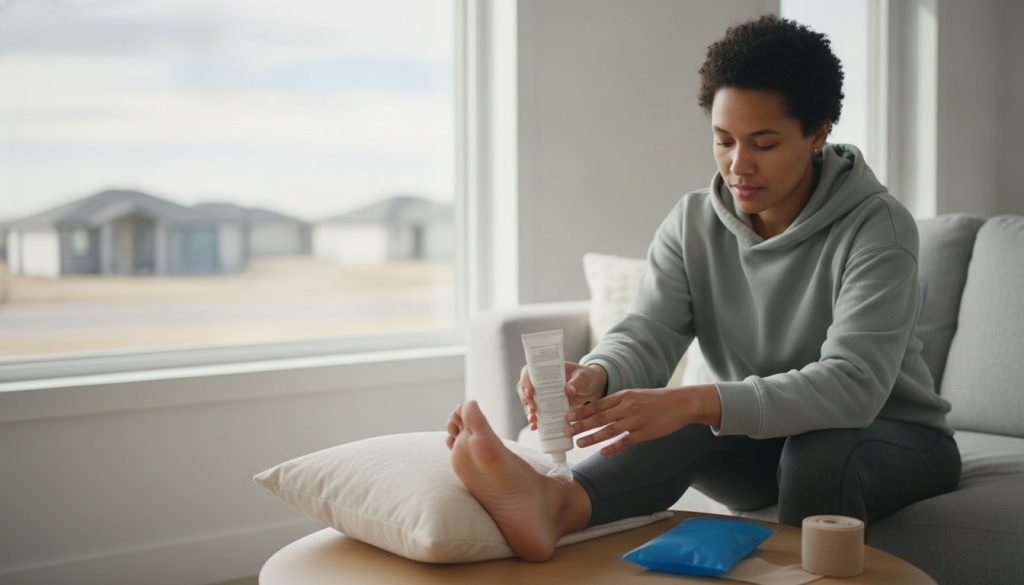
You were just finishing a morning walk through Sage Creek or a game at the local community centre when a sudden twist of the ankle brought your day to a standstill. Now, you’re likely sitting on your sofa with a bag of frozen peas, wondering if that swelling is normal or if you need to spend your entire afternoon in a clinic waiting room. It’s a frustrating position to be in, especially when the pain starts interfering with your work and family life.
We understand that the conflicting information about ice versus heat can be confusing. You want to recover quickly without the fear of taking the wrong dosage of pain relief. This guide provides the clear pharmacist advice for minor sprains Winnipeg residents need to manage their recovery at home with confidence. We’ll walk you through the best over-the-counter treatments for 2026, explain the shift from RICE to MEAT protocols, and help you recognize the signs that an injury requires a doctor’s visit. Our goal is to ensure you have a tailored plan to reduce swelling and get back to your routine as safely as possible.
Key Takeaways
- Understand why the first 48 hours of your recovery are critical for managing inflammation and how to tell if you need a clinic visit.
- Access expert pharmacist advice for minor sprains Winnipeg athletes can trust when deciding between targeted topical gels and oral pain relievers.
- Learn the difference between the RICE and MEAT protocols to choose the most effective way to use ice, heat, and compression.
- Discover how to avoid common dosage mistakes and why returning to activity too early can sometimes lead to more significant injuries.
- Find out how personalized consultations and free delivery services help you get the right supplies without leaving your home.
Understanding Minor Sports Injuries and Initial Self-Care
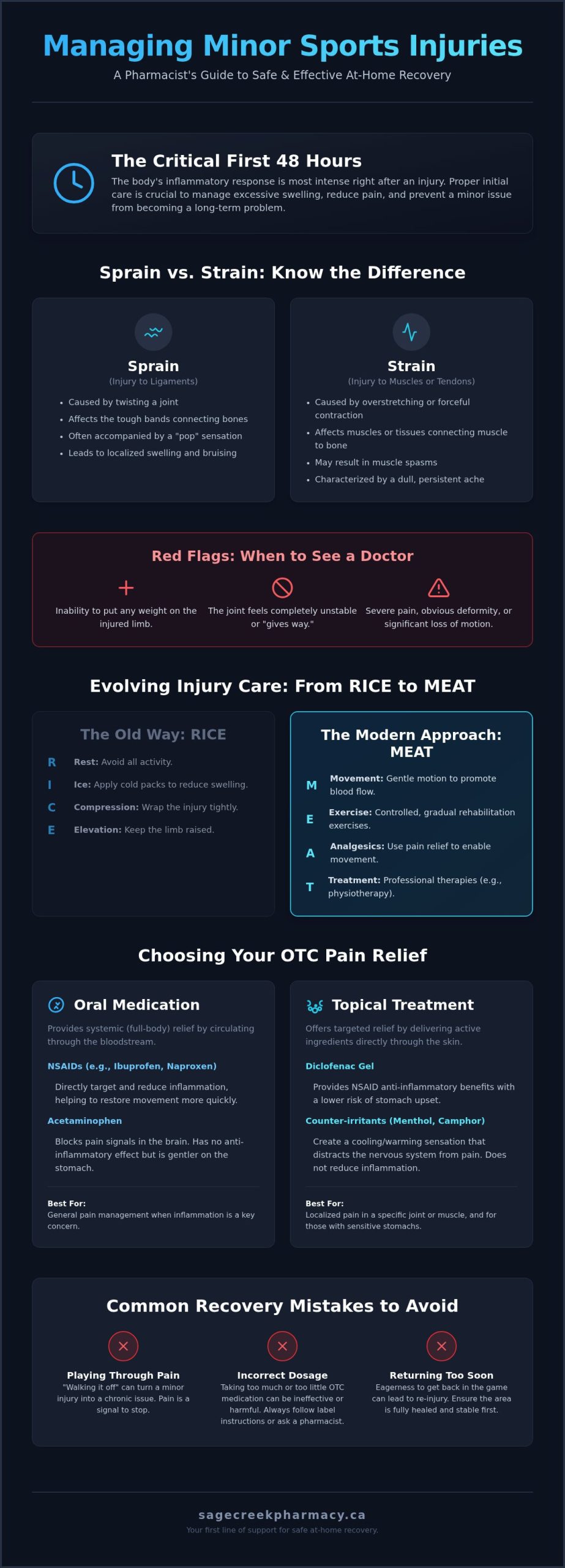
When you’re active in our Winnipeg neighbourhood, whether it’s a weekend hockey game or a walk through the park, common sports injuries are often part of the experience. Most of these incidents fall into three categories: sprains, which involve stretched or torn ligaments; strains, which affect muscles or tendons; and contusions, which are simply deep bruises. The first 48 hours after an injury are the most critical because this is when the body’s inflammatory response is most intense. While inflammation is a natural part of healing, excessive swelling can actually slow down your recovery and increase pain.
We often see neighbours who aren’t sure if they should “walk it off” or head to a clinic. Choosing to play through the pain can often turn a minor tweak into a long term issue. This is where getting professional pharmacist advice for minor sprains Winnipeg residents can rely on becomes invaluable. We can help you determine if your injury is something you can manage safely at home or if it requires a visit to a medical professional. Our team is here to act as your first line of support, ensuring you don’t take unnecessary risks with your mobility.
Sprains vs. Strains: What is the Difference?
Sprains happen when a joint is twisted, stretching or tearing the tough bands of tissue that connect bones. You’ll usually feel a “pop” followed by localized swelling and bruising. Strains, on the other hand, occur when a muscle or tendon is overstretched or contracted too forcefully. You might notice muscle spasms or a dull, persistent ache. Both require immediate stabilization to prevent further damage. If you cannot put weight on the limb or if the joint feels completely unstable, it’s a sign that the injury may be more than a minor sprain.
The Role of Over-the-Counter Care in Recovery
OTC medications aren’t just for masking pain; they play a strategic role in your healing process. By managing the chemical signals that cause swelling, these treatments help you maintain the mobility needed for a successful recovery. We view OTC care as a vital bridge. It keeps you comfortable while your body does the heavy lifting of tissue repair. It also works alongside professional therapy by making it easier for you to perform gentle rehabilitation exercises. When seeking pharmacist advice for minor sprains Winnipeg patients often find that the right combination of topical and oral options makes a world of difference. If you’re struggling to get to the shop because of your injury, we offer Free Medication Delivery in Winnipeg to ensure you get what you need without further straining yourself.
Topical vs. Oral: Choosing the Right OTC Pain Relief
Deciding between a tablet and a gel is one of the most common dilemmas we help our neighbours solve. The right choice depends on the location of your injury and your overall health history. Oral medications provide systemic relief, which means the medication circulates through your entire body to reach the site of the sprain. Topical treatments offer targeted relief, delivering active ingredients directly through the skin to the affected joint or muscle.
Getting the right pharmacist advice for minor sprains Winnipeg residents can trust ensures you select a format that aligns with your recovery goals. While pills are convenient, topicals are often preferred for those who want to minimize the amount of medication entering their bloodstream. Each has a specific role in managing the pain and swelling that follow a sports injury. Our team is always ready to help you weigh these options based on your personal comfort and safety needs.
Oral Pain Relievers: NSAIDs and Acetaminophen
NSAIDs, such as ibuprofen or naproxen, are highly effective for sports injuries because they directly target the chemical signals that cause inflammation. By reducing this swelling, they help restore movement more quickly. Acetaminophen is another reliable option, though it works differently. It’s excellent for blocking pain signals in the brain but does not have anti-inflammatory properties. This makes it a safer choice for individuals with sensitive stomachs. We always emphasize the safe use of OTC pain relievers, as even common medications can interact with other prescriptions or affect cardiovascular health. If you’re managing multiple health conditions, a quick check-in with us can prevent unwanted side effects.
Topical Analgesics: Creams, Gels, and Patches
Topical diclofenac is a powerful tool for joint pain. It provides the anti-inflammatory benefits of an NSAID without the same risk of stomach upset. Other options include counter-irritants containing menthol or camphor. These don’t reduce inflammation, but they create a cooling or warming sensation that effectively distracts your nervous system from the pain. These are particularly useful for minor tweaks where you want immediate, soothing relief. Many of our patients appreciate these options because they can be applied precisely where the ache is strongest. If you’re currently immobile due to an injury, remember that we offer free delivery to help you get these supplies. You can also book a Personal Health Consultation to discuss which topical or oral combination is safest for your specific situation.
Beyond Meds: Compression, Bracing, and the Ice vs. Heat Debate
Managing a sports injury involves more than just selecting the right medication from the shelf. While oral and topical treatments address the chemical side of pain, physical tools like braces and compression wraps provide the mechanical support your tissues need to knit back together. Using a compression sleeve or an elastic bandage helps limit the space available for fluid to accumulate, which directly reduces the “throbbing” sensation many athletes feel. For those building a local first aid kit, we recommend stocking up on flexible cohesive bandages, reusable gel packs, and a variety of joint-specific braces. For a deeper look at general safety, you can explore our guide on Over-the-Counter Medications in Winnipeg.
We see many neighbours who feel stuck at home, unsure if they should be moving or resting. This is where personalized pharmacist advice for minor sprains Winnipeg residents can access helps clear the confusion. We don’t just hand over a box; we help you understand how to use these physical supports alongside your medication to reach your recovery goals faster. If you’re finding it difficult to walk to our location, don’t forget that we offer free city-wide delivery for all your first aid supplies.
RICE vs. MEAT: Modern Recovery Protocols
For decades, the RICE protocol (Rest, Ice, Compression, Elevation) was the gold standard. It’s still incredibly effective during the acute phase of an injury when the goal is to stop swelling in its tracks. However, modern recovery often includes the MEAT protocol (Movement, Exercise, Analgesics, Treatment). This approach suggests that after the initial 48-hour window, gentle movement and targeted exercises can actually speed up healing by encouraging blood flow to the damaged ligaments. We usually advise patients to start with RICE for the first two days and then slowly transition to MEAT once the sharp pain begins to dull. This balance ensures you don’t stay sedentary for too long, which can lead to joint stiffness.
Ice or Heat: The 48-Hour Rule
The question of ice vs. heat for injuries is one of the most frequent topics in our consultations. The general rule is simple: ice is for “new” and heat is for “old.” During the first 48 hours, ice is your best friend. It constricts blood vessels and numbs the area, preventing the inflammatory response from getting out of hand. Applying heat too early can actually backfire by increasing blood flow to the site, which worsens swelling and pressure. Once you’re past that initial two-day mark, heat becomes a valuable tool to relax tight muscles and encourage circulation to the healing tissue. If you aren’t sure which stage your injury is in, our team can provide the pharmacist advice for minor sprains Winnipeg families need to make the right call.
Safe Usage: Avoiding Common OTC Mistakes for Athletes
Athletes in our community are often eager to get back to their training schedules, but rushing the process can lead to significant setbacks. One of the most common mistakes we see is the “more is better” approach to dosing. Increasing your intake beyond the recommended limit doesn’t speed up tissue repair. Instead, it significantly raises the risk of gastrointestinal irritation or kidney strain. Another concern is the masking effect. When pain relievers work well, you might feel ready to jump back into a game before the ligaments are actually stable. This false sense of security can lead to a more severe tear because the body’s natural warning system is silenced.
It’s also vital to consider how your daily vitamins or performance supplements might interact with OTC drugs. Some herbal products or high-dose supplements can affect blood clotting or blood pressure when combined with NSAIDs. This complexity is why we advocate for Personal Health Consultations. We can review your entire wellness regimen to ensure your recovery plan is both safe and effective. If you’re unsure about a specific combination, you can contact our Sage Creek team for a professional review of your current medications.
When to See a Doctor or Physiotherapist
While we provide the pharmacist advice for minor sprains Winnipeg residents need for home care, some injuries require higher-level intervention. You should seek immediate medical attention if you notice a visible deformity, experience numbness in the limb, or find it completely impossible to bear weight. If your pain and swelling haven’t shown any improvement after 72 hours of consistent home treatment, it’s time for a professional review. We often act as a bridge, helping you manage symptoms until you can see a specialist or visit a clinic like the Misericordia Minor Injury and Illness Clinic.
Understanding Dosage and Timing
Consistency is key when using anti-inflammatories. Taking a dose only when the pain becomes unbearable is less effective than maintaining a steady level of medication in your system during the first few days. We recommend tracking your intake on your phone or a notepad to avoid accidental double-dosing. This is surprisingly common when you’re distracted by a busy schedule or taking multiple products that contain similar active ingredients. Our pharmacists can help tailor a schedule based on your body weight and activity level, ensuring you get the maximum benefit with the lowest possible risk.
Personalized Recovery Support at Sage Creek Pharmacy
Choosing an independent Winnipeg pharmacy for your injury needs offers a distinct advantage: a person-to-person connection that prioritizes your specific health journey. At Sage Creek Pharmacy, we don’t treat you like a transaction number. Instead, we act as your dedicated wellness partner, helping you navigate the often-confusing world of over-the-counter treatments. Our team is trained to help you select the precise braces, wraps, and medications that will support your body’s natural healing process. By providing the pharmacist advice for minor sprains Winnipeg neighbours can trust, we help you avoid the guesswork and focus on a safe return to your favourite activities.
We pride ourselves on being more agile and attentive than large corporate entities. This independence allows us to offer bespoke service, whether you need help fitting a compression sleeve or a detailed explanation of how a topical gel interacts with your existing prescriptions. We believe that professional healthcare should feel accessible and warm, stripping away the clinical coldness often found in larger institutions. When you visit us, you’re consulting with a stable, dependable fixture of the neighbourhood who understands your local lifestyle and health history.
Free City-Wide Delivery in Winnipeg
Our commitment to your health extends beyond our physical doors. We recognize that for many people dealing with a sports injury, the simple act of driving to the pharmacy is a significant hurdle. To solve this, we offer free city-wide delivery across Winnipeg. You can easily order your compression sleeves, pain relievers, and first aid essentials from the comfort of your couch. If you’re already managing ongoing health needs, your Online Prescription Refills can be seamlessly bundled with your over-the-counter recovery items. This ensures you have everything you need for a safe recovery without having to put weight on a painful joint. It’s a straightforward, step-by-step process designed to keep your stress levels low while you heal.
Expert Advice from Your Local Pharmacist
We are proud to be a stable fixture in the Sage Creek area, serving as a trusted advisor for families and athletes alike. Our pharmacists are always available for walk-in questions, providing the professional health guidance you need without the wait times of a clinic. We understand the specific health history of our regular patients, allowing us to provide the pharmacist advice for minor sprains Winnipeg residents rely on for safe, effective outcomes. Whether you’re looking for a specific medication or just need a second opinion on your recovery progress, our team is ready to help. We invite you to visit us for a one-on-one discussion about your wellness goals. Let’s prioritize your health together with the dedicated support of the Sage Creek Pharmacy team.
Returning to Your Active Lifestyle with Confidence
Recovering from a twist or pull requires a balance of rest and the right clinical support. You now have a clearer understanding of how to manage inflammation, when to choose ice over heat, and how to select the most effective over-the-counter tools. Seeking pharmacist advice for minor sprains Winnipeg families rely on is the best way to ensure you’re using these medications safely while avoiding the common mistake of returning to play too soon. By prioritizing the first 48 hours of care, you set the stage for a much smoother recovery.
As an independent and locally owned pharmacy, we take pride in being a dependable fixture of the neighbourhood. Our experienced pharmacists are available for personal health consultations to ensure your recovery plan is both safe and effective. If your mobility is limited, our free city-wide delivery in Winnipeg ensures you have the support you need without the strain of a commute. We’re here to act as your dedicated wellness partner every step of the way, helping you navigate your health with clarity and empathy.
Visit Sage Creek Pharmacy for Personalized Injury Advice and let us help you get back on your feet safely. Your health and your journey back to your favourite activities are our top priorities.
Frequently Asked Questions
What is the best over the counter anti-inflammatory for a sports injury?
NSAIDs like ibuprofen or naproxen are generally the most effective over-the-counter options for sports injuries because they target the inflammatory enzymes directly. These medications help reduce the swelling that causes pressure and pain in the joint. However, the best choice depends on your medical history, such as any history of stomach issues or heart conditions. We always recommend a quick consultation to ensure your choice doesn’t interact with other medications you might be taking.
How long should I use OTC pain relief for a sprained ankle?
Most people find that using over-the-counter pain relief for the first two to five days is sufficient to manage the acute inflammatory phase. If you find yourself needing medication for more than a week, it’s a signal that the injury may be more severe than a minor tweak. Consistent dosing during those first few days is more effective than waiting for the pain to peak. If symptoms persist beyond 72 hours, we suggest seeing a professional.
Can I use topical creams and oral pain killers at the same time?
You can often use both, but you must be careful not to double up on the same type of medication. For instance, using an oral NSAID like ibuprofen while applying a topical diclofenac gel can lead to an overdose of anti-inflammatories in your system. It’s safer to pair an oral acetaminophen with a topical anti-inflammatory gel. Getting professional pharmacist advice for minor sprains Winnipeg residents can trust ensures you combine these treatments without risking unwanted side effects.
Is ibuprofen or acetaminophen better for muscle strains?
Ibuprofen is usually the preferred choice for muscle strains because it addresses both the pain and the underlying inflammation. Acetaminophen is an excellent pain blocker but won’t reduce the swelling that often accompanies a strained muscle. If your strain is purely an ache without visible swelling, acetaminophen might be sufficient. For most sports related injuries, the anti-inflammatory properties of ibuprofen or naproxen provide a more comprehensive approach to your recovery and mobility.
How do I know if my sports injury is serious enough for the ER?
You should head to the emergency room or a minor injury clinic if you notice a visible deformity, experience numbness, or find it impossible to put any weight on the limb. These signs often point to a fracture or a complete ligament tear rather than a simple sprain. If the pain is manageable and the swelling is localized, home care is usually safe. We can help you assess these red flags during a personal health consultation.
Does Manitoba Pharmacare cover over the counter sports injury treatments?
Manitoba Pharmacare is designed to help with the cost of eligible prescription drugs once you’ve met your annual deductible. It doesn’t typically cover over-the-counter sports injury treatments like ibuprofen, braces, or topical gels. While these items are out-of-pocket expenses, they are essential for preventing a minor injury from becoming a long term issue. We can help you find the most cost-effective options that fit your specific recovery needs and budget while you heal.
Can Sage Creek Pharmacy deliver sports braces and first aid supplies?
Yes, we provide free city-wide delivery in Winnipeg for all our over-the-counter products, including sports braces, elastic wraps, and first aid supplies. We understand that a knee or ankle injury can make driving nearly impossible. This service ensures you can access the pharmacist advice for minor sprains Winnipeg families need without leaving your home. You can simply call us or use our online tools to have your recovery essentials brought directly to your doorstep.