

What if the difference between an unforgettable holiday and an agonizing week stuck in a foreign clinic comes down to thirty minutes of planning before you leave home? Knowing how to prepare for a travel vaccine appointment transforms a standard injection into customized, reliable healthcare tailored directly to your journey.
Between deciphering destination entry mandates, tracking down past provincial immunization records, and worrying about multi-dose timelines, pre-trip health preparation can quickly feel overwhelming. We know how stressful it is to wonder whether you’ve missed a critical booster window or overlooked a regional health alert. Fortunately, gathering the right details beforehand eliminates the guesswork and avoids repeat visits. Discover exactly what documents, medical histories, and itinerary notes to bring so your consultation is seamless and reassuring. Below, our practical checklist walks you through everything you need to know to secure tailored protection before you fly.
Key Takeaways
- Mastering how to prepare for a travel vaccine appointment ensures your consultation focuses on bespoke preventive care rather than administrative scrambling.
- Bringing a granular, day-by-day itinerary allows your pharmacist to evaluate regional risks, accommodation types, and rural exposures accurately.
- Scheduling your initial visit six to eight weeks before flying provides enough runway to complete essential multi-dose immunization series comfortably.
- Following practical day-of steps, like eating a solid meal and dressing in accessible layers, prevents procedural lightheadedness and injection site distress.
- Safeguarding both paper and digital proof of your immunizations protects you against sudden border delays and unexpected entry policy changes.
Why Preparing for Your Travel Vaccine Appointment Matters
Stepping into a pharmacy for pre-travel protection is fundamentally different from receiving an annual flu shot. A proper travel consultation is a comprehensive clinical risk evaluation, not a quick, transactional injection. Understanding how to prepare for a travel vaccine appointment ensures your pharmacist can assess destination pathogens against your precise medical history, turning standard health data into customized protection.
Arriving organized prevents common setbacks like delayed dosing intervals, accidental duplicate shots, or missed border clearances. The discipline of travel medicine involves mapping your body’s immune memory against regional health threats abroad. When you supply organized information upfront, we can calculate the exact days your body needs to mount an effective antibody response before your departure date.
Understanding the Travel Health Consultation Process
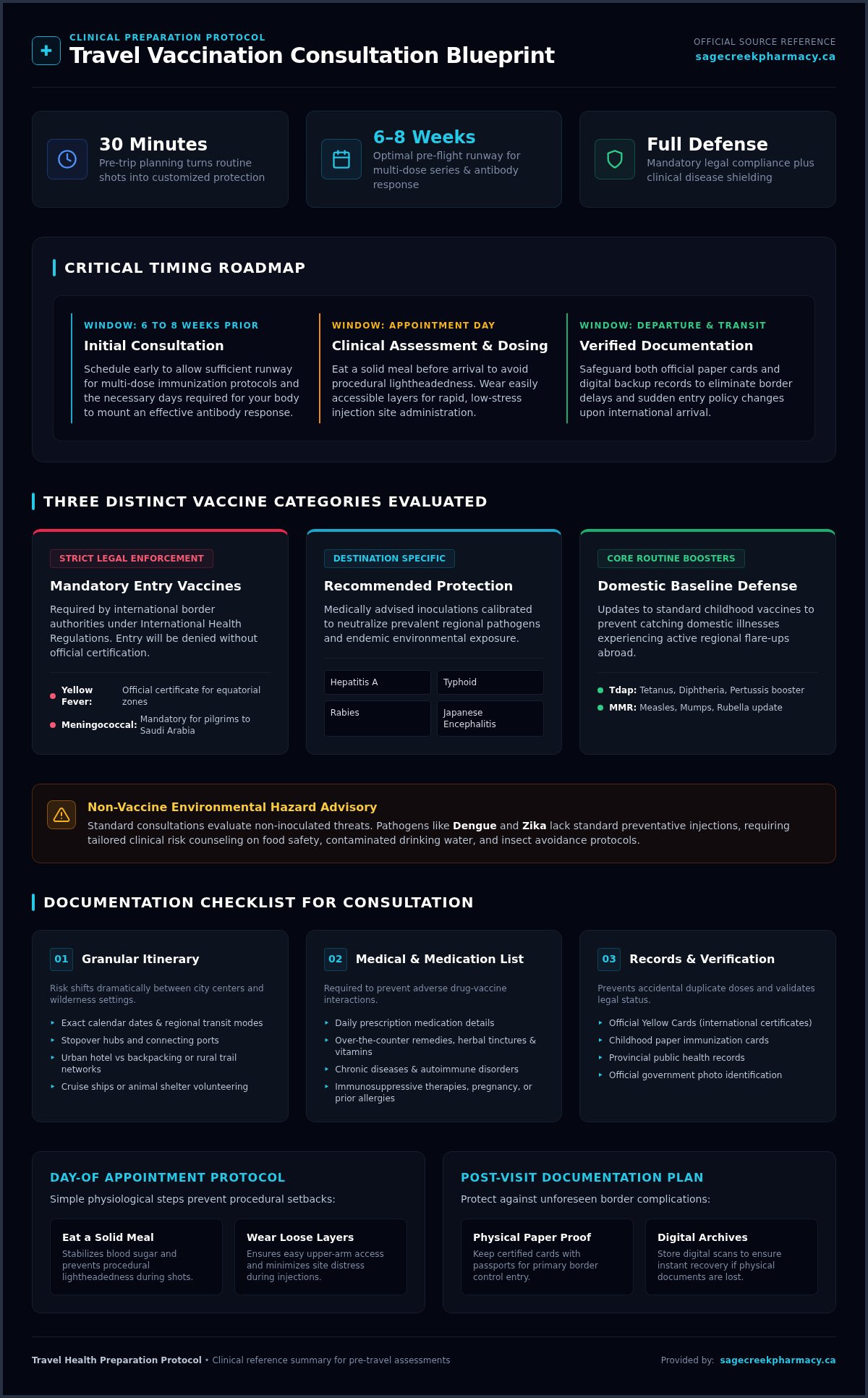
During a consultation, your pharmacist conducts an individualized clinical assessment. We cross-reference current epidemiological disease outbreaks with your planned activities, existing chronic conditions, and past immunizations. Beyond administering syringes, our clinical team evaluates broader non-vaccine environmental hazards, advising you on food safety, contaminated drinking water, and insect-borne illnesses like dengue or Zika that lack standard preventative shots.
Required Versus Recommended Travel Immunizations
Travelers often confuse legal entry mandates with medical safety recommendations, but distinguishing between the two is crucial for international transit:
- Mandatory Immunizations: These are strictly enforced by border authorities under International Health Regulations. For example, proof of Yellow Fever vaccination recorded on an official certificate is legally required to enter specific equatorial nations, while Saudi Arabia mandates Meningococcal vaccination for pilgrims.
- Destination-Specific Recommendations: These are medically advised immunizations that shield you against prevalent endemic threats. Common examples include Hepatitis A, Typhoid, Rabies, and Japanese Encephalitis.
- Routine Baseline Boosters: Global travel frequently exposes you to domestic illnesses experiencing regional flare-ups. Ensuring your routine childhood immunizations, such as Tdap (tetanus, diphtheria, pertussis) and MMR (measles, mumps, rubella), are fully updated is just as vital as exotic protection.
Learning how to prepare for a travel vaccine appointment removes uncertainty, ensuring you arrive organized, protected, and fully compliant with foreign entry laws long before boarding your flight.
What to Bring to Your Travel Health Consultation
Arriving with the right documentation transforms your clinical consultation from an educated guess into an exacting, personalized health shield. Knowing how to prepare for a travel vaccine appointment means compiling the practical puzzle pieces of your trip and medical history before you sit down with your pharmacist.
Your Complete Travel Itinerary and Activities Plan
Disease risk shifts dramatically between air-conditioned high-rises and rural trail networks. Bring an itinerary showing exact travel dates, stopover hubs, regional transit modes, and accommodation types. A traveler staying in an urban hotel faces completely different biological risks than someone backpacking, volunteering in animal shelters, or boarding a cruise ship where gastrointestinal pathogens transmit quickly.
Personal Health History and Current Medications List
Your pharmacist needs to evaluate how prophylactic travel interventions interact with your ongoing healthcare therapies. Bring a comprehensive list detailing every daily prescription medication, over-the-counter remedy, herbal tincture, and vitamin supplement you take. Disclose existing chronic conditions, autoimmune disorders, active immunosuppressive treatments, pregnancy plans, or past allergic reactions to prior inoculations.
Official Immunization Records and Health Documentation
Locate your paper yellow cards, childhood records, and provincial public health records. Having an accurate record prevents accidental over-vaccination while revealing gaps in your baseline coverage. Exploring vaccination services winnipeg helps you understand how community records connect with travel assessments. Remember to carry official government photo identification alongside your provincial health card.
Public health agencies advise initiating preventative healthcare at least a month before you travel so your immune system can mount solid defences. If you’re organizing your departure checklist, you can reach out to our team at Sage Creek Pharmacy to review your itinerary and align your travel immunizations seamlessly.
Ideal Timeline: When to Schedule Your Travel Vaccination Appointment
Timing your clinical visit correctly is just as important as choosing the right immunizations. When planning how to prepare for a travel vaccine appointment, building a realistic scheduling buffer ensures your body produces protective antibodies long before you encounter foreign pathogens.
The 6-to-8 Week Standard Window
Booking your initial consultation six to eight weeks before departure gives your immune system sufficient time to complete multi-dose series safely. Vaccines like Japanese Encephalitis, Rabies, or Hepatitis A and B often demand spaced intervals, requiring weeks or even months between initial doses and final boosters. Starting early also accounts for minor injection site fatigue and provides your pharmacy with adequate ordering lead time if you require specialized, less common formulations.
Your calendar strategy should follow four practical chronological steps:
- Step 1: Consultation Booking: Reserve your appointment at least six to eight weeks ahead to identify required dose series.
- Step 2: Interval Spacing: Schedule mandatory secondary or tertiary booster appointments across the recommended clinical timelines.
- Step 3: Immunity Maturation: Reserve a buffer of at least two full weeks following your final injection so circulating antibody titers reach protective levels.
- Step 4: Contingency Buffer: Leave a few days before your flight free of clinical appointments to allow mild localized inflammation to settle completely.
Navigating Last-Minute and Urgent Travel Departures
Urgent work trips and spontaneous getaways rarely follow ideal planning horizons. If your departure is only days away, seeking professional travel guidance is still drastically safer than departing without protection. Accelerated schedules exist for select vaccines, and partial immunization frequently delivers meaningful defensive value against severe illness.
Last-minute consultations also provide essential rapid prophylaxis that needles cannot solve alone. Your pharmacist can equip you with oral antimalarial tablets, prescribed treatment regimens for acute travellers’ diarrhea, and water purification strategies. Even when time is tight, understanding how to prepare for a travel vaccine appointment ensures every available day before your flight actively protects your health.
Practical Steps on Appointment Day: What to Expect and Do
Simple physical preparations on appointment day can completely change your clinic experience. Knowing how to prepare for a travel vaccine appointment involves steadying your body’s physiology so that your consultation is smooth, comfortable, and efficient.
Eat a nutritious snack or balanced meal roughly an hour before your arrival, and drink plenty of water. Stable blood sugar and good hydration keep your vascular system regulated, drastically lowering the odds of vasovagal episodes like lightheadedness or faintness. Choose loose-fitting clothing with easily rollable sleeves. Giving your clinician clear, rapid access to your upper deltoid muscle prevents awkward shifting and minimizes muscle tension during the injection.
Physical Preparation and Managing Vaccine Anxiety
Needle hesitation is remarkably common across travelers of all ages. Tell your pharmacist right away if you feel nervous or tend to get lightheaded around needles. We can recline your chair, walk you through steady breathing techniques, or simply pause between administrations to keep you comfortable. Plan to stay seated in our waiting area for 15 minutes following your shots so we can confirm you feel steady before you leave.
Key Questions to Ask Your Pharmacist During Your Visit
Use your consultation time to ask practical questions about staying healthy on the ground:
- Daily Prophylaxis: Confirm dosing routines for antimalarial tablets, including when to start before arriving and how long to continue after returning home.
- First-Aid Essentials: Review recommended over-the-counter medications, such as oral rehydration salts, antihistamines, and digestive remedies, to build a reliable travel kit.
- Climate and Storage: Ask about temperature thresholds for your daily medications, especially if you’re transiting through extreme tropical heat or high humidity without continuous refrigeration.
Taking a proactive approach turns a standard clinic visit into a complete safety check. To review your itinerary and build a comprehensive pre-trip medical plan, schedule your travel consultation with Sage Creek Pharmacy today.
Post-Appointment Follow-Through and Safe Travel Health Planning
Walking out of the dispensary with your injections completed is a major milestone, but post-consultation follow-through is what cements your protection. Learning how to prepare for a travel vaccine appointment includes managing your recovery, safeguarding official records, and locking in required boosters before packing your bags.
Monitoring Expected Side Effects Versus Serious Reactions
Mild immune activation is completely normal after vaccination. You might experience localized muscle tenderness, slight swelling, a low-grade fever, or minor fatigue for twenty-four to forty-eight hours. Applying a cold, damp cloth to the injection site and taking approved over-the-counter pain relievers helps ease this temporary stiffness. Severe allergic reactions like hives, facial swelling, or breathing difficulties are exceedingly rare, but if they occur, seek immediate emergency medical care.
To avoid border complications and secure lasting immunity, complete these follow-up steps:
- Digitize Immunization Certificates: Photograph your official Yellow Card and provincial immunization printouts. Store digital copies in secure cloud storage and offline on your phone alongside your passport scans.
- Protect Paper Originals: Keep official signed paper records in a waterproof travel wallet with your primary travel documents. Border authorities inspect original physical certificates, not casual photos on a smartphone screen.
- Pre-Book Secondary Boosters: Schedule any remaining doses before you leave the pharmacy counter. Completing full multi-dose series builds years of durable biological defense for future adventures.
Organizing Documentation and Booking Future Booster Shots
Working closely with a trusted pharmacy near me ensures your travel health records remain updated within your long-term medical profile. Independent pharmacists track your historical doses, adjust routines when destination alerts shift, and coordinate prescription supplies so you depart fully covered.
Mastering how to prepare for a travel vaccine appointment transforms pre-travel anxiety into genuine peace of mind. By keeping careful documentation and finishing your recommended schedules, you protect your wellbeing abroad and make your journey back home safe and worry-free.
Step Confidently into Your Next Global Adventure
Planning international travel should spark excitement, not clinical stress. Knowing how to prepare for a travel vaccine appointment gives you the upper hand, allowing you to walk into your visit with clear records, exact route details, and a realistic dosing calendar. By gathering your provincial documents early and preparing your questions in advance, you ensure every recommendation is tailored directly to your personal health and destination risks.
Our experienced clinical pharmacists provide comprehensive destination risk assessments and personalized care, pairing essential immunizations with targeted advice on environmental hazards, daily medication safety, and tailored first-aid support. Whether you have weeks before departure or need urgent protection, we offer convenient same-day travel health appointments right here in Winnipeg to fit your busy schedule.
Don’t leave your wellbeing to chance at the departure gate. Book your personalized travel vaccine consultation today with our Sage Creek team, and look forward to your journey with complete confidence.
Frequently Asked Questions
How far in advance should I book my travel vaccine appointment?
You should book your travel health consultation six to eight weeks before your departure date. This window allows adequate time to complete multi-dose immunization series, such as Hepatitis A and B or Rabies, while leaving at least two weeks for your body to develop peak antibody protection. If you are departing sooner, booking immediately is still beneficial, as even partial coverage provides vital protection.
What documents do I need to bring to a travel vaccination consultation?
Bring your complete travel itinerary, an updated list of your current medications and supplements, and your official immunization records. When planning how to prepare for a travel vaccine appointment, gathering paper yellow cards and provincial records gives your pharmacist the diagnostic data needed to avoid duplicate doses. You should also bring valid government photo identification and your Manitoba Health card.
Can my pharmacist prescribe travel medications like malaria pills and antibiotics?
Yes, pharmacists in Manitoba with appropriate clinical training can prescribe preventative travel medications. During your personal consultation, your pharmacist assesses regional risks to prescribe oral antimalarial tablets, oral cholera vaccines, or prophylactic antibiotics for severe travellers’ diarrhea. They will review dosing instructions, timing protocols, and potential interactions with your daily routine.
What should I do if I am travelling on short notice and need vaccines fast?
Seek a same-day appointment immediately rather than leaving for your trip completely unprotected. While certain multi-dose vaccines require weeks to complete, single-dose injections can still jumpstart your immunity. At Sage Creek Pharmacy in Winnipeg, we offer convenient same-day appointments for travel vaccines, ensuring last-minute travelers receive urgent clinical risk assessments, accelerated vaccine regimens, and vital prophylactic prescriptions before departure.
Are travel vaccines covered by provincial healthcare plans in Canada?
Provincial healthcare programs, including Manitoba Health, generally do not cover travel-specific immunizations or pre-travel consultation fees because they are classified as elective services. However, routine boosters recommended for travel, such as tetanus or MMR, are often publicly funded. Many private or employer-sponsored extended health insurance plans offer partial or full reimbursement for specific travel vaccines and prescription medications.
Is it safe to receive multiple travel vaccinations during a single appointment?
Yes, administering multiple routine and travel vaccines in one visit is clinically proven to be safe and effective. The human immune system handles millions of daily antigens and easily processes several vaccines simultaneously. Your pharmacist will administer the injections in different injection sites, typically alternating between both deltoid muscles, which prevents excessive local tenderness and ensures optimal antibody production.
What should I eat or wear on the day of my vaccination appointment?
Understanding how to prepare for a travel vaccine appointment physically makes the entire visit much easier. Eat a balanced meal or healthy snack one hour before your visit to steady your blood sugar, and drink a large glass of water to maintain blood pressure and prevent lightheadedness. Wear a loose, short-sleeved shirt so your clinician has simple, direct access to your upper arm muscles.