

The laxative that seems like the obvious choice may not be the best fit for your health or symptoms. If you’re comparing over the counter constipation relief options, it’s understandable to be unsure what to choose, how to use it, or whether it could interact with your medicines.
A safer starting point is to match an option to your circumstances rather than pick one at random. This guide compares common non-prescription options, including fibre products, osmotic laxatives, stimulants, and stool softeners. You’ll also find practical label checks, important precautions, and signs that self-care may not be enough.
Your health history and other medicines can affect which option is suitable. A pharmacist can help you review those details and understand product directions. In Winnipeg, Sage Creek Pharmacy offers over-the-counter medications and personal health consultations, making it a local place to ask questions when you’re not sure where to start.
Key Takeaways
- Over the counter constipation relief products work in different ways. Understand the differences between fibre, osmotic, stimulant, and stool-softening options.
- Consider your symptoms, health context, and other medicines instead of looking for a one-size-fits-all choice.
- Read the product label, check that it’s suitable for you, and follow its directions.
- Know when to ask a pharmacist or clinician, and when symptoms call for medical assessment.
- For personal guidance in Winnipeg, Sage Creek Pharmacy offers over-the-counter medications and personal health consultations.
Over-the-Counter Constipation Relief: What It Can Help With
Over-the-counter constipation relief may support people with occasional difficulty passing stool, but it doesn’t diagnose the cause or replace medical assessment when symptoms need attention. Constipation can mean stools are harder or less frequent than usual, or that passing them takes extra effort. The experience varies from person to person. For a broader overview of possible causes and approaches, see Constipation.
Non-prescription products may ease symptoms, but no single option suits everyone. The right approach depends on what you’re experiencing, your health history, and any medicines or supplements you take. Product labels provide directions and warnings; a pharmacist can help you decide whether self-care is appropriate.
When might someone consider non-prescription relief?
You might ask about a non-prescription option if you’re having occasional difficulty passing stool or notice a temporary change from your usual pattern. A recent change in routine, food, fluid intake, or activity may be useful context to share, but it doesn’t establish the cause. Relief products aren’t guaranteed to work for every person or situation.
If the problem persists, keeps returning, or gets worse, seek professional advice rather than repeatedly trying products on your own. A pharmacist can review what’s happening and help you decide whether further assessment is advisable.
What should you know before choosing a remedy?
Before choosing, note how long the change has lasted, whether it’s recurring, and what else has changed in your routine or health. Consider your age, whether you’re pregnant, any existing health conditions, and all prescription and non-prescription medicines or supplements you use.
These details matter because a product that seems suitable for one person may not be appropriate for another. A pharmacist can review your medicines and discuss whether an over-the-counter option may fit your circumstances. If you’re unsure about a label, have a health condition, or are choosing a product for a child, ask before using it. A conversation can clarify next steps without treating a general symptom guide as a personal diagnosis.
Common Over-the-Counter Constipation Relief Options and How They Differ
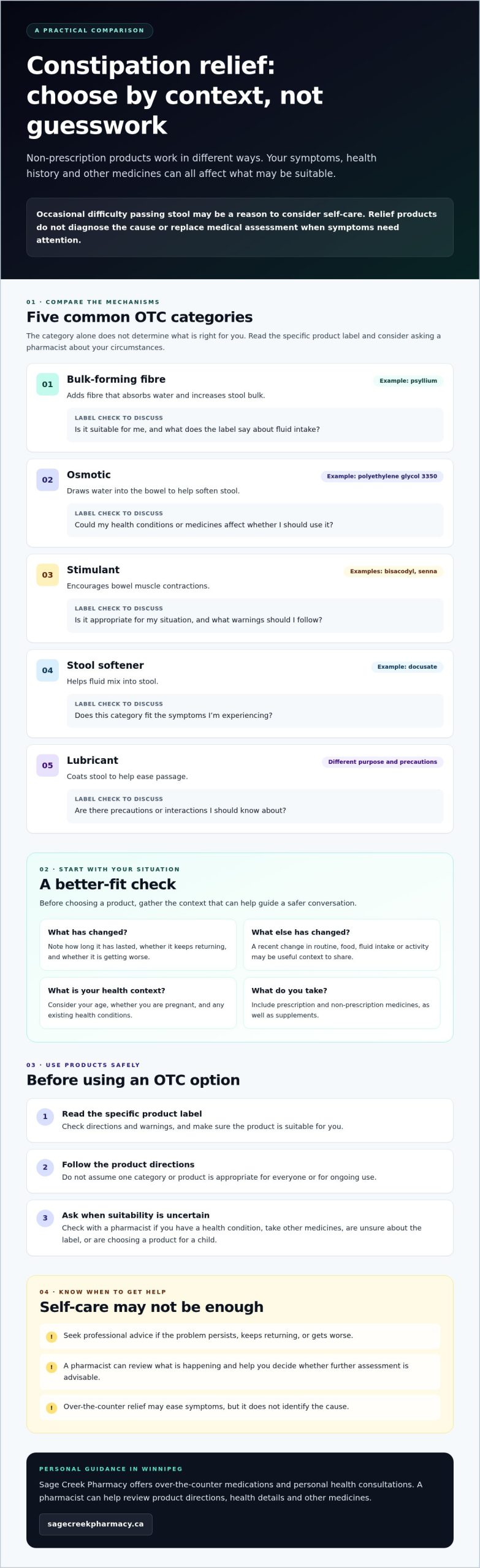
Non-prescription laxatives work in different ways, so the category alone doesn’t determine what’s right for you. Your symptoms, health conditions, and other medicines can all matter. The National Institute of Diabetes and Digestive and Kidney Diseases outlines several over-the-counter medicines for constipation. Use that overview as general information, then check the Canadian product label and ask a pharmacist about your circumstances.
| Category | General action | Question to ask a pharmacist |
|---|---|---|
| Bulk-forming fibre | Adds fibre and absorbs water, increasing stool bulk. | Is this suitable for me, and what does the label say about fluid intake? |
| Osmotic | Draws water into the bowel to help soften stool. | Could my health conditions or medicines affect whether I should use it? |
| Stimulant | Encourages bowel muscle contractions. | Is this appropriate for my situation, and what warnings should I follow? |
| Stool softener | Helps fluid mix into stool. | Does this category fit the symptoms I’m experiencing? |
| Lubricant | Coats stool to help ease passage. | Are there precautions or interactions I should know about? |
How do bulk-forming and osmotic laxatives differ?
Bulk-forming products, including psyllium, add fibre that absorbs water and increases stool bulk. Osmotic ingredients, such as polyethylene glycol 3350, draw water into the bowel instead. They work differently, and neither is automatically right for everyone. Read the specific label, including directions and warnings, and ask a pharmacist about suitability, especially if you take other medicines or have a health condition.
When are stimulant or stool-softening options discussed?
Stimulant ingredients such as bisacodyl and senna prompt bowel contractions. Stool softeners, such as docusate, have a different intended action: they help fluid mix into stool. Lubricant products also differ in purpose and precautions. No type is universally best, and you shouldn’t assume any option is appropriate for ongoing use. Follow the product label and seek personalized advice if symptoms persist or you’re unsure.
These categories can help you understand over the counter constipation relief, but they aren’t a treatment plan. Sage Creek Pharmacy offers over-the-counter medications and personal health consultations in Winnipeg. To discuss your health context and medicine use, learn more about personal health consultations.
Which Constipation Relief Option Fits Your Situation?
Choosing over the counter constipation relief is best treated as a conversation, not a self-diagnosis exercise. The option that may suit you depends on your symptoms, health history, other medicines, and the directions and warnings on the specific product. General information from the National Institute of Diabetes and Digestive and Kidney Diseases can explain common categories, but it can’t tell you which one is right for you.
Before choosing, consider:
- How long have you noticed the change, and is it improving, recurring, or worsening?
- Are you pregnant, choosing a product for a child, or helping an older adult?
- Do you have a chronic health condition or take several medicines or supplements?
- Have you checked the product’s active ingredients, warnings, and directions?
This checklist can help you prepare questions, but it isn’t a treatment algorithm. Pregnancy, childhood, older age, chronic conditions, or taking multiple medicines are good reasons to ask a pharmacist or clinician for advice before using a product. For general help evaluating non-prescription products, see our over-the-counter medication safety and selection guide.
What should you check on the product label?
Read the full label before use. Check the active ingredient, package directions, warnings, age restrictions, and storage instructions. Follow the directions for that specific product and don’t exceed them. If you’re considering more than one medicine, compare active ingredients to avoid unintentionally taking the same ingredient in multiple products. Check the label for information about when to stop use and seek advice. If anything is unclear, ask a pharmacist before proceeding.
When should a pharmacist review your medicines and health history?
If you take several medicines or have a chronic condition, ask a pharmacist whether a non-prescription option is suitable. Some medicines may affect bowel habits, so share your complete medication list, including non-prescription products and supplements. Don’t stop or change a prescribed medicine on your own. For broader questions about prescription medicines, you can also read this prescription medication guide.
Sage Creek Pharmacy offers medication reviews and personal health consultations in Winnipeg. A conversation with the pharmacy team can help you clarify what to ask and whether further professional assessment may be appropriate.
How to Use Constipation Relief Safely and When to Get Help
A careful approach to over the counter constipation relief can help you avoid preventable mistakes and recognize when self-care isn’t enough. Use this sequence as a safety check, not as a substitute for the product label or personalized medical advice:
- Read the label. Check the active ingredient, directions, warnings, age restrictions, and storage instructions.
- Check suitability. Consider your health conditions, pregnancy or breastfeeding status, and other medicines. Ask a pharmacist if you’re uncertain.
- Follow directions. Use the product only as directed. Don’t exceed the package directions or combine laxatives unless a healthcare professional advises you to.
- Reassess. Pay attention to how you’re feeling and whether symptoms persist, return, or worsen. Don’t keep repeating treatment beyond the label directions.
- Seek advice when needed. Contact a pharmacist or clinician for guidance, and get prompt medical assessment for severe or concerning symptoms.
What precautions help reduce avoidable risks?
Use one product as directed unless a healthcare professional recommends otherwise. Before using a laxative while pregnant or breastfeeding, for a child, or when managing a chronic illness, ask a pharmacist or clinician to check whether it’s appropriate. Get professional advice before combining laxatives or repeating treatment outside the product directions. If you’re unsure how the label applies to you, pause and ask rather than guessing.
When is constipation a reason to seek medical care?
Severe abdominal pain, vomiting, blood in your stool, or inability to pass gas are reasons to seek prompt medical assessment instead of trying to manage the situation with a laxative. Use appropriate local medical services based on the urgency of your symptoms. This guidance can’t identify the cause, so don’t delay assessment when symptoms are severe or concerning.
Arrange clinical advice for persistent, recurrent, or unexplained changes in bowel habits, even if symptoms don’t feel urgent. Product directions and health guidance can vary, so confirm current Canadian product advice and when to seek further care with a pharmacist or clinician. In Winnipeg, Sage Creek Pharmacy offers over-the-counter medications and personal health consultations. Ask Sage Creek Pharmacy about medication safety if you’re unsure whether an option fits your circumstances.
Get Personal Over-the-Counter Constipation Relief Guidance in Winnipeg
Choosing over the counter constipation relief is a personal decision. Consider your symptoms and health history, follow the directions on the specific product, and ask for advice if you’re uncertain. A product category or general guide can explain the options, but it can’t confirm what’s suitable for you or replace medical assessment when needed.
Sage Creek Pharmacy is a Winnipeg community pharmacy offering over-the-counter medications and personal health consultations. If you’re weighing an option, the pharmacy team can help you discuss your questions and the information on a product label. Availability of a particular constipation product isn’t guaranteed, so check with the pharmacy rather than assuming a specific item is stocked.
What information should you bring to a pharmacist?
A few details can make the conversation more useful. Be ready to describe how long the concern has lasted and any important recent changes. Bring your medicine containers or a current list so the pharmacist can see the names of your prescriptions, non-prescription medicines, and supplements. Mention allergies and relevant health conditions, too.
Also share whether you’re pregnant or breastfeeding, or asking about a product for a child. These details can affect which options may be appropriate and what guidance to follow. You don’t need to choose a remedy before asking. Start with your questions and health context.
How can a local pharmacist help you take the next step?
A pharmacist can talk through product-label directions, help identify questions about ingredients or potential interactions, and discuss whether further professional care may be appropriate. Their guidance is tailored to the information you share, but it doesn’t diagnose the cause of constipation or replace a clinician’s assessment. If symptoms are severe or concerning, seek medical care rather than relying on self-care advice.
For Winnipeg residents, Sage Creek Pharmacy provides a local place to ask questions about over-the-counter medications and personal health consultations. If you’re unsure where to begin, Contact Sage Creek Pharmacy to speak with the team before choosing an option.
Choose a Safer Next Step for Constipation Relief
The right over the counter constipation relief depends on more than the product category. Your symptoms, health history, and current medicines all matter. Use the label as your guide and ask a pharmacist if you’re uncertain about suitability or possible interactions.
Pay attention to how your symptoms change. Persistent, recurring, worsening, or severe symptoms may need professional assessment rather than continued self-care. Asking for guidance is a practical step, not a reason to feel embarrassed.
Sage Creek Pharmacy is a community pharmacy serving Winnipeg, offering over-the-counter medications and personal health consultations. If you have questions about choosing an option, contact the team to discuss what may be appropriate for your situation. Contact Sage Creek Pharmacy to discuss your questions with the team.
A thoughtful conversation can help you feel more confident about what to do next. Take it one step at a time, and seek care when you need it.
Frequently Asked Questions
What is the best over-the-counter constipation relief?
There isn’t one best option for everyone. The right choice depends on your symptoms, health history, and other medicines. Fibre-based products, osmotic laxatives, stimulants, and stool softeners work differently and have different precautions. Read the Canadian product label and ask a pharmacist if you’re unsure which category may suit you. Seek medical advice instead of self-treating if symptoms are severe, persistent, recurring, or worsening.
How quickly does over-the-counter constipation relief work?
How long relief takes varies by product and person, so there isn’t one reliable timeframe for every type. Check the specific package for its directions and information about expected effects. Don’t take extra or combine products because you haven’t noticed a change. If the label doesn’t answer your question, or symptoms persist or worsen, ask a pharmacist or clinician what to do next.
Can I take a laxative if I am pregnant or breastfeeding?
Ask a pharmacist or clinician before using a laxative while pregnant or breastfeeding. They can consider your circumstances, review the specific product’s ingredients and label, and help determine whether self-care is appropriate. Don’t assume that a fibre-based, “natural,” or familiar remedy is automatically suitable. If you’ve already taken a product and are concerned, contact a healthcare professional for advice tailored to you.
Can I use over-the-counter constipation relief with my other medicines?
Possibly, but check with a pharmacist before combining a laxative with prescription medicines, non-prescription products, or supplements. Some products have warnings about interactions or taking them alongside other medicines, so read the full label and share your medication list. Don’t stop or change a prescribed medicine on your own. A pharmacist can help review the ingredients and directions for your situation.
What should I do if over-the-counter constipation relief does not work?
Don’t exceed the label directions, repeat treatment beyond them, or add another laxative without professional advice. Contact a pharmacist or clinician to discuss what you’ve taken, your symptoms, and possible next steps. Seek prompt medical assessment for severe abdominal pain, vomiting, blood in your stool, or inability to pass gas. Persistent, recurring, or worsening symptoms also warrant professional advice rather than continued self-treatment.
Is it safe to use laxatives regularly?
Regular use shouldn’t be assumed safe or appropriate without professional guidance. Follow the product label, and ask a pharmacist or clinician before using laxatives repeatedly or beyond the directions. This is especially important if symptoms keep returning or you rely on a stimulant laxative, since overuse may carry risks. A healthcare professional can review your situation and advise whether further assessment is needed.
When should I ask a pharmacist about constipation relief in Winnipeg?
Ask a pharmacist if you’re unsure which product to choose, take other medicines, have a health condition, or are considering a laxative for a child, during pregnancy, or while breastfeeding. Seek urgent medical assessment for severe or concerning symptoms instead of relying on pharmacy advice alone. Sage Creek Pharmacy is a Winnipeg community pharmacy offering over-the-counter medications and personal health consultations. Check with the team about your questions and current service availability.