

How can you tell whether a senior still needs every medicine they take without risking the benefits of treatment that’s working? For families concerned about side effects, interactions, or prescriptions from different clinicians, reducing polypharmacy in seniors starts with a complete, shared picture of every medication.
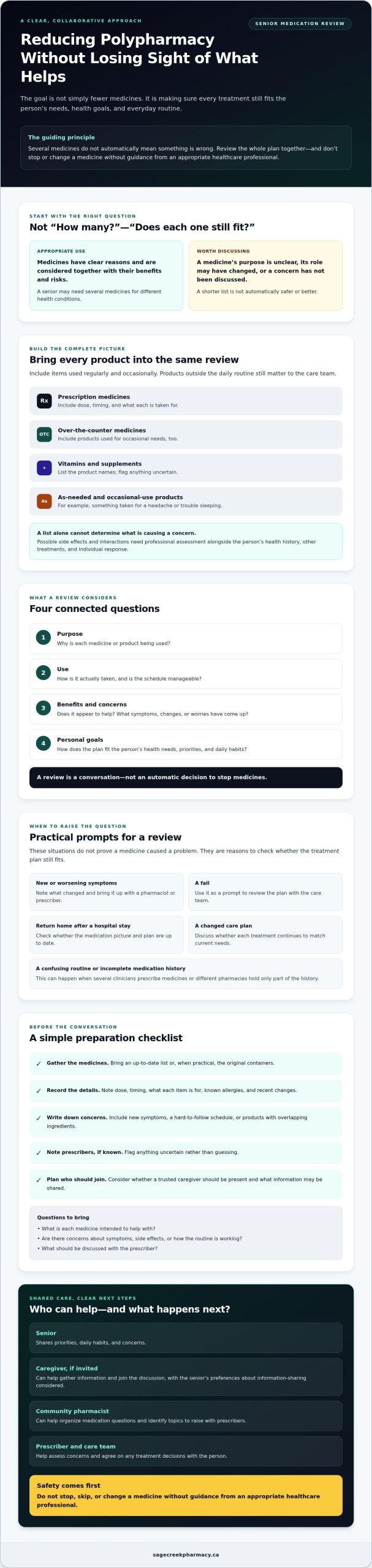
It’s understandable to worry that a medication review means stopping medicines. It doesn’t. A review gives the senior, caregiver, pharmacist, and prescriber a chance to discuss what each medicine is for, how it’s being taken, and which concerns need follow-up. Don’t stop or change a medicine without guidance from an appropriate healthcare professional.
This guide covers when a review may help, how to prepare a complete list of prescriptions, over-the-counter products, and supplements, and what questions to bring. You’ll also learn how to discuss possible changes with the care team and monitor them safely. A pharmacist can help organize concerns and identify topics to raise with prescribers, making the next conversation clearer and more focused.
Key Takeaways
- Taking several medicines doesn’t automatically mean treatment is inappropriate. The goal is to check that each medicine still fits the person’s needs and health goals.
- Include prescriptions, over-the-counter medicines, vitamins, supplements, and occasional-use products in the same review so the care team has a fuller picture.
- For reducing polypharmacy in seniors, start by noting concerns such as new symptoms, a confusing schedule, or products with overlapping ingredients. Ask a pharmacist or prescriber what to discuss.
- Prepare for a review by gathering medicines, writing down questions, and deciding whether a trusted caregiver should join and what information may be shared.
- A community pharmacist can help organize medication questions and identify topics to raise with prescribers. Any treatment changes should be agreed on with an appropriate healthcare professional.
What Does Reducing Polypharmacy in Seniors Really Mean?
Polypharmacy generally means using several medicines at the same time. The term doesn’t automatically mean something is wrong. A senior may need multiple medicines to manage different health conditions. The key question is whether each treatment remains appropriate, beneficial, and consistent with the person’s current needs.
Appropriate polypharmacy means medicines are used together for clear reasons, with their benefits and risks considered as part of the person’s overall care. Medication use may need closer review if a medicine’s purpose is unclear, it no longer fits the person’s needs, or concerns about its use have not been discussed. This overview of polypharmacy and appropriate use provides background, but a healthcare professional should help assess an individual medication plan.
Reducing polypharmacy in seniors isn’t about reaching a lower medication count. It’s about supporting safe, suitable treatment. A medication list can become complicated when several clinicians prescribe medicines, health needs or care plans change, or prescriptions are filled at different pharmacies. Over-the-counter medicines, vitamins, supplements, and products used only occasionally matter too. If these items are left out, the care team may not have the full picture.
When might a senior benefit from a medication review?
Ask a pharmacist or prescriber about a review if a senior has new or worsening symptoms, experiences a fall, returns home after a hospital stay, or has a changed care plan. These events don’t prove a medicine caused a problem. They are practical prompts to check whether the treatment plan still fits. A review may also help when different clinicians or pharmacies hold only part of the medication history.
Why is medication count not the whole story?
Consider each medicine in context: why it’s used, whether it’s helping, how it fits with other treatments, and what matters to the person. A combination may be needed for separate health needs. Another medicine may need closer discussion if its purpose or current role is uncertain. A shorter list isn’t automatically safer or better. Don’t stop, skip, or change a medicine without guidance from an appropriate healthcare professional.
How a Senior Medication Review Weighs Benefits, Risks, and Goals
A medication review is a collaborative assessment of why each medicine is used, how it’s actually taken, whether it appears to be helping, and what concerns the person has. It also considers the person’s health conditions and priorities. The senior’s perspective is considered alongside a pharmacist’s medication knowledge and, when needed, questions for the prescriber. A review isn’t an automatic exercise in stopping medicines.
Cover the whole medication picture: prescription medicines, over-the-counter products, vitamins, supplements, and anything taken only occasionally. A product used for a headache or trouble sleeping still matters, even if it isn’t part of the daily routine. Possible interactions and side effects need professional assessment in the context of the person’s full health history, other treatments, and individual response. A list alone cannot determine what’s causing a concern.
The National Institute on Aging discusses why a careful medication assessment weighs benefits, risks, and goals for older adults. For reducing polypharmacy in seniors, that balance is central: the aim is to identify questions and support suitable care, not to assume a particular medicine is unnecessary.
What information helps a pharmacist assess the full medication picture?
Bring an up-to-date medication list or, when practical, the original containers. Include the dose and timing, what each item is taken for, known allergies, and the names of supplements or occasional-use products. Note recent changes and specific concerns, such as difficulty following the schedule. If you know which clinician prescribed a medicine, record that as well. Flag anything you’re unsure about rather than guessing.
How do benefits, side effects, and personal goals fit together?
Tell the reviewer what the senior hopes treatment will help with, what symptoms or changes they’ve noticed, and whether the routine is hard to manage. Daily habits and priorities matter. For example, a schedule that’s difficult to follow is worth discussing. Age, other health conditions, and a person’s response can affect how benefits and risks are weighed. The pharmacist may help identify questions for the prescriber, and next steps depend on the individual case.
A review can clarify what’s known, what needs follow-up, and who should be involved in decisions. Sage Creek Pharmacy offers medication reviews and personal health consultations. You can ask the pharmacy team about medication reviews and discuss what process may fit your needs. Don’t stop, skip, or change a medicine unless an appropriate healthcare professional advises you to do so.
Which Medication Concerns Should Seniors Discuss First?
Start with anything that has changed, feels confusing, or is difficult to manage. These concerns don’t prove a medicine is causing harm, but they give a pharmacist or prescriber useful details to assess. The National Institute on Aging explains some dangers of polypharmacy and why medication decisions should be reviewed carefully.
Don’t stop, skip, or change a prescribed medicine just because the list seems long. A change made without professional advice may affect the condition being treated. Ask for an individual assessment instead.
| Concern | What to record | Whom to ask |
|---|---|---|
| New or worsening symptom | What changed, when it began, and whether a medicine or dose changed around the same time | Pharmacist or prescriber; seek urgent care for severe or rapidly worsening symptoms |
| Confusing schedule | Which doses or times are hard to remember or follow | Pharmacist or prescriber |
| Products that may overlap | Names and containers for prescriptions, over-the-counter products, vitamins, and supplements | Pharmacist or prescriber |
| Medicine’s purpose is unclear | Medicine name, how it’s taken, and what you understand it’s for | Prescriber or pharmacist |
Could a new symptom be related to a medicine?
Write down when the symptom started and whether a treatment was added, stopped, or changed around that time. Share those details promptly with a pharmacist or prescriber for assessment. Don’t assume the medicine is the cause, and don’t adjust it on your own. If symptoms are severe or getting worse quickly, seek urgent medical care. Call 911 for a life-threatening emergency.
What if a medicine seems duplicated, unnecessary, or hard to take?
Ask whether two products have overlapping ingredients or purposes rather than deciding they’re duplicates yourself. Bring the packages or a list, including non-prescription products. Be open about missed doses, side effects you’re concerned about, or practical barriers such as a difficult schedule. There’s no need to feel blamed. These details help the care team understand what’s manageable.
During a review, the pharmacist may help identify questions to raise with the prescriber. Deprescribing, or gradually reducing or stopping a medicine, may be considered only when an individualized assessment supports it and an appropriate healthcare professional guides the plan. For reducing polypharmacy in seniors, the priority is a safe, suitable plan, not a shorter list at any cost.
How Seniors and Caregivers Can Prepare for a Safer Medication Review
A little preparation can make a medication review more useful and keep the senior’s priorities at the centre of the discussion. The senior can decide whether a trusted caregiver joins and what health information they’re comfortable sharing. If a caregiver attends, they can help remember questions or take notes while the senior speaks for themselves.
What should you bring and ask at the appointment?
- Gather the full medication picture. Bring an up-to-date list or the containers, if useful. Include prescriptions, over-the-counter medicines, vitamins, supplements, occasional-use products, allergies, and recent changes. Sage Creek Pharmacy’s “Over-The-Counter Medications in Winnipeg” guide may help you identify which non-prescription products to include.
- Write down questions. Ask what each medicine is for, when and how to take it, what side effects or interactions to discuss, and what to do if a dose is missed. Note symptoms or practical difficulties, such as trouble managing the schedule.
- Describe daily life. Share what matters to the senior, including treatment priorities and challenges with routines, in their own words. A caregiver can add observations with the senior’s agreement.
How should you track and follow up on agreed changes?
- Confirm the plan before leaving. Write down any agreed change, who recommended it, when it should happen, and which prescriber or pharmacist is responsible for communicating it. Ask what effects or symptoms to monitor and when to check back.
- Follow up as planned. Keep the written instructions with the medication list and note questions or changes to report. If a note is unclear, contact the pharmacist or prescriber to confirm what to do. Don’t stop, restart, or adjust treatment based on a guess.
These steps make reducing polypharmacy in seniors a shared process, not a decision based on a medication list alone. If you’d like to discuss a review, ask Sage Creek Pharmacy about a medication review.
Getting Local Pharmacy Support for Reducing Polypharmacy in Winnipeg
A community pharmacist can help organize medication questions. Together, you can discuss what each medicine is for, how it’s being taken, concerns to raise, and practical barriers such as a schedule that’s hard to follow. A pharmacist may also help identify which questions should go to a prescriber. The role and next steps depend on the person’s situation and current Manitoba requirements.
Sage Creek Pharmacy offers medication reviews and personal health consultations in Winnipeg. These give seniors an opportunity to discuss their medication picture with the pharmacy team. They don’t guarantee that medicines will be stopped or changed. A shared plan can include the senior, a caregiver if the senior wants one involved, the pharmacist, and the prescriber. If a prescription change is recommended, coordinate it with the prescriber and the pharmacy dispensing the medicines so everyone has clear, consistent instructions.
What can a Winnipeg pharmacist help you discuss?
Bring questions about a medicine’s purpose, how it’s used, possible concerns, or difficulties following the routine. You can also ask which items to discuss with the prescriber and how to clarify instructions. The goal is a practical conversation that respects the senior’s priorities and helps the care team understand what’s working, what feels uncertain, and what may need follow-up.
For broader pharmacy support, readers can look for prescription medication services in Winnipeg. Ask what services are available and whether they fit the senior’s needs. A pharmacist can help organize the conversation, while treatment decisions and any changes should be coordinated with the appropriate healthcare professional.
How can medication safety stay part of ongoing care?
Keep one current medication list and update it after a confirmed treatment change or a transition in care, such as returning home from hospital. Bring the list to healthcare appointments, and tell clinicians about over-the-counter products, vitamins, supplements, and medicines taken only occasionally. This helps each member of the care team work from the same information.
Questions are welcome, and raising a concern doesn’t mean a medicine must be changed. If instructions seem unclear, check with the pharmacist or prescriber before acting. Don’t stop, restart, skip, or adjust a medicine abruptly based on uncertainty. Reducing polypharmacy in seniors is a careful, shared process that aims to support treatment suited to the person, not simply a shorter medication list.
For a calm, person-centred conversation about medication review support, talk with Sage Creek Pharmacy about a medication review.
Take the Next Step Toward a Clearer Medication Plan
Reducing polypharmacy in seniors isn’t about cutting medicines to reach a smaller number. It’s about checking that each treatment still fits the person’s needs, understanding concerns, and making any changes with guidance from the appropriate healthcare professional.
A complete medication list helps the senior, caregiver, pharmacist, and prescriber discuss the same information. Include prescriptions, over-the-counter products, supplements, and occasional-use medicines. Bring questions about symptoms, schedules, or anything whose purpose is unclear. A review can help organize those questions and identify what to discuss with the prescriber, without assuming that a medicine must be stopped.
Sage Creek Pharmacy offers medication reviews and personal health consultations through its community-focused pharmacy care in Winnipeg. To discuss questions about a senior’s medicines, talk with our team about a medication review. You don’t have to sort through every concern alone. A calm, collaborative conversation is a practical place to begin.
Frequently Asked Questions
What is polypharmacy in seniors?
Polypharmacy generally means taking several medicines at the same time. It isn’t a diagnosis, and it doesn’t automatically mean a senior’s treatment is inappropriate. The important question is whether each medicine still has a clear purpose and fits the person’s health needs. A review can help the senior and healthcare team discuss the full medication picture, including prescriptions, non-prescription products, vitamins, and supplements.
Is taking multiple medications always harmful for seniors?
No. A senior may need several medicines to manage different health conditions, and a combination can be appropriate. The number alone doesn’t show whether treatment is safe or suitable. Consider each medicine in context, including its purpose, benefits, possible concerns, and how it fits with the person’s other treatments. Ask a pharmacist or prescriber to assess concerns rather than assuming a long list is harmful.
Can a pharmacist help reduce polypharmacy?
A pharmacist can help review medication information, organize concerns, and identify questions to discuss with prescribers. This may include clarifying a medicine’s purpose, how it’s taken, or whether a concern needs follow-up. Reducing polypharmacy in seniors doesn’t always mean reducing the number of medicines. Any treatment change depends on the individual assessment and should be coordinated with the appropriate healthcare professional.
How can a senior prepare for a medication review?
Bring an up-to-date list of medicines or the containers, if practical. Include doses and timing, prescriptions, over-the-counter products, vitamins, supplements, occasional-use medicines, and known allergies. Write down recent changes, symptoms, and questions about purpose, schedule, or concerns. The senior can choose whether a trusted caregiver joins and what information may be shared. In Winnipeg, ask the pharmacy about its medication review process and what to bring.
What should I do if I think a medicine is causing side effects?
Record what you noticed, when it began, and whether a medicine or dose changed around that time. Share the information promptly with a pharmacist or prescriber so they can assess it in the person’s full health context. Don’t assume the medicine is the cause, and don’t stop or change it without professional guidance. For severe or rapidly worsening symptoms, seek urgent care or call 911 for a life-threatening emergency.
Should seniors stop taking a medicine that seems unnecessary?
No. Don’t stop, skip, restart, or change a prescribed medicine just because its purpose is unclear or the medication list seems long. Contact the prescriber or pharmacist to ask what it’s for and whether it still fits the person’s needs. If a change is appropriate, the healthcare professional can explain the plan and any follow-up. Confirm unclear instructions before acting on them.
Can over-the-counter medicines and supplements affect a medication review?
Yes. Over-the-counter medicines, vitamins, supplements, and products used only occasionally are part of the medication picture. Tell the pharmacist or prescriber what the senior takes, including the product name and how often it’s used. Bring the packaging or an up-to-date list if possible. This gives the care team more complete information to assess possible interactions or overlapping ingredients in the context of the person’s other medicines.