

Did you know that Winnipeg is facing a “pollen explosion” this May because a long, cold spring has forced different tree species to release their allergens all at once? Approximately 1 in 5 Canadians struggle with hay fever, and with local pollen counts doubling over the last 25 years, the standard solutions don’t always cut it. If you’re already feeling the sting of itchy eyes and constant sneezing, we understand how exhausting it is. It’s frustrating when the pills you bought off the shelf leave you feeling foggy or simply don’t work against our city’s intense ragweed and oak cycles.
We want to help you clear the air and breathe easier. You can find reliable allergy medication advice Winnipeg families trust right here at our pharmacy. In this guide, we’ll explain the differences between modern antihistamines, why your generic spray might be failing you, and how you can access prescription-strength relief through a professional pharmacist assessment. We’re here to help you find a tailored strategy so you can actually enjoy the Manitoba summer instead of hiding from it.
Key Takeaways
- Identify the “Big Three” triggers—tree pollen, grass, and ragweed—that define the unique seasonal shifts in our local environment.
- Differentiate between antihistamines and corticosteroids to find the most effective, non-drowsy solution for your specific symptoms.
- Discover how to receive professional allergy medication advice Winnipeg residents can use to access prescription-strength relief directly through a pharmacist assessment.
- Learn practical at-home strategies, such as the “Wash the Day Away” method and optimal medication timing, to wake up with clearer eyes and less congestion.
- See how personalized care and free medication delivery in Winnipeg can help you manage your seasonal health with ease and reliability.
Understanding the Winnipeg Allergy Landscape: Triggers and Timing
Living in Winnipeg means we experience some of the most dramatic seasonal shifts in the country. These transitions are beautiful, but for many of our neighbors, they signal the start of a long battle with itchy eyes and congestion. Allergic rhinitis is essentially your immune system’s overreaction to environmental triggers. For a comprehensive overview of allergic rhinitis, it’s helpful to understand how these airborne particles affect your nasal passages. In our city, the flat prairie landscape and constant winds mean that pollen doesn’t just stay in one park; it travels across every neighborhood. This makes it nearly impossible to avoid without a solid plan. If you’re seeking allergy medication advice Winnipeg pharmacists can provide, it starts with knowing exactly what is floating in the air outside your front door.
The Winnipeg Pollen Calendar
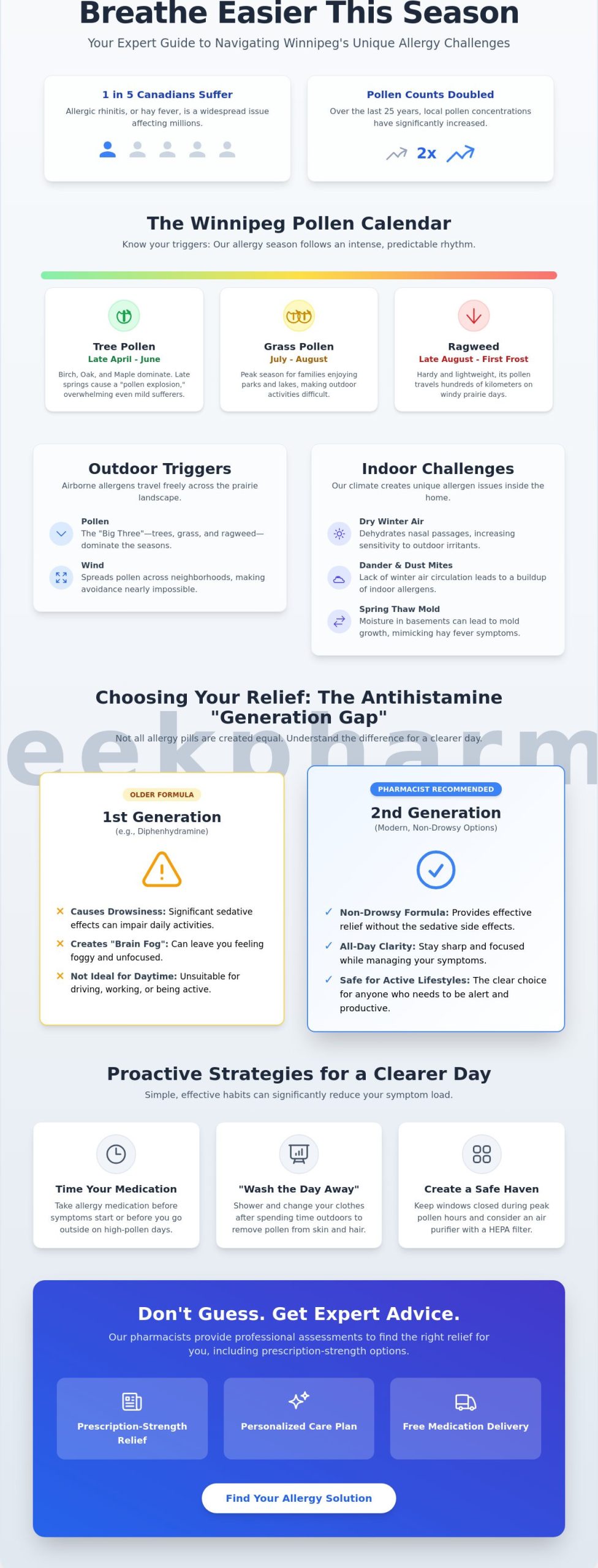
Our local allergy season follows a predictable, yet intense, rhythm. From late April through June, we see the dominance of tree pollens. In the Red River Valley, Birch, Oak, and Maple trees are the primary triggers. Because our springs can sometimes be delayed by late snowfalls, we often experience a “pollen explosion” where multiple tree species release their allergens simultaneously. This creates a high-concentration environment that can overwhelm even those with mild sensitivities. It’s a localized phenomenon that requires a proactive approach to management.
As we move into July and August, the focus shifts to grass pollens. This is often the most difficult time for active families who spend their weekends at the lake or in local parks. Finally, from late August until the first hard frost, we face the notorious Manitoba ragweed season. Ragweed is particularly hardy and its pollen is lightweight, allowing it to travel hundreds of kilometers on a windy day. Knowing these cycles helps us time your treatments effectively so you aren’t playing catch-up with your symptoms.
Indoor vs. Outdoor Allergens
While we often focus on the outdoors, Winnipeg’s climate also creates unique indoor challenges. Our winters are notoriously long and dry, which can dehydrate your nasal passages. This dryness makes your respiratory system more sensitive to irritants when you finally step outside. During the months when we spend 90% of our time indoors, pet dander and dust mites become significant factors. If you have a furry family member, the lack of fresh air circulation in the winter can lead to a buildup of allergens that persists well into the spring.
We also see specific issues during the spring thaw. Moisture can seep into older Winnipeg basements, leading to mold growth that triggers many of the same symptoms as hay fever. Understanding whether your congestion is coming from the birch tree in your yard or the dust in your vents is a key part of the allergy medication advice Winnipeg residents receive when they visit us for a consultation. We want to help you identify these nuances so your relief is as targeted as possible.
Navigating Allergy Medications: A Pharmacist’s Breakdown
Choosing the right treatment shouldn’t feel like a guessing game. While we’ve already looked at the intense pollen shifts in our city, finding the most effective allergy medication advice Winnipeg families can rely on requires a closer look at how these drugs actually work. We see many neighbors reaching for the first box they recognize on the shelf, but a little bit of pharmacological knowledge goes a long way in ensuring your day isn’t ruined by side effects. According to the Canadian government’s information on airborne allergies, effective management is essential for maintaining quality of life during peak seasons. The best strategy usually involves three main categories: antihistamines, decongestants, and nasal corticosteroids.
One of the most important things we discuss with patients is the “generation gap” in antihistamines. Older, first-generation medications like diphenhydramine are known for causing significant drowsiness and “brain fog.” For active Winnipeggers who need to drive, work, or enjoy the outdoors, we almost always recommend second-generation, non-drowsy options. These modern formulas provide the relief you need without the sedative heavy-hitting of the past. If you’re confused by the dozens of brands available, we can help you cut through the noise during one of our personal health consultations.
Oral Antihistamines: Fast-Acting Relief
These medications are known as H1-blockers. They work by stopping the “histamine dump” that your immune system triggers when it encounters pollen. Ingredients like Cetirizine, Loratadine, and Fexofenadine each have slightly different profiles regarding how fast they work and how long they last. For those with chronic seasonal issues, consistency is vital. Taking your tablet at the same time every day helps maintain a stable level of protection in your system, preventing the “rebound” symptoms that occur when a dose is missed. It’s much easier to prevent an allergy attack than it is to stop one once your eyes are already streaming.
Nasal Corticosteroids: The Gold Standard for Congestion
If your primary struggle is a stuffy, blocked nose, a nasal spray like Fluticasone is often more effective than an oral tablet. These sprays target inflammation directly at the source. However, technique is everything. We recommend the “opposite hand to opposite nostril” method: use your right hand to spray into your left nostril, aiming slightly outward toward your ear. This prevents the medication from hitting the middle of your nose, which can cause dryness or irritation. You should also manage your expectations; these medications are not instant fixes and usually take 3 to 5 days of consistent use to reach their full clinical effect.
Professional Advice: OTC vs. Prescription Allergy Relief in Manitoba
Many Winnipeggers spend hours in walk-in clinic waiting rooms just to get a prescription for their seasonal allergies. In Manitoba, your pharmacist has the authority to assess and prescribe medications for minor ailments, including allergic rhinitis. This means you can access professional allergy medication advice Winnipeg residents need without the long wait times often found in traditional medical settings. We take the time to evaluate your symptoms and determine if an over-the-counter (OTC) option is sufficient or if a prescription-strength treatment is necessary. Our goal is to ensure you feel like a person, not just a transaction number, as we navigate these health choices together.
While the open shelves are full of familiar brands, some of the most effective treatments are kept behind the pharmacy counter. For a detailed guide to allergy medications, it’s clear that the right choice depends on the severity and duration of your reaction. If you have a drug plan or have met your deductible, certain prescription allergy treatments are eligible for coverage under Manitoba Pharmacare. This makes professional relief more accessible for families who find that basic retail products aren’t quite enough to handle our city’s intense pollen counts.
When to Move Beyond OTC Products
How do you know when it’s time to step up your treatment? If your current pills aren’t stopping the itchy throat or if you’re experiencing significant sleep disruption, your current regimen isn’t working. Untreated allergies can sometimes lead to secondary sinus infections, which are much more difficult to manage. We often see patients who find immense relief from prescription-strength antihistamine eye drops. These target that localized Manitoba itchiness more effectively than oral tablets alone. We look at your specific health history to recommend a pharmaceutical solution that fits your lifestyle and provides the clear-headed relief you deserve.
The Convenience of Pharmacist Prescribing
Our team in Sage Creek is ready to help you today. You can bypass the clinic and speak directly with a professional who understands the local environment. We handle all the necessary documentation and ensure your primary care provider is kept in the loop. This collaborative approach ensures your health records remain accurate while you get the relief you need immediately. If you’re looking for a more in-depth discussion about your seasonal health or long-term wellness, we invite you to learn more about our Personal Health Consultations. We’re proud to be your local partner in navigating these intense seasonal shifts with care and expertise.
Managing Allergies at Home: Practical Tips for Winnipeggers
When you walk through your front door after a windy day in the Red River Valley, you’re likely carrying millions of microscopic pollen particles on your clothes, hair, and skin. We often focus so much on what we take that we forget how our home environment influences our symptoms. Finding the most effective allergy medication advice Winnipeg families can use involves a “whole-home” approach. One of the simplest habits we recommend is the “Wash the Day Away” strategy. By showering and changing your clothes immediately after spending time outdoors, you prevent yourself from spreading local allergens onto your furniture and bedding. This is especially vital during the “pollen explosion” months we discussed earlier.
Medication timing also plays a significant role in how you feel when you wake up. For many of our neighbors, allergy symptoms are most aggressive in the early morning. We often suggest taking your long-acting antihistamine at night. This allows the medication to reach peak levels in your bloodstream by the time you face the morning pollen surge. Additionally, consider where you store your supplies. Manitoba’s extreme temperature swings can degrade the active ingredients in your medicine. Avoid leaving bottles in a hot car or a humid bathroom cabinet. Instead, find a cool, dry place to ensure your treatments remain as potent as the day you bought them.
Environmental Control Strategies
Your HVAC system is your first line of defense against the Manitoba climate. During peak tree and grass seasons, keep your windows closed, particularly between 6:00 AM and 10:00 AM when pollen counts are usually at their highest. Using high-quality furnace filters can help trap smaller particles before they circulate through your home. We also recommend using saline rinses, like a Neti pot, to physically clear allergens from your nasal passages. This works beautifully as a drug-free supplement to your over-the-counter medications, providing a clean slate for your nasal sprays to work more effectively.
Medication Safety and Adherence
It’s easy to grab a half-used bottle of syrup from last year, but we urge you to check those expiry dates. Expired medications don’t just lose their strength; they can also become prone to bacterial growth, especially in liquid forms. You should also be cautious about drug-on-drug interactions. Many multi-symptom cold and flu meds contain antihistamines or decongestants that might overlap with your daily allergy pill, leading to accidental over-medication. If you’re managing multiple health conditions, it might be time for a full medication review to ensure your allergy plan is safe and coordinated. If you’re unsure about how your current prescriptions interact, please reach out to our Sage Creek team for a quick consultation.
Personalized Allergy Support at Sage Creek Pharmacy
Navigating the intense seasonal shifts in Manitoba is much easier when you have a dedicated wellness partner by your side. At Sage Creek Pharmacy, we pride ourselves on being an independent fixture of the neighborhood. Unlike large corporate entities where you might be just another transaction number, we focus on continuity of care. This means we take the time to understand your specific health history and how different triggers in the Red River Valley affect your daily life. We believe the most reliable allergy medication advice Winnipeg residents can receive comes from a team that actually knows their name.
We also recognize that managing chronic allergies can become a financial burden for many families. Our team is here to help you navigate the complexities of Manitoba Pharmacare. We can explain how your deductible works and ensure you’re accessing the coverage you’re entitled to for prescription-strength treatments. By acting as your local health advocate, we help take the stress out of the paperwork so you can focus on feeling better. It’s all part of our commitment to being more than just a retail outlet; we’re your partners in long-term wellness.
Seamless Refills and Delivery
We know that when your symptoms are at their worst, the last thing you want to do is leave the house. If you’re struggling with severe congestion or itchy eyes, you can stay comfortable at home while we handle the rest. You can easily use our online prescription refill Winnipeg service to request your allergy medications from your phone or computer. To make things even simpler, we offer free medication delivery in Winnipeg. If you’re currently using another pharmacy but want to experience our personalized approach, we can manage the entire transfer process for you. It’s a stress-free, pharmacist-led transition that ensures your care is never interrupted.
Consult with Your Sage Creek Pharmacist
If you find that your symptoms are persistent despite trying different products, we invite you to sit down with us for a one-on-one consultation. We’re deeply committed to the Sage Creek community and families throughout Southeast Winnipeg. Whether you’re a young family dealing with a child’s first allergy season or a senior looking for non-drowsy options that won’t interfere with other medications, we’re here to help. You don’t have to suffer through the Winnipeg allergy season alone. Our doors are always open, and our team is ready to provide the clear, professional guidance you deserve. Stop by today for a chat; we’d love to help you breathe easier this season.
Ready to Breathe Easier This Season?
Managing seasonal triggers in the Red River Valley doesn’t have to be a solo struggle. By understanding our local pollen calendar and choosing the right modern antihistamines, you can reclaim your time outdoors. Our independent pharmacists are here to provide the allergy medication advice Winnipeg residents rely on to navigate even the most intense ragweed and tree pollen cycles. We are committed to your comfort and health through every seasonal shift.
We offer more than just a shelf of products; we provide a dedicated wellness partnership. With our specialized prescribing authority for minor ailments and personalized medication reviews, we ensure your treatment is safe and effective for your specific health history. If you’re stuck at home with severe symptoms, our free city-wide prescription delivery brings relief directly to your door. It’s our way of looking out for our neighbors and ensuring no one has to manage their symptoms alone.
Contact our Sage Creek team for personalized allergy advice today. We look forward to helping you feel your best all year long.
Frequently Asked Questions
Can a pharmacist in Winnipeg prescribe allergy medication?
Yes, pharmacists in Manitoba are authorized to assess and prescribe medications for minor ailments, which includes seasonal allergies. This allows you to receive expert allergy medication advice Winnipeg residents can use to skip the walk-in clinic. While there’s a fee for this assessment, the convenience of getting immediate relief is often worth it for busy families. We’ll ensure your primary care provider is notified to keep your health records accurate.
What is the best non-drowsy allergy medication available in Manitoba?
Second-generation antihistamines are the modern standard for non-drowsy relief in our province. Popular options include Cetirizine, Loratadine, and Fexofenadine. These medications are specifically designed to block histamine without crossing into the brain, which prevents the “foggy” feeling associated with older drugs like Benadryl. Finding the right one depends on your specific symptoms, so we often suggest a quick chat to find your perfect match.
When does the ragweed season typically start in Winnipeg?
Ragweed season in Winnipeg usually begins in late August and persists until the first hard frost of the autumn. This period can be particularly challenging because ragweed pollen is incredibly lightweight and can travel long distances on our prairie winds. If you’ve struggled in previous years, we suggest starting your preventative treatments a week or two before the middle of August to build up protection in your system.
Are prescription allergy medications covered by Manitoba Pharmacare?
Many prescription allergy treatments are eligible for coverage under Manitoba Pharmacare once you’ve met your annual deductible. This includes certain high-strength nasal sprays and eye drops that are often more effective than basic retail options. When you receive allergy medication advice Winnipeg families trust at our pharmacy, we can help you check the provincial formulary to see which options are covered. It’s a great way to manage your seasonal health costs.
How do I know if I have a cold or seasonal allergies?
The main difference lies in the “itch factor” and the duration of your symptoms. Allergies almost always involve itchy, watery eyes and a clear nasal discharge that lasts as long as the pollen is in the air. Colds usually resolve within seven to ten days and may be accompanied by a low-grade fever or body aches. If your symptoms appear suddenly on a windy spring day, it’s likely an allergic reaction.
Is it safe to take allergy medication every day during the spring and summer?
It’s generally safe and often recommended to take second-generation antihistamines daily during the peak pollen months. These medications work best when they maintain a consistent level in your bloodstream to prevent symptoms before they start. However, we always advise a quick medication review if you’re managing other health conditions. We want to ensure there are no interactions with your existing prescriptions so you can stay safe while seeking relief.
Can I get allergy medication delivered for free in Winnipeg?
Yes, we provide free medication delivery in Winnipeg for all your allergy needs. Whether you require a new prescription we’ve just assessed or some over-the-counter supplies, our team can bring them directly to your doorstep. This service is a lifesaver when your symptoms are so severe that driving or spending time outdoors feels impossible. We’re proud to support our neighbors across the city with this convenient, no-cost option.
What should I do if OTC allergy pills are no longer working for me?
If your usual pills aren’t providing relief, it’s time to speak with a pharmacist about more targeted options. You might benefit from a nasal corticosteroid or prescription-strength eye drops that treat inflammation at the source. We can perform a professional assessment to determine if a different class of medication is necessary. Don’t feel discouraged; many people find that a simple adjustment to their regimen makes a world of difference for their comfort.