

What if that 1,000 mg Vitamin C tablet you take every morning is actually doing more harm to your stomach than good for your immune system? Most of us have stood in the supplement aisle feeling overwhelmed by rows of bright orange bottles, wondering if “liposomal” is worth the extra cost or if “buffered” is just a marketing buzzword. It’s frustrating to spend your money on a product that might cause digestive upset instead of providing the protection you need. We understand that you want clear, clinical advice without the coldness of a medical textbook.
Our team wants to help you cut through the noise so you can understand exactly how to choose a vitamin C supplement that fits your unique health profile. While the global market for these supplements is growing rapidly, reaching an expected $2.5 billion by 2026, more options shouldn’t mean more confusion. In this guide, we’ll explain the different chemical forms of Vitamin C, identify the right dose for your lifestyle based on the latest 2026 standards, and show you how to spot high-quality ingredients that won’t irritate your system.
Key Takeaways
- Discover why buffered vitamin C might be the best option for your routine if standard ascorbic acid causes you stomach irritation or digestive discomfort.
- Learn how to choose a vitamin C supplement by matching the specific form and dose to your daily lifestyle, especially if you are a smoker or managing high levels of stress.
- Identify the essential quality markers to look for on every label, including the Natural Product Number (NPN) and recognized third-party certifications like USP or NSF.
- Understand why a personalized medication review with our team is the most reliable way to ensure your supplements are both safe and effective for your unique health history.
Why Vitamin C Matters and the ‘Highest Dose’ Misconception
Vitamin C, or L-ascorbic acid, isn’t just another bottle on our pharmacy shelves; it’s a vital micronutrient your body cannot produce on its own. Because it’s water-soluble, we need a steady daily intake to keep our systems running smoothly. In our Winnipeg climate, where seasonal changes and environmental stressors can take a toll on our health, Vitamin C acts as a powerful antioxidant. It works by neutralizing free radicals, which are unstable molecules that can damage your cells. Understanding this role is the first step when you’re learning how to choose a vitamin C supplement that actually supports your long-term wellness.
Many people believe that taking a “megadose” of 2,000 mg or more will provide extra protection, but your biology has other plans. Unlike fat-soluble vitamins that stay in your system, your body treats excess Vitamin C like a guest that’s overstayed its welcome. Once your tissues are saturated, your kidneys simply filter out the rest. We often see neighbors aiming for the highest milligram count possible, but optimizing wellness is about consistency and absorption rather than just chasing the biggest number on the label. Preventing a deficiency is simple, but truly supporting your body requires a more thoughtful approach to dosage.
Essential Functions: Beyond Just the Common Cold
While many of us reach for it during cold and flu season, this nutrient is a multi-tasker. It’s the primary driver for collagen synthesis, which is essential for healthy skin and wound healing. If you follow a plant-based diet, Vitamin C is your best friend because it significantly improves the absorption of non-heme iron from foods like spinach or lentils. It even supports your brain by helping produce neurotransmitters that regulate your mood and cognitive focus. Because there are different forms of vitamin C available, picking the right one ensures you’re getting these benefits without unnecessary side effects.
The Reality of Intestinal Saturation
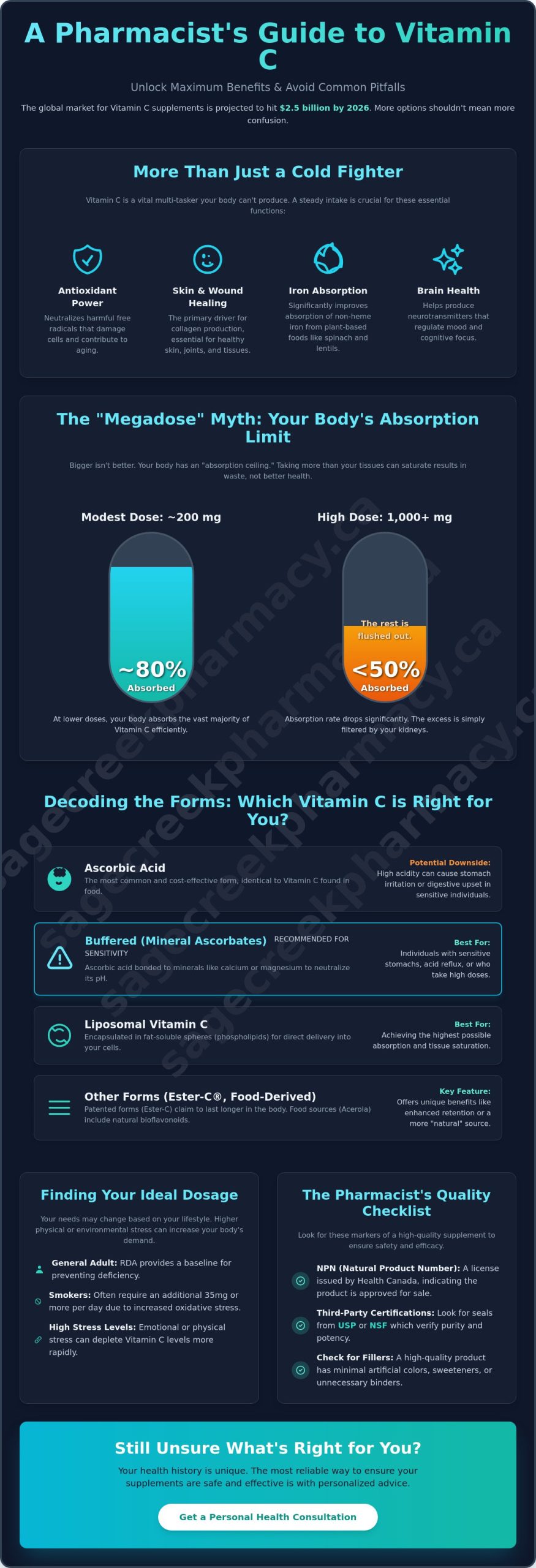
There is a literal “absorption ceiling” in your gut. Research shows that your body absorbs about 70 to 90 percent of Vitamin C when you take a modest dose of around 200 mg. However, if you jump to a 1,000 mg dose, that absorption rate can drop below 50 percent. The rest ends up as “expensive urine” as your kidneys work to flush it out. This is why many manufacturers developed time-release formulas; they aim to trickle the nutrient into your system slowly to bypass this saturation point. Knowing these physiological limits helps you understand how to choose a vitamin C supplement that provides steady support throughout your busy day rather than a single, wasteful spike.
Understanding the Forms: Ascorbic Acid vs. Buffered vs. Liposomal
Picking the right bottle often feels like guesswork. When you’re deciding how to choose a vitamin C supplement, the chemical form is just as important as the dose. Standard ascorbic acid is the most common and cost-effective option. It’s bioidentical to the vitamin C found in fruits, but its high acidity can be tough on the digestive tract for some. If you’ve ever felt a “sour” stomach after taking your vitamins, the acidity of pure ascorbic acid might be the culprit.
Buffered Vitamin C, often labeled as mineral ascorbates, offers a gentler alternative. By attaching the acid to minerals like calcium or magnesium, the pH is neutralized. This makes it much easier on your stomach lining. For those seeking the highest possible absorption, Liposomal Vitamin C uses fat-soluble spheres called phospholipids to carry the nutrient directly into your cells. There is also Ester-C, a patented form that includes metabolites like threonate, which helps the vitamin stay in your system longer than standard versions.
Which Form is Right for Your Digestion?
Our team often speaks with neighbors who struggle with acid reflux or sensitive stomachs. If that sounds like you, we recommend avoiding high-dose powders of pure ascorbic acid. Instead, look for buffered capsules or food-derived options like Acerola cherry or Camu Camu. These whole-food sources provide the vitamin alongside natural bioflavonoids, which may assist with gentle processing. Whether you prefer a quick-dissolving tablet or a simple capsule, the goal is to find a format you can take consistently without discomfort. If you’re unsure which form fits your current health plan, speaking with our team during a personal health consultation can provide the clarity you need.
Bioavailability vs. Cost: Finding the Sweet Spot
It’s easy to get caught up in the marketing of “luxury” delivery systems. While liposomal technology is impressive, it’s often more expensive. For about 90 percent of the population, standard ascorbic acid or a basic buffered supplement is perfectly effective. You don’t need to overspend to meet the recommended dietary allowances for vitamin C. We suggest investing in liposomal forms only if you have specific malabsorption issues or if you’re working toward a very specific health goal under professional guidance. Learning how to choose a vitamin C supplement is really about finding that balance between what your body can use and what fits your budget.
Finding Your Ideal Dosage: How Much Do You Actually Need?
Standard health guidelines are a great starting point, but they don’t always tell the whole story for your specific life. Most of us want to do more than just avoid a deficiency; we want to feel our best. When you’re figuring out how to choose a vitamin C supplement, checking the milligram count on the label is your first step. As of 2026, the Recommended Dietary Allowance (RDA) for adults is 90 mg for men and 75 mg for women. However, these numbers are the bare minimum designed to prevent disease. Many health experts now suggest that an intake of 200 mg per day is likely the optimal dose for most healthy adults to ensure full tissue saturation.
Understanding the role of vitamin C in the body helps you see why a slightly higher dose can be beneficial for cellular protection. But don’t go overboard. The Tolerable Upper Intake Level (UL) is 2,000 mg daily. Pushing past this limit can lead to unwanted side effects like stomach cramps, diarrhea, or even an increased risk of kidney stones in certain people. We always remind our neighbors that more isn’t always better. If you’re aiming for a higher daily total, try a “divided dose” strategy. Taking 500 mg in the morning and another 500 mg with dinner keeps your blood levels steady and respects your body’s natural absorption limits.
Dosage Requirements for Different Life Stages
Health needs shift as we grow. Children require much smaller amounts than adults, and it’s easy for them to get what they need from a balanced diet. Seniors, however, might need a little extra help. As we age, our bodies often produce less stomach acid, which can make it harder to absorb nutrients from standard tablets. For those who are pregnant or breastfeeding, the requirements increase to 85 mg and 120 mg respectively. This ensures there is enough for both the parent’s recovery and the baby’s development.
The Impact of Lifestyle on Vitamin C Status
Your environment plays a massive role in how much Vitamin C you use up each day. If you’re regularly exposed to secondhand smoke or heavy urban pollution, your body works harder to combat oxidative stress, depleting your reserves. Smokers specifically need an extra 35 mg every day to keep up. For local athletes, this nutrient is a key partner in physical recovery and tissue repair after a long run or a gym session. Chronic stress also takes a toll, as elevated cortisol levels can rapidly deplete your body’s Vitamin C reserves. Knowing these factors makes it much easier to decide how to choose a vitamin C supplement that actually supports your daily routine.
The Pharmacist’s Checklist: 5 Things to Check on the Label
Decoding a supplement label can feel like solving a puzzle. When you’re standing in the pharmacy aisle trying to figure out how to choose a vitamin C supplement, the first thing to look for is the Natural Product Number (NPN). In Canada, this eight-digit number is your guarantee that Health Canada has vetted the product for safety, potency, and quality. Without it, you can’t be certain that what’s listed on the bottle matches what’s inside. We also suggest looking for third-party seals from organizations like USP, NSF, or Informed Choice. These groups verify that the product is free from contaminants and contains exactly what it claims. As of early 2026, even major retailers have stepped up their standards. Amazon now requires third-party validation for all dietary supplements to ensure they meet strict manufacturing practices.
Scan the “non-medicinal ingredients” list for hidden fillers. Many chewable tablets or gummies are packed with artificial sweeteners like aspartame or synthetic dyes like Red Dye 40. These additives don’t offer any health benefits and can sometimes cause sensitivities for our neighbors with allergies. It’s also wise to check the packaging itself. Because Vitamin C is highly sensitive to light and oxygen, it should always come in an opaque or dark amber-colored bottle. If you open a bottle and see that the white tablets have developed yellow or brown spots, the vitamin has likely oxidized. This means it has lost its antioxidant power and could potentially be irritating to your system. Learning how to choose a vitamin C supplement means looking past the marketing and focusing on these clinical details.
Medication Interactions You Shouldn’t Ignore
High doses of Vitamin C can interfere with several common prescriptions. It can decrease the blood-thinning effect of Warfarin, which might put your health at risk if not monitored. It may also increase estrogen levels if you’re taking estrogen-based birth control, which can lead to unexpected side effects. We also advise our neighbors to pause high-dose supplements a few days before certain lab tests. The presence of excess vitamin C in your system can cause false readings in blood sugar monitors or stool tests used for screening. If you’re managing multiple health conditions, the best way to stay safe is to schedule a medication review with us to ensure your supplements aren’t working against your prescriptions.
Quality Control and Expiry Dates
Don’t be fooled by the word “natural” on a label. Synthetic ascorbic acid is chemically identical to the version found in fruit and is often more stable in supplement form. The real test of quality is the color and the storage method. Always keep your bottle in a cool, dark cabinet rather than on a sunny windowsill or in a humid bathroom. Heat and light will rapidly destroy the potency of your vitamins. If your supplement has changed color or smells “off,” it is time to dispose of it safely and start fresh with a stable product.
Personalizing Your Wellness at Sage Creek Pharmacy
Searching for health advice online often leads to more questions than answers. While you now have a framework for how to choose a vitamin C supplement, applying that knowledge to your specific health history is where we come in. Every person’s body is different. A dose that works for a marathon runner might be too much for someone managing a chronic condition. We believe that professional guidance should be accessible and warm, which is why we take the time to understand your lifestyle before making a recommendation.
Our approach to vitamins and supplements in Winnipeg focuses on quality and clinical relevance. We don’t just point you to the most popular brand. Instead, we look at the chemical form, the presence of a required NPN, and how it fits with your current routine. This holistic view is essential because we manage your total health, from prescription medication to everyday OTC choices. Having a pharmacist review your full medication list is the safest way to prevent the interactions we discussed earlier, like those involving blood thinners or specific lab tests.
Your Local Winnipeg Wellness Partners
We are proud to serve the Sage Creek neighbourhood as a dedicated wellness partner. Our goal is to make managing your health as simple and stress-free as possible. If you’re feeling overwhelmed by the options, you can request a personalized medication review right here in our Winnipeg pharmacy. We’ll sit down with you, look at everything you’re taking, and ensure your supplement choices are actually serving your goals. For those days when you can’t make it into the store, we offer free medication delivery in Winnipeg. This ensures you never have to miss a dose of your essential health supplies.
Start Your Journey to Better Health Today
We invite you to visit us for a one-on-one health consultation. Whether you are curious about how to choose a vitamin C supplement or need help understanding a new prescription, our team is ready to listen. We are committed to providing clear, functional information that empowers you to make the best decisions for your family. Think of us as your stable, dependable fixture in the community. Our doors are open, and we look forward to seeing you soon. Stop by and let’s chat about your wellness goals; we’re always here to help.
Take Control of Your Daily Wellness Routine
You now have the clinical tools to look past flashy marketing and understand exactly how to choose a vitamin C supplement that respects your body’s absorption limits. Remember that finding the right form, such as a gentle buffered ascorbate or a high-efficiency liposomal liquid, is more important than simply picking the highest milligram count on the shelf. By checking for the NPN and keeping an eye on storage quality, you can ensure your investment actually supports your immune health rather than going to waste.
As an independent, community-focused pharmacy, we’re here to help you navigate these choices with confidence. Our team offers expert medication reviews for Winnipeg residents to ensure your supplements never clash with your prescriptions. We also provide free city-wide prescription and OTC delivery to make staying healthy as convenient as possible. We want to make sure you feel supported at every step of your health journey.
Speak with a Sage Creek Pharmacist about your supplement needs today! We’re always here to listen and help you find the right path forward for your unique needs.
Frequently Asked Questions
Is it better to take Vitamin C in the morning or at night?
Taking your supplement in the morning or afternoon with a meal is generally the best approach. Because it’s water soluble, having food in your stomach helps with absorption and reduces the risk of digestive upset. Some of our neighbors find Vitamin C slightly energizing, so taking it earlier in the day ensures it doesn’t interfere with your sleep. Consistency is more important than the exact hour you choose.
Can I take Vitamin C if I have a history of kidney stones?
You should speak with our team before starting a new routine if you have a history of stones. High doses can increase the amount of oxalate in your urine, which is a primary building block for calcium oxalate stones. We typically suggest that individuals with this history stay well below the 2,000 mg upper limit. We can help you find a safe, modest dose that supports your health without increasing your risks.
What are the first signs that a Vitamin C supplement is working?
You won’t usually feel a sudden burst of energy, as this nutrient works silently at the cellular level. Over time, you might notice that small cuts or bruises heal more quickly or that your skin looks healthier due to improved collagen production. Better gum health and a stronger resilience against seasonal stressors are also positive indicators. It’s about long term cellular support rather than an immediate physical sensation.
Do I need a separate Vitamin C supplement if I already take a multivitamin?
It depends on whether your multivitamin meets your specific health goals. Most standard multivitamins provide the basic 75 to 90 mg needed to prevent deficiency, but they may not reach the 200 mg level often recommended for optimal wellness. If you are a smoker or dealing with high stress, a separate supplement might be necessary. We can review your current multivitamin label to see if an extra boost is right for you.
Can children take adult Vitamin C supplements?
Children should only take supplements specifically formulated for their age group. Adult tablets often contain doses that far exceed the safe limits for smaller bodies, which can lead to stomach pain or diarrhea. Pediatric versions come in lower strengths and are tested for safety in children. If you’re looking for how to choose a vitamin C supplement for your child, we can point you toward gentle, kid friendly options available here in Sage Creek.
Does Vitamin C actually help prevent the flu or COVID-19?
Vitamin C doesn’t prevent you from catching viruses like the flu or COVID-19, but it does support your immune system’s natural defenses. While it isn’t a “shield” against infection, staying consistent with your intake may help reduce the severity or duration of symptoms if you do get sick. It’s one part of a larger wellness plan that should also include staying up to date with your annual vaccinations at our pharmacy.
How long does it take for Vitamin C levels to increase in the body?
Your blood levels will begin to rise within just a few hours of taking a supplement. However, it takes about two to three weeks of daily, consistent use to reach full tissue saturation. This is why we encourage our neighbors to stick to a steady routine rather than taking a large dose only when they feel a cold coming on. Your body benefits most from a predictable, daily supply.
What is the maximum amount of Vitamin C I can safely take daily?
The tolerable upper intake level for adults is 2,000 mg per day. Taking more than this can cause uncomfortable side effects like cramps or diarrhea. When you’re researching how to choose a vitamin C supplement, remember that your body can’t store the excess. Most people find their “sweet spot” is much lower than the maximum limit. Our pharmacists can help you determine the safest and most effective daily amount for your specific lifestyle.