

Your HbA1c isn’t a final grade on your health; it’s a roadmap that helps us navigate your wellness journey together. It’s completely normal to feel a bit of anxiety when you see that three-month average, especially if it doesn’t seem to match your daily glucose readings. Many of our neighbors tell us they feel overwhelmed by strict diets or worried about how new medications might make them feel. Understanding how to lower HbA1c pharmacist advice can bridge that gap between clinical data and your daily life is the first step toward feeling better and more in control.
In this guide, we’ll show you how to use the latest 2026 ADA standards, like real-time continuous glucose monitoring and personalized medication reviews, to bring your levels down safely. You’ll discover how strategic medication timing and small, manageable lifestyle shifts can lead to more energy and a lower percentage at your next check-up. We’re here to help you move past the confusion and gain total confidence in your diabetes management routine, ensuring you feel like a person rather than just a transaction number.
- Follow our guide on how to lower HbA1c pharmacist advice to understand your three-month health report card and learn how to bridge the gap between daily readings and lab results.
- Learn why your body needs time to reflect healthy changes and how managing liver glucose release can help stabilize those stubborn morning numbers.
- Discover how the specific timing of your medication can reduce common side effects and make your treatment plan more effective for long-term stability.
- Master simple, sustainable shifts like “Fiber First” eating and 10-minute post-meal walks to prevent sugar spikes without feeling deprived.
- See how a free diabetes medication review can help you optimize your routine and keep your wellness journey on the right track.
What is HbA1c and Why Does it Matter for Your Health?
Think of your HbA1c as a long-term health report card rather than a daily pop quiz. While your finger prick tests show us what’s happening right this second, the A1c test provides a steady average of your blood sugar levels over the past few months. HbA1c is a measure of sugar-coated red blood cells over a 90-day period. Because your red blood cells have a lifespan of about 120 days, this test captures the “memory” of how much glucose has been sticking to your hemoglobin. When neighbors visit us asking for how to lower HbA1c pharmacist advice, we explain that this percentage is the most reliable way to see if your current routine is truly working for your body.
Understanding your percentage is vital for staying on top of your wellness. According to the 2026 clinical standards, a normal A1c is below 5.7%. If your results fall between 5.7% and 6.4%, you’re in the prediabetic range, while 6.5% or higher indicates diabetes. These numbers might feel like just data, but they have a massive impact on your future. For instance, lowering your A1c by even 1% can significantly reduce your risk of developing long-term complications like neuropathy or kidney issues. We see this as a powerful opportunity for you to take back control. Small, consistent shifts in your daily habits can lead to life-changing results at your next check-up.
HbA1c vs. Daily Finger Pricks
A single good reading after a healthy lunch is great, but it doesn’t always tell the whole story. Daily monitoring is a “snapshot” of a specific moment, influenced by your last meal or a stressful morning. In contrast, What is Glycated Hemoglobin (HbA1c) represents the “big picture” average. Our team uses both sets of data to spot patterns. If your daily numbers look good but your A1c remains high, it might mean your sugar is spiking while you sleep or during the afternoon. Identifying these hidden trends is exactly why how to lower HbA1c pharmacist advice is so personalized to your specific life rhythm.
The Long-Term Benefits of Controlled A1c
Keeping your A1c within a healthy target range does more than just please your doctor; it protects your vision and cardiovascular health. High glucose levels over time can damage the delicate blood vessels in your eyes and heart. By maintaining steady levels, you also reduce “glucose variability,” which is the roller coaster of highs and lows that causes those frustrating afternoon crashes and bouts of fatigue. When your sugar stays stable, your energy stays stable too. We’re dedicated to helping you find that balance so you can enjoy your day without the constant worry of a sudden energy drain.
The 3-Month Window: How Your Body Processes Sugar
When you start a new daily walk or change your breakfast routine, you might expect your A1c to drop by the following week. It doesn’t work that way. There is a natural “lag time” because the test measures the sugar attached to red blood cells that have been circulating for months. It takes roughly 90 to 120 days for your body to cycle through these cells. This is why patience is the most important part of the first 90 days of any new treatment plan. If you are looking for how to lower HbA1c pharmacist advice, we often remind our neighbors in Sage Creek that today’s healthy choices are an investment in a lab result three months from now.
Your cells also need time to adjust. Think of insulin sensitivity as how “welcoming” your cells are to sugar. When you are active and eating well, you are essentially greasing the hinges on your cellular doors. This makes it easier for insulin to do its job. Consistent Managing Diabetes involves giving your metabolism the time it needs to reset these internal processes. If you feel like your progress has stalled, our how to lower HbA1c pharmacist advice can help you identify if the issue is biological timing or a need for a medication adjustment.
The Impact of “Dawn Phenomenon”
Many people are confused when they wake up with high blood sugar after not eating for ten hours. This is often the “Dawn Phenomenon.” Between 4:00 AM and 8:00 AM, your body releases hormones like cortisol to help you wake up. These hormones signal the liver to release extra sugar for energy. If your insulin isn’t working efficiently, that sugar stays in your bloodstream. We can help you manage these morning spikes by adjusting the timing of your long-acting insulin or other medications. Tracking these patterns in a log is a great way to share data with our local pharmacy team during your next visit.
How Your Liver and Pancreas Work Together
Think of your pancreas as the store manager and your liver as the pantry. When you eat, the pancreas releases insulin to put sugar “on the counter” for immediate use. Any extra goes into the liver “pantry” for later. If the pantry is full, sugar spills back out into the blood. Exercise is like a neighborhood cleanup. It helps your muscles burn off that stored sugar, creating more room in the pantry. Hydration is also a key player here. Staying well-hydrated helps your kidneys flush out any excess glucose that your body doesn’t need. It’s a simple, effective way to support your organs as they work to find balance.
Medication Optimization: A Pharmacist’s Perspective
Medication isn’t just a daily task to check off; it is a strategic tool that works best when it’s precisely timed. Many of our neighbors feel frustrated when their daily readings don’t seem to improve despite taking their pills faithfully. Often, the missing piece is the synchronization of that medication with your body’s natural rhythms. For example, taking Metformin with your largest meal isn’t just about habit. It is about reducing stomach upset and maximizing how your body processes the drug. When you seek how to lower HbA1c pharmacist advice, we focus on these small but vital adjustments to your routine that make a big difference in your lab results.
Modern treatments like GLP-1 receptor agonists, including Ozempic and Mounjaro, have changed the landscape of diabetes care in 2026. These medications don’t just lower blood sugar. They help your body respond better to its own insulin and slow down digestion, which prevents those sharp spikes after you eat. This dual action is incredibly effective for long-term A1c reduction. We believe the pharmacist’s role in HbA1c management is to ensure these powerful tools are used correctly and safely. A Diabetes Medication Review in Winnipeg allows us to sit down with you and check for any drug interactions or timing issues that might be hindering your progress.
Metformin and GLP-1 Side Effect Management
Gastrointestinal upset is the most common reason people stop taking their diabetes medications. Nausea, bloating, and diarrhea can be incredibly disruptive to your day. We always recommend a “low and slow” approach to dosing titration. This means starting with a very small amount and gradually increasing it as your body adapts. If you’re struggling with side effects, don’t just stop your medication. Talk to us about switching to extended-release versions, which release the drug more slowly and are often much gentler on your system.
The Role of Manitoba Pharmacare
No one should ever have to skip a dose because of a price tag. The Manitoba Pharmacare program is a provincial drug insurance plan that helps with the cost of eligible prescription drugs based on your income. We can help you navigate your deductible and ensure you’re getting the coverage you’re entitled to. Consistency is the key to a healthy A1c, and we’re here to make sure your refills are accessible and affordable. Regular medication reviews ensure your treatment aligns with current 2026 clinical guidelines.
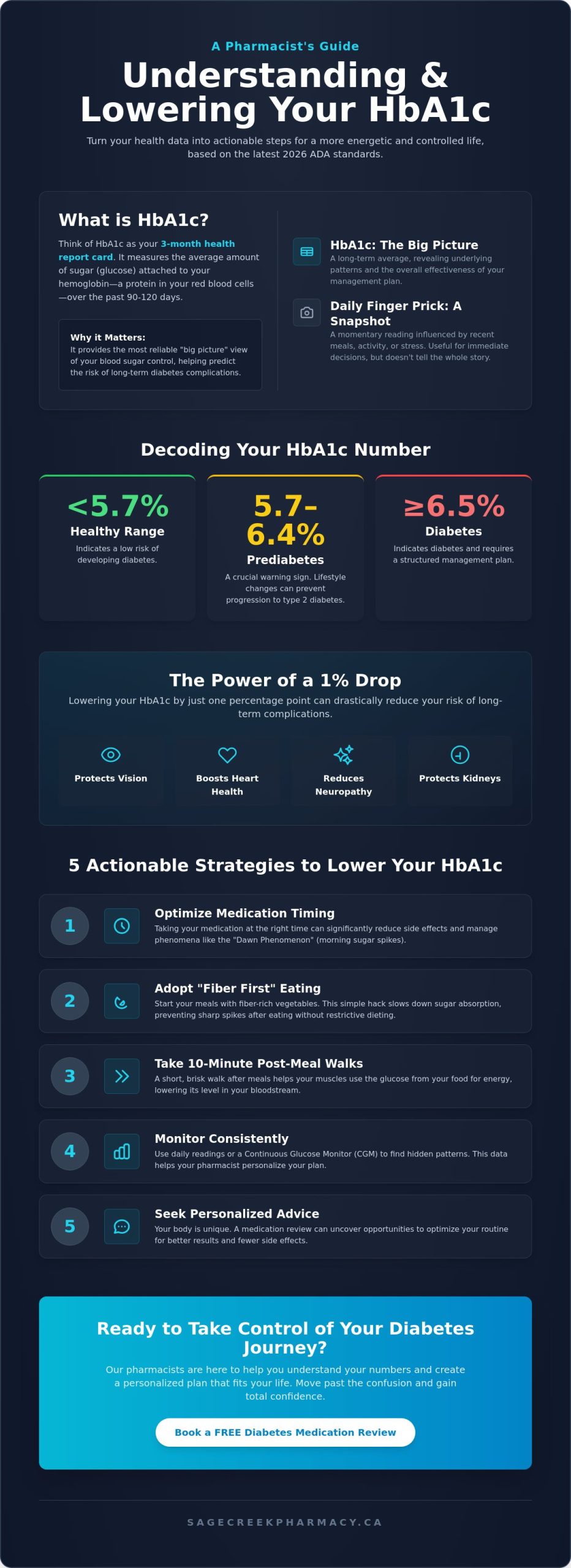
5 Actionable Strategies to Lower HbA1c Safely
Lowering your A1c doesn’t require a total life overhaul or an exhausting gym schedule. Instead, it is about making small, strategic shifts that work with your body’s natural chemistry. We’ve seen that the most successful neighbors in our community aren’t those who try to be perfect for a week, but those who find a steady, sustainable rhythm. When providing how to lower HbA1c pharmacist advice, we emphasize that consistency always beats intensity. High stress levels and elevated cortisol can also keep your blood sugar high even if your diet is “perfect,” so finding time for relaxation is just as important as what you put on your plate.
Smart monitoring is another game changer. Using your data to see how specific foods affect your body allows you to make informed choices. Perhaps a certain fruit spikes your sugar while another doesn’t. This personalized approach takes the guesswork out of your day. If you’re ready to fine-tune your routine, we invite you to book a Free Diabetes Medication Review in Winnipeg so we can look at your patterns together.
The “Fiber First” Method
The order in which you eat your food has a surprising impact on your glucose levels. By eating your vegetables and proteins before your carbohydrates, you create a “fiber buffer” in your stomach. This fiber slows down the absorption of sugar into your bloodstream, preventing the sharp spikes that contribute to a higher A1c. For a local twist, try swapping traditional Winnipeg rye bread for a dense, sprouted whole grain option. These simple swaps make your favorite meals much friendlier to your blood sugar goals.
Lowering A1c Safely: Avoiding the “Low”
As you increase your activity or adjust your diet, it’s vital to stay safe. Hypoglycemia, or low blood sugar, can happen if your efforts to lower your A1c become too aggressive without adjusting your medication. Watch for signs like shakiness, sweating, or sudden confusion. We always recommend carrying a “rescue carb,” like glucose tablets or a small juice box, especially if you use insulin or secretagogues. Before you start a new exercise routine or make a major dietary change, come chat with us. Our how to lower HbA1c pharmacist advice ensures your journey toward better health is both effective and secure.
A ten-minute walk after your largest meal is often more effective for A1c control than a grueling hour at the gym once a week. This gentle movement encourages your muscles to soak up the glucose in your blood for energy right when it’s needed most. It’s a manageable habit that fits into even the busiest Winnipeg schedule, providing a steady way to see real results at your next check-up.
How Sage Creek Pharmacy Supports Your Diabetes Journey
Managing your health shouldn’t feel like a lonely task. At Sage Creek Pharmacy, we see ourselves as your dedicated wellness partner. We’re here to help you turn the clinical strategies you’ve read today into a practical, daily routine that works for your life. When you’re looking for how to lower HbA1c pharmacist advice, you’re looking for someone who understands that you’re a person, not just a lab value. Our team is committed to providing that personal touch, ensuring you have the tools and the confidence to reach your goals safely.
We pride ourselves on being a stable, dependable fixture of the Sage Creek neighborhood. Unlike large corporate entities, we’re agile and attentive to your specific needs. Whether you’re newly diagnosed or have been managing diabetes for years, we offer a level of tailored care that treats you like a neighbor. We believe that by combining our medical authority with genuine empathy, we can help you navigate the complexities of medication and lifestyle shifts with ease.
Free Diabetes Consultation & Med Review
Our one-on-one sessions are designed to give you clarity and peace of mind. During a medication review, we sit down together to look at the big picture of your health. Please bring your daily glucose logs, your current medications, and any questions you have about side effects. We use this information to spot patterns and, when necessary, work directly with your doctor to suggest dosage adjustments that align with the latest 2026 clinical standards. Having a local pharmacist who knows your specific history means your care is always bespoke and never generic.
Stress-Free Refills and Delivery
Consistency is the backbone of successful diabetes management. We’ve made it easier than ever to stay on track with online prescription refills in Winnipeg. You can use our app to request what you need in seconds, freeing up your time to focus on your lifestyle goals rather than pharmacy errands. For our seniors and busy families in Sage Creek, we offer free city-wide delivery right to your front door. This ensures you never have to worry about running out of essential supplies or missing a dose because of a hectic schedule.
We invite you to stop by the pharmacy for a “verbal handshake” and a chat about your health. Our team is always ready to listen and provide the personalized how to lower HbA1c pharmacist advice you need to feel your best. Let’s work together to make your next A1c check-up a reason to celebrate. Your journey to better health is our priority, and we’re here to support you every step of the way.
Taking Control of Your Health Today
Your journey toward a healthier A1c is built on the small, consistent choices you make every day. We’ve seen how understanding the 90 day window of your blood cells and mastering medication timing can transform your long term health outcomes. Finding the right path for your body is much simpler when you have access to personalized how to lower HbA1c pharmacist advice that treats you as a neighbor rather than just a number on a chart.
As an independent, patient-first pharmacy, we’re here to provide the clinical expertise and community care you deserve. Our experienced clinical pharmacists are ready to help you optimize your routine, and our free city-wide prescription delivery ensures you never miss a beat. Book Your Free Diabetes Medication Review in Winnipeg Today to get started. You have the power to change your future, and we’re ready to support you every step of the way.
Frequently Asked Questions
Is a 7.0 HbA1c considered high for a diabetic patient?
A 7.0% HbA1c is the standard target for many non-pregnant adults with diabetes according to current clinical guidelines. While it isn’t necessarily “high,” it is the threshold where we begin evaluating if your current routine needs adjustment to prevent long-term complications. We always recommend discussing your personal target with us because factors like your age and other health conditions can shift what is considered ideal for your specific body.
Can I lower my HbA1c in just one month?
You cannot fully lower your HbA1c in just one month because the test measures the average sugar attached to red blood cells over their 120-day lifespan. While you might see a slight downward trend if you make significant changes, the most accurate reflection of your new habits won’t appear until your next 90-day check-up. Patience is key during this initial window as your body cycles through older cells and resets its baseline.
Does drinking water help lower my HbA1c levels?
Staying well-hydrated helps your kidneys flush out excess glucose through urine, which can prevent short-term spikes in your blood sugar. While drinking water isn’t a replacement for medication or diet, it is a vital support system for your organs. We often include hydration as part of our how to lower HbA1c pharmacist advice because it is a simple, low-stress way to help your body maintain balance throughout the day.
What is the best time of day to take Metformin for A1c control?
The best time to take Metformin is typically with your largest meal of the day to minimize gastrointestinal side effects like bloating or nausea. Taking it at the same time every day ensures a steady level of the medication remains in your system. If you’re using the extended-release version, taking it with dinner can often help manage morning blood sugar spikes more effectively by working while you sleep.
Can stress alone cause my HbA1c to increase?
Stress triggers the release of hormones like cortisol and adrenaline, which signal your liver to release stored glucose for energy. If you are dealing with chronic stress, these “fight or flight” hormones can keep your blood sugar elevated even if your diet remains unchanged. Over a three-month period, this persistent elevation can lead to a noticeable increase in your HbA1c percentage, making stress management a key part of your care.
How often should I have my HbA1c tested at the lab?
Most patients should have their HbA1c tested every three to six months depending on how stable their levels have been. If you’ve recently changed your medication or are struggling to meet your targets, your doctor might request a test every 90 days. For those who are consistently meeting their goals, twice a year is often sufficient to ensure everything remains on the right track for your long-term health.
Are there any natural supplements that help lower HbA1c safely?
Some supplements like magnesium or alpha-lipoic acid have shown potential in supporting glucose metabolism, but they should never replace prescribed medications. It’s important to seek how to lower HbA1c pharmacist advice before starting any supplement because some can interact with your diabetes pills or cause your sugar to drop too low. We can help you determine if a specific supplement is a safe and effective addition to your wellness plan.
What should I do if my HbA1c is low but my daily readings are high?
If your A1c is low but your daily finger pricks are high, it might indicate that you’re experiencing frequent “lows” or hypoglycemia that you haven’t noticed. These low points can pull your three-month average down even if your sugar is spiking at other times. We recommend bringing your glucose logs to the pharmacy so we can help you identify these patterns and ensure your levels stay stable and safe throughout the day.