
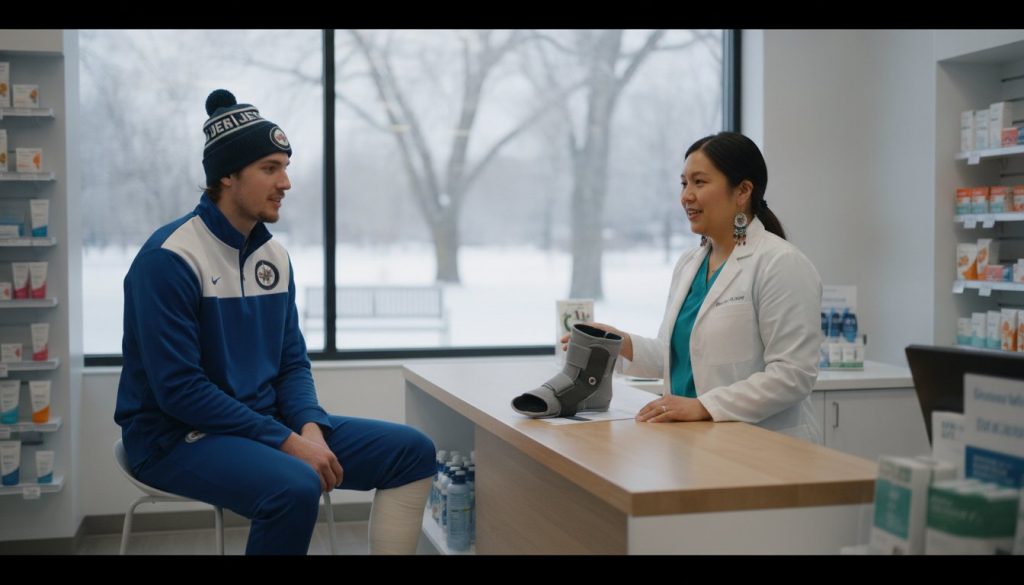
You’re halfway through a weekend game at the community center when a sudden twist or an awkward landing leaves you sidelined. In Canada, 35% of all injuries happen during sports or exercise; you aren’t alone in that moment of pain. Instead of spending your afternoon in a crowded waiting room, you likely just want to know how to stop the swelling and get back on your feet. We understand the frustration of long clinic wait times and the confusion that comes with choosing the right treatment.
Finding the right Pharmacist Advice for Sports Injuries Winnipeg residents need shouldn’t be another hurdle in your recovery. We’ll help you safely manage pain, select the correct recovery supplies, and understand when to seek professional care from our trusted team. This guide explains how to avoid harmful drug interactions and clarifies whether ice or heat is best for your specific injury. We’re here to ensure you get back to your favorite activities safely while feeling supported by your local wellness partners.
Key Takeaways
- Learn why the first 72 hours are vital and how to correctly apply the R.I.C.E. protocol to reduce swelling immediately.
- Discover expert Pharmacist Advice for Sports Injuries Winnipeg athletes can use to choose the safest pain relief based on their unique health history.
- Understand how to select the right medical-grade compression and bracing sizes to support your joints without restricting circulation.
- Identify the specific “red flags” that signal when it’s time to move beyond home care and visit a local minor injury clinic.
- Find out how to access personalized consultations and free city-wide delivery so you can focus on healing at home.
Immediate Home Care: The Pharmacist’s Perspective on R.I.C.E.
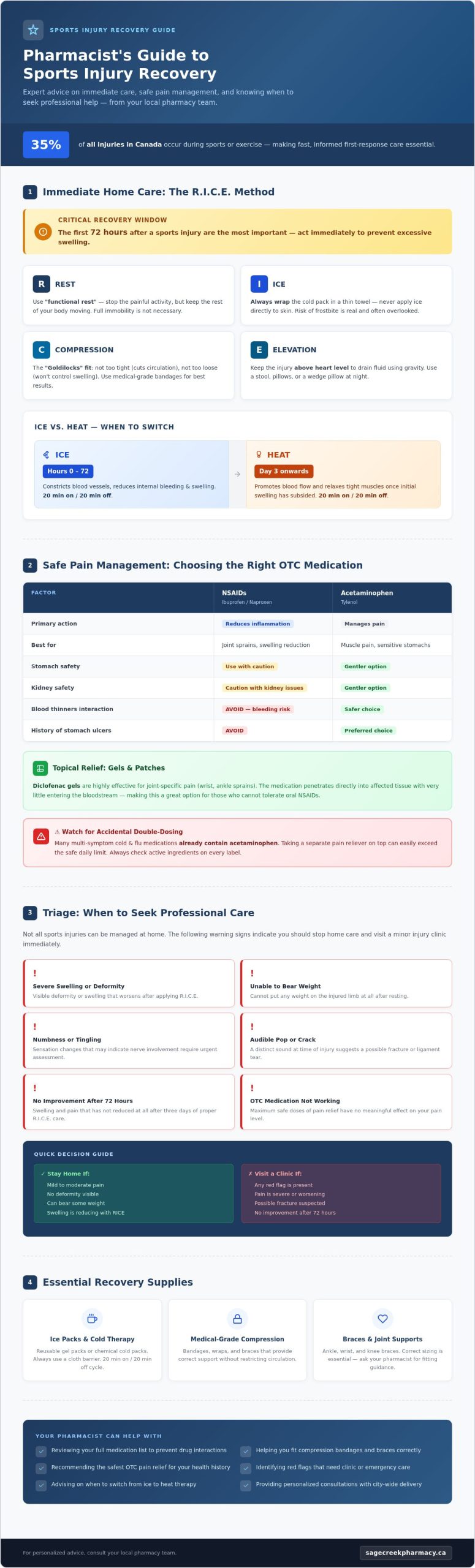
When you suffer a sprain or strain on the field, the first 72 hours are the most critical for your recovery. During this window, your body initiates an inflammatory response that can either lead to efficient healing or excessive swelling and pain. We often see neighbors come into the pharmacy after trying to “walk it off,” only to find the injury has doubled in size. Seeking professional Pharmacist Advice for Sports Injuries Winnipeg families rely on ensures you aren’t just guessing during those first few hours. By following the R.I.C.E. method for injuries immediately, you give your tissues the best chance to mend without complications.
Our team at Sage Creek Pharmacy is here to help you navigate these first few days. We provide the tailored Pharmacist Advice for Sports Injuries Winnipeg residents need to manage the initial trauma. One of the biggest mistakes we see is people applying ice directly to their skin. This can cause frostbite or skin damage. Always wrap your cold pack in a thin towel. Additionally, choosing the right compression level is tricky. If it’s too tight, you risk cutting off circulation; if it’s too loose, it won’t control the swelling. We can help you find that “Goldilocks” fit with medical-grade bandages that provide the right support without causing further harm.
Rest and Elevation: Giving Your Body a Head Start
Rest doesn’t mean you have to be completely immobile. We recommend “functional rest,” which involves avoiding any activity that causes pain to the injured area while keeping the rest of your body moving. For effective elevation, the goal is to use gravity to drain fluid away from the site. You should keep the injury above the level of your heart. If you’re working at a desk, use a stool and a few pillows. At night, tuck a firm cushion under your mattress or use a wedge pillow to maintain that height while you sleep. This simple step significantly reduces pressure and throbbing.
Ice vs. Heat: When to Switch
We often get asked if heat is better for a sore muscle. For acute sports injuries, ice is mandatory for the first 48 to 72 hours. Cold constricts blood vessels, which reduces the internal bleeding and swelling that causes pain. Once the initial swelling has subsided, usually after day three, you can introduce heat to promote blood flow and relax tight muscles. We suggest the “Pharmacist Rule” for both: 20 minutes on, followed by at least 20 minutes off. This cycle prevents tissue damage and ensures the treatment remains effective throughout your recovery process.
Safe Pain Management: Choosing the Right OTC Medication
Walking into the pharmacy with a fresh injury can feel overwhelming. You see rows of colorful boxes, but which one is right for your specific sprain or strain? Getting expert Pharmacist Advice for Sports Injuries Winnipeg is the best way to ensure you don’t pick something that clashes with your existing health conditions. We see you as a neighbor, not just a transaction. Our goal is to make sure the medication you choose helps you heal without causing unexpected side effects. The “strongest” pill on the shelf isn’t always the safest choice for your unique body.
Your health history is the most important factor in this decision. Many people don’t realize that common over-the-counter (OTC) medications can interact with prescriptions they already take. For example, you must be extremely careful with “double-dosing.” Many multi-symptom cold or flu medications already contain acetaminophen. If you take one of those along with a standard pain reliever, you could easily exceed the safe daily limit. We always recommend checking the active ingredients on every label. If you’re ever in doubt, our team is ready to provide a personalized medication review to keep your recovery on the right track.
NSAIDs vs. Acetaminophen
NSAIDs like Ibuprofen (Advil or Motrin) and Naproxen (Aleve) are designed to fight inflammation. They are excellent for reducing the swelling that follows a joint injury. However, they aren’t for everyone. If you have a history of stomach ulcers or kidney issues, these might cause more harm than good. Patients taking blood thinners must avoid NSAIDs entirely because they significantly increase the risk of internal bleeding. In these cases, Acetaminophen (Tylenol) is often the preferred choice. It manages pain effectively while being much gentler on the stomach and kidneys.
Topical Relief: Gels and Patches
Sometimes, the best route for Pharmacist Advice for Sports Injuries Winnipeg athletes need is a topical one. Gels containing Diclofenac are highly effective for joint-specific pain, like a wrist or ankle sprain. These allow the medication to penetrate directly into the affected tissue with very little of it entering your bloodstream. Menthol-based rubs are also popular. While they don’t heal the tissue directly, they create a cooling sensation that distracts your nerves from the pain signal. Using these gels alongside knowing when to use a brace provides a layered approach to your healing. Just remember to apply them to intact skin and avoid using heating pads immediately after application to prevent irritation.
Essential Recovery Supplies: Bracing and Support
Having the right gear at home can mean the difference between a quick recovery and a lingering ache. While custom medical braces have their place for complex surgeries, high-quality over-the-counter supports are often the most practical solution for common sprains. We take pride in helping you navigate these options. Seeking Pharmacist Advice for Sports Injuries Winnipeg athletes rely on means you won’t just grab the first sleeve you see on the shelf. We can help you determine if you need a rigid stabilizer to prevent movement or a flexible compression sleeve to manage minor swelling.
Medical-grade compression bandages are another vital tool in your recovery kit. Unlike standard elastic wraps, these provide consistent pressure that helps move fluid away from the injury. This is essential for the “Compression” part of the R.I.C.E. protocol we discussed earlier. If you’re unsure which type of wrap offers the best support for your specific activity level, just ask. We’re here to ensure you have the supplies that fit your lifestyle and your injury.
Selecting the Right Ankle or Knee Support
A support that doesn’t fit correctly is more than just uncomfortable. It can be counterproductive. To find your size, use a flexible measuring tape around the widest part of the joint. If your support is too tight, you might experience numbness, tingling, or even increased swelling below the brace. These are clear signs that circulation is restricted. We recommend hand washing your fabric supports in cool water and letting them air dry. This simple care routine preserves the elasticity and ensures the compression remains effective for months to come.
First Aid Kit Essentials for Active Families
Winnipeg families spend a lot of time being active, from the soccer pitch to local hiking trails. Your home first aid kit should reflect that lifestyle. We suggest keeping instant cold packs ready for those moments when you aren’t near a freezer. Cohesive wraps are another essential. These bandages stick to themselves rather than your skin, making them perfect for securing dressings over “road rash” or providing light compression. For minor scrapes, antiseptic wipes are vital to prevent infection before you even get home.
Building a complete kit also means having the right medications on hand. When you come in for Pharmacist Advice for Sports Injuries Winnipeg residents trust, we can help you curate a kit that fits your family’s specific sports. You can always ask our team about Over-the-Counter Medications to stock your home kit safely. We want to ensure your family is prepared for the unexpected. Whether you’re dealing with a minor twist or a scraped knee, having these supplies ready provides peace of mind and keeps your recovery moving forward.
Triage: When to Visit a Winnipeg Minor Injury Clinic
We pride ourselves on being your first stop for health concerns, but knowing the limits of home care is vital for your long-term mobility. Getting Pharmacist Advice for Sports Injuries Winnipeg patients can trust often involves us helping you decide if you can manage at home or if you need the specialized equipment found at a clinic. While the R.I.C.E. protocol and over-the-counter support work wonders for minor strains, some injuries require a physician’s diagnostic tools. If your swelling doesn’t improve after a week of diligent treatment, it’s time for a professional assessment to rule out hidden fractures or ligament tears.
In our city, we have excellent resources like the Pan Am Clinic, which specializes in acute muscle and joint injuries. For more severe issues, such as those involving head trauma or heavy bleeding, an Urgent Care center or Emergency Room is the correct destination. Before you head out, we can perform a quick medication review to ensure any new prescriptions from the clinic won’t conflict with what you’re currently taking. We’re here to act as your wellness partner, helping you navigate the system efficiently.
Identifying “Red Flag” Symptoms
Certain symptoms are immediate indicators that you need more than a bandage. If you cannot bear any weight on the limb or if there is a visible deformity, seek medical attention right away. Severe bruising that appears quickly or a loss of sensation in the area are also major concerns. Additionally, keep an eye out for signs of infection like fever or spreading redness around a scrape. These situations require a physician’s assessment to prevent permanent damage and ensure your recovery stays on track.
Preparing for Your Doctor’s Visit
When you see a doctor, having clear information helps them make an accurate diagnosis. Try to recall the exact mechanism of injury. Did you twist, fall, or experience a direct impact? It’s also helpful to keep a log of every dose of pain relief you’ve taken so far. You can use our Prescription Medication Guide to help track your treatment and communicate effectively with your healthcare team. This organization reduces stress and helps your doctor understand the full picture of your health.
Providing Pharmacist Advice for Sports Injuries Winnipeg families can rely on is about more than just selling supplies. It’s about being a dependable fixture in your neighborhood. We want to make sure you get the right care at the right time. If you’re feeling uncertain about your symptoms or how to manage your pain safely, come in and talk to us. We’ll help you find the professional solution that fits your specific needs.
Personalized Care at Sage Creek Pharmacy
At Sage Creek Pharmacy, we believe that healthcare works best when it feels personal. Large corporate chains often focus on volume, but as an independent pharmacy, we focus on you. When you visit us, you aren’t just another number in a queue. We take the time to understand your specific recovery goals and your medical history. This tailored approach is why the Pharmacist Advice for Sports Injuries Winnipeg residents receive here is so effective. We work closely with your local Winnipeg doctors to coordinate prescription transfers or clarify instructions, making your recovery as seamless as possible.
Our commitment to the Sage Creek community and the surrounding Winnipeg areas drives everything we do. We’re your neighbors, and we want to see you back on the field or the trail as much as you do. By acting as your dedicated wellness partner, we ensure you have a stable and dependable source of support throughout your healing journey. We understand the local landscape and the specific needs of our active population, providing a level of agile and attentive service that larger entities simply can’t match.
Free Medication Delivery in Winnipeg
Recovering from a sports injury often means your mobility is limited. If you have a sprained ankle or a torn ligament, driving to the pharmacy is the last thing you should be doing. We offer free city-wide delivery to help you stay home and focus on healing. Whether you need a refill on your pain medication or a new knee brace, we can bring those essential supplies directly to your door. You can request delivery by calling us or using our online refill system. We serve the entire city from our Sage Creek home, ensuring that no matter where you live in Winnipeg, you have access to the care you need without the stress of travel.
Consult with Your Sage Creek Pharmacist
You don’t need an appointment to get professional guidance. If you have a quick question about a minor injury or need help selecting the right support wrap, we invite you to walk in and speak with our team. We offer personalized medication reviews to ensure your recovery plan is safe and effective. This face-to-face connection is at the heart of our practice. When you are looking for a Pharmacy Near Me in Winnipeg, you are looking for more than just a store. You’re looking for a team that knows your name and understands your health history. We’re here to provide the Pharmacist Advice for Sports Injuries Winnipeg athletes need to return to their sport with confidence.
Stay Active and Recover with Confidence
Recovery is rarely a straight line, but having the right tools makes every step easier. We’ve explored how the R.I.C.E. protocol protects your tissues in those first 72 hours and why selecting the correct medication for your health history is vital. Whether you’re managing a minor strain with a flexible wrap or deciding if a visit to a minor injury clinic is necessary, you don’t have to make those choices alone. Our team is here to guide you through every stage of the healing process with professional clarity and genuine care.
Our highly experienced clinical team is dedicated to providing the Pharmacist Advice for Sports Injuries Winnipeg residents need to stay safe and healthy. We take pride in our neighborly, community-focused care and want to ensure you can focus entirely on your healing. If you’re currently sidelined, remember that we offer free city-wide prescription delivery in Winnipeg so you can rest without interruption. Injured? Contact Sage Creek Pharmacy for expert advice or free delivery to your door. We’re ready to help you get back to the sports you love with confidence.
Frequently Asked Questions
Is it better to use Advil or Tylenol for a sports injury?
Advil is typically more effective for injuries involving swelling or redness because it is an anti-inflammatory medication. Tylenol is an excellent choice for managing pain but it does not reduce inflammation. We often recommend Tylenol for neighbors with sensitive stomachs or those who have kidney concerns. Always check with our team to see which option fits your specific health history best.
How long should I keep a sprained ankle elevated?
You should aim to keep your ankle elevated above the level of your heart as much as possible during the first 48 to 72 hours. This use of gravity helps drain excess fluid away from the injury site and reduces painful throbbing. Even 20 to 30 minutes of elevation several times a day can make a significant difference in your overall recovery time.
Can a pharmacist prescribe anything for a sports injury in Manitoba?
As of May 2026, Manitoba pharmacists are authorized to assess and prescribe for 14 different common ailments. While many sports injuries still require a physician for specialized prescriptions, we provide the essential Pharmacist Advice for Sports Injuries Winnipeg athletes need to select the most effective over-the-counter treatments. We can also help determine if your symptoms require a formal clinic visit for stronger medication.
How do I know if my sports injury is a break or just a sprain?
A break is often characterized by a visible deformity, intense pain directly on the bone, or a total inability to bear weight on the limb. Sprains involve ligament damage and while they are very painful, you can often still move the joint slightly. If you heard a loud “pop” or experience immediate, severe bruising, you should visit a minor injury clinic for an X-ray.
Does Sage Creek Pharmacy deliver knee braces and first aid supplies?
Yes, we offer free city-wide delivery for all our over-the-counter supplies, including knee braces, ankle supports, and complete first aid kits. We want to make it easy for you to stay home and rest while we bring the recovery tools to your door. Just give us a call or use our online system to request the supplies you need to heal comfortably.
When can I start exercising again after a minor muscle strain?
You can generally begin light exercise once you have regained a full range of motion and can perform daily activities without pain. It is vital to avoid rushing back to full intensity, as this often leads to re-injury. We suggest starting with gentle stretching and low-impact movements to test the area before returning to your regular sports routine or gym schedule.
What is the best topical cream for joint pain available at the pharmacy?
Diclofenac gels are often the best choice for joint-specific pain because they deliver anti-inflammatory medication directly through the skin to the site of the injury. For general muscle soreness, menthol-based rubs provide a soothing cooling sensation that helps distract your nerves from pain signals. We can help you compare different brands and formulas to find the one that suits your skin type.
Can I take Ibuprofen if I am on blood pressure medication?
You should consult with us before mixing Ibuprofen with blood pressure medication, as NSAIDs can sometimes reduce the effectiveness of certain heart drugs. This interaction can also place extra strain on your kidneys. We are happy to provide personalized Pharmacist Advice for Sports Injuries Winnipeg residents can trust by reviewing your current prescriptions and suggesting a safer pain relief alternative if necessary.