

Did you know that nearly 40% of Canadians fall below the healthy threshold for vitamin D during our long winter months? For those of us living in Manitoba, the “Winnipeg Gap” is a reality we feel in our bones and our moods as the sun disappears behind the horizon. You might feel the weight of Seasonal Affective Disorder or worry about your bone health as you age; this makes it hard to know which Vitamin D supplements Winnipeg residents should prioritize to stay healthy.
We understand that the pharmacy aisles can feel overwhelming, especially when you’re faced with conflicting advice on whether to take 1000 IU or 5000 IU. We’re here to help you move forward with confidence by providing a clear, safe framework based on the updated 2026 Health Canada standards. This guide will explain the vital differences between D2 and D3, break down dosage requirements for every stage of life, and show you how a personalized approach to supplementation can protect your wellness until the spring thaw arrives.
Key Takeaways
- Understand why Winnipeg’s geographic location makes natural vitamin D production impossible from October to March and how to bridge this “gap” safely.
- Get clarity on the 2026 Health Canada updates to ensure your daily intake aligns with the latest medical standards for bone and immune health.
- Learn why D3 is often the preferred choice when selecting Vitamin D supplements Winnipeg residents use to maintain peak wellness during our coldest months.
- Identify potential interactions with medications like prednisone or cholesterol treatments to ensure your supplement routine remains safe and effective.
- Discover how a personalized consultation can help you determine a specific “winter dose” tailored to your unique health history and lifestyle.
Understanding Vitamin D and the “Winnipeg Gap”
To understand why we talk so much about this nutrient in Manitoba, we first need to look at its function. What is Vitamin D? While we call it a vitamin, it actually functions as a fat-soluble pro-hormone. It acts as a key that unlocks your body’s ability to absorb calcium from your diet. Without enough of it, your bones can’t stay strong, and your immune system doesn’t have the “instructions” it needs to defend you properly. For most of the year, our primary source of this hormone is supposed to be the sun, but our geographic location creates a unique challenge known as the “Winnipeg Gap.”
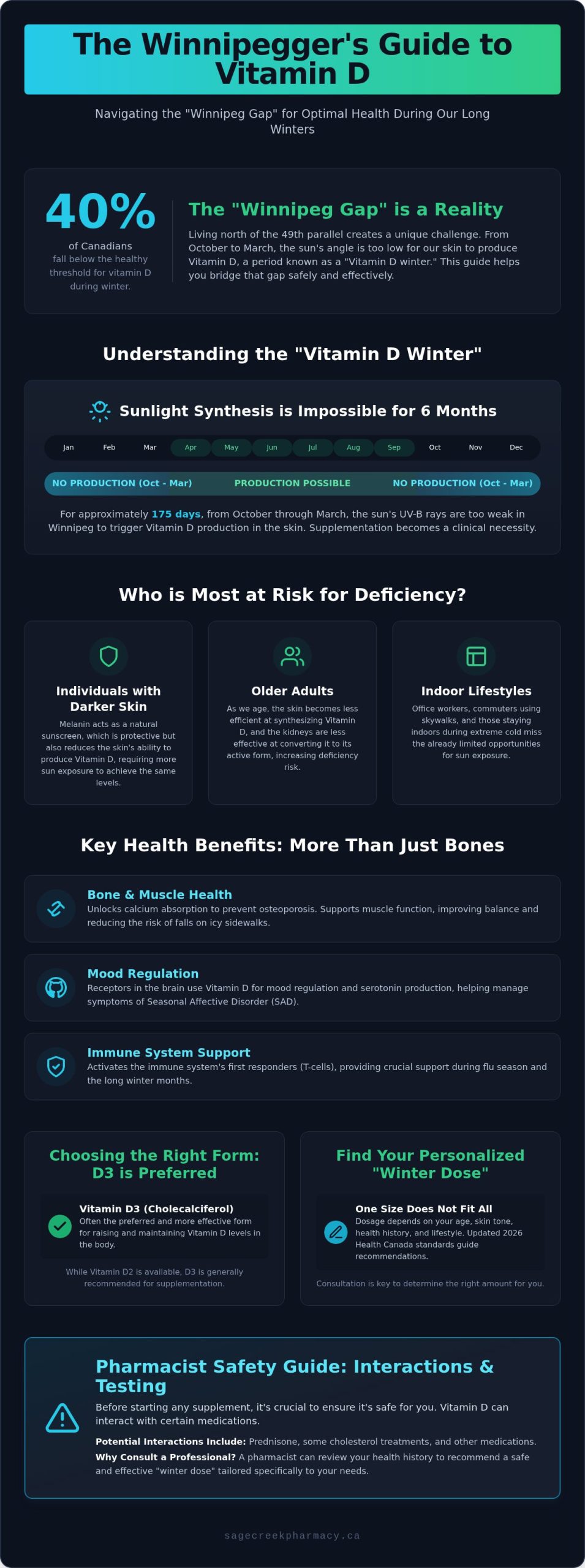
Living north of the 49th parallel means we face a biological disadvantage. From October through March, the sun never reaches a high enough point in the sky for its rays to trigger vitamin production in our skin. This six month stretch is what clinicians often call a “Vitamin D winter.” Because of this gap, relying on Vitamin D supplements Winnipeg residents can trust becomes a clinical necessity rather than a luxury. We simply cannot “tan” our way to health during a Manitoba winter, no matter how bright the snow looks on a January afternoon.
The Science of Sunlight in Manitoba
The physics of our atmosphere plays a major role in your health. During our winter months, the UV-B rays required for vitamin synthesis hit the Earth at such an oblique angle that they’re almost entirely absorbed by the ozone layer before they reach us. Even on a perfectly clear day in the Exchange District, the atmosphere filters out the very light you need. When you add the typical cloud cover of a Winnipeg December or the urban smog that can settle over the city, your skin’s production drops to zero. In our region, the “Vitamin D winter” lasts approximately 175 days, a period where natural synthesis is physically impossible.
Who is Most at Risk for Deficiency?
While the “Winnipeg Gap” affects everyone in the city, certain members of our community face higher risks. Melanin acts as a natural sunscreen; while this is helpful for preventing burns, it also means neighbors with darker skin tones require much more UV exposure to produce the same amount of Vitamin D as those with fair skin. Age is another factor we watch closely. As we get older, our skin becomes less efficient at synthesizing the hormone, and our kidneys are less effective at converting it into its active form.
Office workers and those who stay indoors during our extreme -30°C cold snaps are also highly vulnerable. If you spend your daylight hours inside a building or commuting through the skywalks, you’re missing the tiny window of opportunity for even minimal exposure. If you’re concerned about your levels, reaching out to a pharmacy near me in Winnipeg is the best first step. Our team can help you identify if you fall into these high risk categories and suggest a plan that fits your specific lifestyle.
Key Health Benefits: Beyond Just Strong Bones
While most people associate Vitamin D with skeletal strength, its influence stretches into nearly every system of your body. When choosing Vitamin D supplements Winnipeg residents often look for bone support, but the benefits for immune resilience and mood regulation are just as critical during our sub-zero months. This nutrient acts as a foundational pillar for your overall wellness, especially when the Manitoba winter limits our natural access to sunlight. It’s about more than just avoiding a deficiency; it’s about helping your body function at its peak when external conditions are at their harshest. For readers interested in how advanced integrative therapies can further support the body during complex health challenges, you can learn more about Sunridge Medical and their approach to chronic disease care.
Vitamin D is the primary regulator of calcium absorption. Without it, your body may pull calcium from your bones, leading to thinning and osteoporosis over time. For our local seniors, this nutrient also plays a vital role in muscle function. Stronger muscles mean better balance. This is a life-saving advantage when navigating icy Winnipeg sidewalks or clearing snow from the driveway. By supporting muscle fibers, Vitamin D helps reduce the risk of falls, which is a major concern for aging residents in our community.
We often hear about the “Winter Blues” in our city. There’s a biological reason for this connection. Vitamin D receptors are found in areas of the brain involved in mood regulation and the production of serotonin. Maintaining steady levels can be a helpful tool in managing symptoms of Seasonal Affective Disorder (SAD) during our darkest weeks. Even with these benefits, it’s important to understand Vitamin D Safety and Interactions. Some medications can interfere with how your body processes the supplement, making professional advice essential.
Immune Support During Flu Season
Your immune system relies on Vitamin D to activate its “first responders,” specifically T-cells and macrophages. These cells identify and destroy pathogens before they can take hold. While supplements aren’t a “cure” for the common cold, they provide the baseline support your body needs to fight back. This nutritional foundation works in perfect synergy with our vaccination services in Winnipeg to build a multi-layered defense against seasonal viruses.
Vitamin D and Respiratory Health
Dry, cold air can irritate our airways, making us more susceptible to infections. Clinical research indicates that adequate Vitamin D levels may help reduce the frequency of acute respiratory tract infections. This is particularly relevant in Manitoba, where we spend so much time in recirculated, dry indoor air. For a broader look at how different nutrients work together to keep you healthy, you can explore our vitamins and supplements in Winnipeg guide. If you’re unsure how these benefits apply to your specific health goals, our team at Sage Creek Pharmacy is always available to help you find the right balance through a personal consultation.
Choosing the Right Dosage and Format in 2026
Selecting the right product involves more than just picking a bottle off the shelf. As we navigate the 2026 health landscape, Health Canada has updated the Daily Value for Vitamin D to 800 IU (20 mcg) to better reflect our nutritional needs. While this is a great baseline, we often find that Vitamin D supplements Winnipeg residents require during the winter may need to be higher to overcome the “Winnipeg Gap” we discussed earlier. Your specific dose depends on your age, diet, and how much time you spend outdoors during our brief summer. For those interested in the broader field of professional nutrition solutions and expert consulting, arknutrition.ca provides specialized expertise in formulated products across Canada.
Vitamin D is fat-soluble, which means your body needs dietary fat to absorb it properly. We always recommend taking your supplement with your largest meal of the day; something containing healthy fats like eggs, avocado, or yogurt will significantly improve how much your body actually uses. If you prefer a more direct approach, softgels and liquid drops are often formulated with a carrier oil like MCT or olive oil, which can help with absorption even if you’re taking them on a lighter stomach.
D2 vs. D3: Which Should You Choose?
When you look at the labels, you’ll see two main forms: Vitamin D2 (ergocalciferol) and Vitamin D3 (cholecalciferol). We generally recommend D3 because it’s the same form our bodies produce naturally from sunlight. Research shows that D3 is more effective at raising and maintaining your blood levels over the long term. The metabolic pathway for D3 allows it to bind more effectively to protein carriers in the blood compared to D2. If you follow a plant-based lifestyle, you no longer have to settle for D2; many high-quality vegan D3 options are now available, sourced sustainably from lichen.
Dosage Guidelines for Winnipeggers
Dosage is never a one-size-fits-all solution. For our youngest neighbors, Health Canada recommends that all breastfed and formula-fed infants receive 400 IU daily via liquid drops. For adults under 50, a daily supplement of 400 to 1000 IU is common if you aren’t eating fortified foods daily. However, for those over 50, a dedicated 400 IU supplement is recommended regardless of diet to protect bone density.
While it’s tempting to take very high doses to “catch up,” you should be aware of the risks of too much vitamin D. While a short-term “loading dose” of up to 10,000 IU is sometimes used under clinical supervision to correct a severe deficiency, taking this amount daily without guidance can lead to toxicity. For optimal results, we often discuss the synergy between Vitamin D, Vitamin K2, and Magnesium. These nutrients work as a team to ensure calcium goes into your bones rather than settling in your arteries. If you’re unsure which combination is right for you, our team is ready to help you build a tailored plan during your next visit.
Pharmacist Safety Guide: Interactions and Testing
While we often think of vitamins as universally safe because they’re “natural,” they are still active compounds that influence your biology. Choosing the right Vitamin D supplements Winnipeg residents need for winter wellness is only half the battle; ensuring they don’t interfere with your current health regimen is just as vital. As your local pharmacy team, we want to make sure your pursuit of health doesn’t lead to unexpected complications. This is why a comprehensive medication review is such a valuable step before you start any high-dose supplement routine.
The primary safety concern with Vitamin D is its fat-soluble nature. Unlike Vitamin C, which your body can easily flush out through your urine if you take too much, Vitamin D is stored in your fat tissues and liver. If levels become too high, it can lead to hypercalcemia, a condition where there’s an excessive amount of calcium in your blood. This can weaken your bones, create kidney stones, and interfere with how your heart and brain work. Professional guidance helps you find that “Goldilocks” zone: enough to bridge the winter gap, but not so much that it becomes a burden on your system.
Common Medication Interactions
Several common prescription medications can change how your body handles Vitamin D. For example, corticosteroids like prednisone can reduce calcium absorption, which may increase your need for supplementation. Conversely, certain weight-loss drugs or cholesterol-lowering medications like cholestyramine can reduce the absorption of Vitamin D itself by binding to it in the digestive tract. It is also important to know that taking Vitamin D alongside thiazide diuretics can significantly increase the risk of hypercalcemia because these “water pills” reduce the amount of calcium your kidneys excrete. We always check these details during our consultations to keep your treatment plan balanced and safe.
Signs of Vitamin D Toxicity
Toxicity isn’t common, but it’s something we watch for, especially when people follow aggressive “internet-fad” dosing without supervision. Your kidneys play a massive role in processing fat-soluble vitamins, and overworking them can lead to noticeable symptoms. If you experience persistent nausea, unexplained weakness, or a sudden increase in the frequency of urination, these could be early warning signs that your levels are too high. We encourage you to trust clinical data over social media trends when it comes to your health.
If you’re unsure about your current status, you can ask your doctor for a 25-hydroxy vitamin D blood test. While this is the most accurate way to measure your levels, please keep in mind that lab tests ordered by pharmacists are not currently an insured benefit under Manitoba Health. This means you would be responsible for the cost of the test. If you’d like to discuss whether your current medications might be affecting your levels, we invite you to visit us at Sage Creek Pharmacy for a personal consultation. We’re here to help you navigate these safety details so you can focus on feeling your best.
Why Get Your Vitamin D at Sage Creek Pharmacy?
Independent pharmacies like Sage Creek offer something big-box retailers often miss: clinical accountability and neighborly care. When you browse for Vitamin D supplements Winnipeg residents often find themselves staring at walls of generic products without knowing which one is actually right for their specific health history. We take the guesswork out of this process. Our team only stocks pharmacist-vetted, high-quality Canadian brands that meet rigorous standards for purity and potency. We don’t just sell you a bottle; we make sure the dose inside matches what your body actually needs to thrive.
Personalized advice is the cornerstone of what we do. We look at your health as a whole, considering your diet, age, and any existing conditions. This tailored approach ensures that your supplement routine is both safe and effective. We want you to feel confident that you’re taking the right steps for your long-term wellness, backed by professional medical authority you can trust.
The Local Advantage
As an independent pharmacy, we have the agility to focus on you as a person rather than just a transaction number. We understand the specific health challenges of our neighborhood, from the impact of our long winters on bone density to the unique needs of local seniors. This connection allows us to provide dosage advice that’s truly bespoke. You can also streamline your health routine by combining your supplement needs with our online prescription refills. This ensures all your health information stays in one trusted place, managed by a team that knows your history.
Free Delivery for Your Wellness
Winnipeg weather can be unpredictable, and we know that a trip to the pharmacy isn’t always easy during a -30°C cold snap. We believe that staying healthy shouldn’t depend on the temperature outside or your ability to clear the driveway. That’s why we offer free city-wide delivery for all our neighbors. You can easily order your Vitamin D supplements Winnipeg essentials along with other vital nutrients like Vitamin B12 and have them brought directly to your door. This service ensures you never miss a dose because of a blizzard or a frozen car battery.
We invite you to stop by our Sage Creek location for a face-to-face wellness chat whenever you’re in the area. Whether you have a quick question about the 2026 Health Canada guidelines or you need a deeper conversation about your long-term goals, our doors are always open. We’re proud to be a dependable fixture of the community, ready to help you bridge the “Winnipeg Gap” with confidence. Your health journey is personal; let us help you navigate it.
Protect Your Health Through the Manitoba Winter
Bridging the “Winnipeg Gap” is a vital part of staying healthy during our long winters. We’ve discussed why our northern latitude makes natural vitamin production impossible for six months and how the right dosage supports your bones, mood, and immune resilience. By selecting pharmacist-vetted Vitamin D supplements Winnipeg residents can ensure their levels stay within a safe, effective range even when the sun disappears behind the clouds. It’s about more than just avoiding deficiency; it’s about giving your body the tools it needs to thrive in our unique climate.
Don’t leave your wellness to chance or confusing online dosage trends. Your health history is unique, and your supplement plan should be too. Ask a Sage Creek Pharmacist about the right Vitamin D dose for you to receive a personalized recommendation based on your current medications and lifestyle. As your independent, community-focused pharmacy, we provide the clinical expertise you deserve with the added convenience of free city-wide delivery. We’re here to help you navigate the cold months with confidence. Let’s work together to keep your wellness on track until the spring thaw arrives.
Frequently Asked Questions
How much Vitamin D should I take daily during a Winnipeg winter?
Health Canada’s updated 2026 Daily Value is 800 IU (20 mcg), but many Winnipeg residents require 1,000 to 2,000 IU daily from October to March. This higher range helps bridge the “Winnipeg Gap” when sun exposure is absent. We always recommend a personal consultation to determine the exact dose that fits your age and health history.
Can I get enough Vitamin D from my diet alone?
It is very difficult to get enough Vitamin D from food alone, even with Health Canada’s 2026 mandatory fortification updates for milk and margarine. While you can find it in fatty fish and fortified yogurts, most people only reach about 10% to 20% of their needs through diet. This is why Vitamin D supplements Winnipeg locals use are so important for maintaining healthy levels.
What is the difference between Vitamin D2 and D3?
Vitamin D3 (cholecalciferol) is the form your body naturally produces from sunlight, while D2 (ergocalciferol) is typically derived from plants or fungi. Clinical research shows that D3 is significantly more effective at raising and maintaining your blood levels over time. We generally suggest D3 softgels or drops for our community members because of this superior absorption.
Do I need to take Vitamin K2 with my Vitamin D supplement?
While not strictly required for everyone, taking Vitamin K2 with your Vitamin D can help ensure calcium is directed to your bones rather than your arteries. This synergy is particularly helpful for seniors focused on heart and bone health. We can help you look at your current supplement routine to see if a combination product would be beneficial for you.
How long does it take for Vitamin D supplements to work?
It typically takes three to six weeks of consistent daily supplementation to see a noticeable increase in your blood levels. If you are starting from a severe deficiency, it may take several months to reach the optimal range. Consistency is the most important factor, especially during the long Manitoba winter when natural synthesis isn’t possible.
Can Vitamin D interact with my blood pressure medication?
Yes, Vitamin D can interact with certain blood pressure medications, particularly thiazide diuretics. These “water pills” can reduce the amount of calcium your kidneys remove, which increases the risk of hypercalcemia when combined with high-dose supplements. We always recommend a medication review to ensure your Vitamin D supplements Winnipeg routine is safe alongside your prescriptions.
Is it better to take Vitamin D in the morning or at night?
Taking Vitamin D with your largest meal of the day is more important than the specific time of day. Because it is fat-soluble, it requires dietary fat for proper absorption. Some neighbors find that taking it in the morning or at lunch works best, as very high doses taken late at night might interfere with natural melatonin production.
Should I get a blood test before starting Vitamin D supplements?
Routine blood testing is generally not recommended for healthy adults in Manitoba, according to Choosing Wisely guidelines. Most people can safely start a standard winter dose based on Health Canada’s 2026 recommendations without a test. Since pharmacist-ordered lab tests are not an insured benefit in Manitoba, we usually reserve testing for those with specific medical conditions or symptoms of severe deficiency.