

Every 5 minutes, someone in Canada has a heart attack, according to the Heart and Stroke Foundation. It’s a staggering statistic that brings a critical health concern close to home for many of us here in Winnipeg, and it’s natural to feel worried about what it means for you and your family.
We understand the anxiety that comes with heart health. You might be confused by complex medical terms, concerned about ‘silent’ symptoms, or unsure how your current medications fit into your prevention plan. That’s why we’ve created this guide. Our goal is to demystify what causes a heart attack, giving you a clear, straightforward understanding of the biological triggers and risk factors.
By the end of this article, you will have actionable steps to lower your risk and feel more confident managing your heart health with personalized support from your local Sage Creek Pharmacy team. We’ll explore the key risk factors, the role of proper medication, and the simple lifestyle changes that make a significant difference.
Key Takeaways
- Learn why the first hour of a heart attack is so critical for treatment and how quick medical attention can save heart muscle.
- Understand what causes a heart attack by exploring the connection between plaque buildup in your arteries and Coronary Artery Disease (CAD).
- Identify the key “silent” risk factors you can control, such as high blood pressure and cholesterol, to proactively protect your heart health.
- Discover how your local Winnipeg pharmacist acts as a vital partner in prevention by helping you manage medications to lower your personal risk.
What is a Heart Attack? The Biological Mechanism
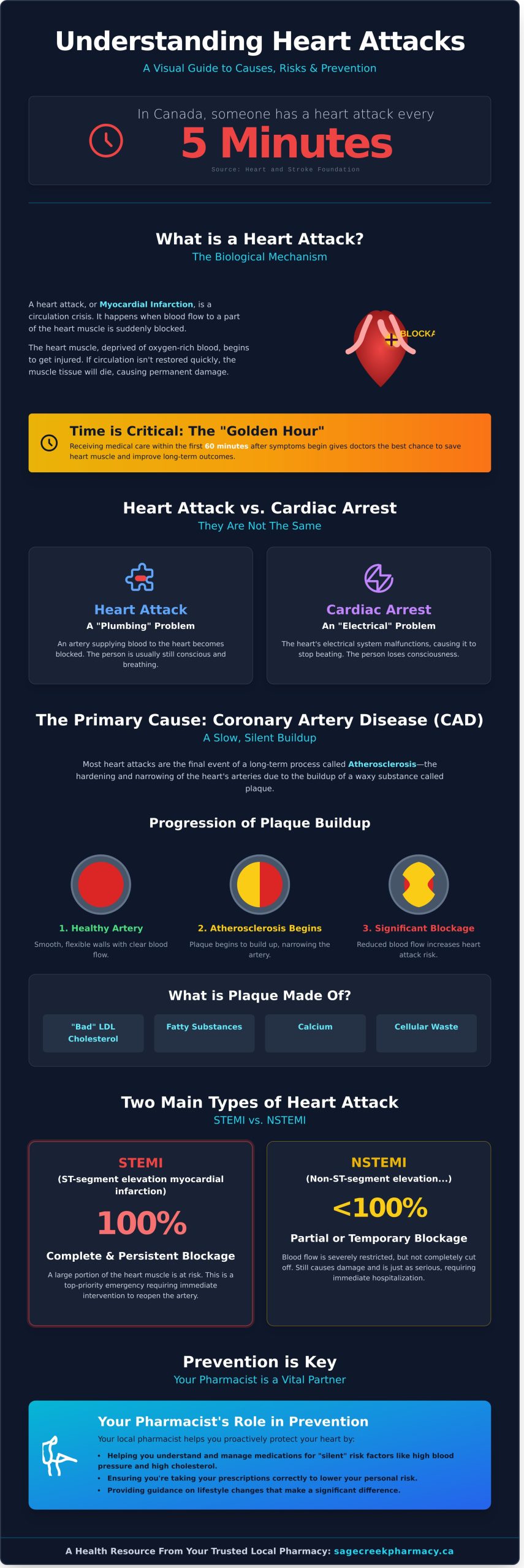
Think of your heart as the most dedicated employee you’ll ever meet. It’s a powerful muscle that works nonstop, every second of every day, to pump life-giving blood throughout your body. But just like any worker, it needs its own resources to function. A heart attack occurs when the heart’s own fuel supply—its oxygen-rich blood—is suddenly cut off.
Medically known as a myocardial infarction, the simple answer to what is a heart attack? is a circulation crisis. When a blockage forms in a blood vessel supplying the heart, a section of the heart muscle is starved of oxygen. Without that essential oxygen, the tissue begins to get injured and, if blood flow isn’t restored quickly, it will die. This is why time is absolutely critical. Emergency responders often refer to the “golden hour,” the first 60 minutes after symptoms begin. Receiving medical care within this window gives doctors the best chance to restore blood flow, save heart muscle, and significantly improve your long-term health outcome.
It’s also common for people to confuse a heart attack with a cardiac arrest. While they are related, they are not the same thing. We find it helpful to think of it with a simple analogy:
- A heart attack is a “plumbing” problem. An artery is blocked, stopping blood flow to a part of the heart. The person is usually still awake and breathing.
- A cardiac arrest is an “electrical” problem. The heart’s internal electrical system malfunctions, causing it to beat irregularly or stop beating altogether. This causes the person to lose consciousness.
A severe heart attack can sometimes trigger a cardiac arrest, which is why immediate medical intervention is so vital.
The Role of the Coronary Arteries
While your heart is busy pumping blood to every organ, it also has its own dedicated network of blood vessels called the coronary arteries. These are the heart’s personal ‘fuel lines’. They wrap around the outside of the heart muscle (the myocardium) to ensure it receives a constant, direct supply of oxygen. A blockage in one of these critical pathways is what causes a heart attack; it immediately places the section of muscle fed by that artery in life-threatening danger.
STEMI vs. NSTEMI: Understanding the Blockage
Emergency doctors in Winnipeg typically classify heart attacks into two main types, which helps them determine the most urgent course of treatment. Both are serious medical emergencies.
STEMI (ST-segment elevation myocardial infarction): This is the result of a complete and persistent blockage of a coronary artery. Because the artery is 100% blocked, a large portion of the heart muscle is at risk. A STEMI is a top-priority emergency that often requires an immediate procedure, like an angioplasty, to reopen the artery.
NSTEMI (Non-ST-segment elevation myocardial infarction): This type of heart attack usually involves a partial or temporary blockage. Although blood flow isn’t completely cut off, it is severely restricted, and this still causes damage to the heart muscle. An NSTEMI is just as serious as a STEMI and requires immediate hospitalization and treatment.
If you or a loved one in Winnipeg experiences symptoms like chest pain, shortness of breath, or discomfort in the arms, back, or jaw, please call 9-1-1 without delay. Recognizing the signs and acting fast is the first and most important step in care.
The Primary Cause: Coronary Artery Disease (CAD)
When you ask, “what causes a heart attack?”, the answer for the vast majority of people is a long-term condition called Coronary Artery Disease (CAD). A heart attack often feels sudden, but it’s usually the final, dramatic event in a process that has been developing silently for decades. This underlying process is known as atherosclerosis, which is the slow hardening and narrowing of the arteries that supply your heart with oxygen-rich blood. As leading medical experts at the Mayo Clinic explain, the development of Coronary Artery Disease is the critical first chapter in the story of a heart attack.
At its core, atherosclerosis is the buildup of a sticky, waxy substance called plaque on the inner walls of your coronary arteries. Think of your arteries as smooth, flexible pipes. Plaque is like rust and scale building up inside those pipes, making the passage smaller and the pipe walls stiffer. This plaque isn’t just one thing; it’s a complex mixture of:
- Cholesterol: Specifically, “bad” LDL cholesterol.
- Fatty substances: Other lipids circulating in your blood.
- Calcium: Which makes the plaque hard and brittle.
- Cellular waste products: The debris from your body’s natural processes.
How Plaque Buildup Progresses Over Time
This buildup doesn’t happen overnight. It’s a slow, progressive disease that often starts in early adulthood, even in your 20s. Chronic, low-grade inflammation in the artery walls acts as the trigger, damaging the delicate lining and creating a surface where cholesterol and other substances can latch on. Over years, this plaque grows. What’s concerning is that this process is completely silent. You won’t feel it happening. In fact, symptoms like chest pain (angina) or shortness of breath typically don’t appear until an artery is severely narrowed, often by 70% or more.
The Blood Clot: The Final Trigger
For years, a narrowed artery might not cause a major problem. The heart can often compensate. The true emergency begins when a plaque deposit becomes unstable and ruptures. When the plaque’s thin, fibrous cap tears open, your body perceives it as an injury and immediately initiates its healing response. Platelets, your blood’s tiny clotting cells, rush to the site to form a plug. This is a life-saving mechanism when you get a cut, but inside a coronary artery, it’s a catastrophe. This rapidly forming blood clot can turn a partial blockage into a complete wall in just minutes, completely cutting off blood flow to a section of the heart muscle.
This sudden, total blockage is what causes a heart attack. Deprived of oxygen and nutrients, the heart muscle begins to suffer damage and die. This is why immediate medical attention is so critical. Understanding this chain of events underscores why managing risk factors like high cholesterol and blood pressure is not just about long-term health, but about preventing the sudden crisis of a plaque rupture. If you have questions about your medications and how they work to control these risks, our team is always here to help. You can speak with one of our Sage Creek pharmacists to get clear, personalized advice.
Risk Factors: What Increases Your Chances?
Understanding your personal risk factors is the first step toward prevention. Think of these as pieces of a puzzle; the more pieces you have, the clearer the picture of your heart health becomes. At Sage Creek Pharmacy, we help our community see this picture clearly by breaking down risks into two simple categories: those you can’t change, and those you absolutely can.
First, there are the non-modifiable risks—the parts of your personal health story you can’t alter. These include your age, your gender (men are generally at higher risk, though a woman’s risk increases significantly after menopause), and your family history. If a parent or sibling had heart disease early in life, your own risk is higher. While you can’t change these facts, knowing them is powerful. It allows you and your healthcare team to be extra vigilant.
Then there are the modifiable risks. This is where your daily choices make a profound difference. Many of the most significant factors that cause a heart attack are conditions you can manage, treat, or eliminate with the right support from your healthcare team.
- The ‘Silent Killers’: High blood pressure (hypertension) and high cholesterol are particularly dangerous because they often show no symptoms. Hypertension forces your heart to work harder, damaging your arteries over time. Meanwhile, high levels of LDL or “bad” cholesterol contribute to plaque buildup (atherosclerosis), narrowing the pathways for your blood. Regular monitoring, which we can help with right here at the pharmacy, is your first line of defense.
- Diabetes: Uncontrolled blood sugar is incredibly damaging to your blood vessels. Over years, it makes the artery walls rough and more susceptible to the plaque buildup that ultimately causes blockages. Managing diabetes effectively is a critical part of protecting your heart.
- Lifestyle Habits: Smoking is one of the most direct ways to harm your arteries. The chemicals in tobacco smoke damage the lining of your blood vessels and can make your blood “stickier,” increasing the risk of clots. Similarly, a sedentary lifestyle contributes to nearly every other modifiable risk factor, from obesity to high blood pressure.
Winnipeg Specific Health Considerations
Living in our beautiful city comes with unique challenges for heart health. The infamous “snow shoveling factor” is a serious concern. The combination of frigid air, which constricts blood vessels, and the sudden, intense exertion of clearing a heavy snowfall can place a dangerous strain on the heart. Furthermore, Manitoba’s long, cold winters often lead to more sedentary months, which can impact weight and overall cardiovascular fitness. Data from the Heart & Stroke Foundation of Manitoba consistently points to the distinct heart health challenges we face here on the Prairies.
The Connection Between Stress and Heart Health
Your mental well-being is directly linked to your physical heart health. Chronic stress floods your body with hormones like cortisol, which can elevate your blood pressure and blood sugar over the long term. It can also lead to unhealthy coping mechanisms like poor diet choices or smoking. A holistic plan that includes stress management is essential. It’s also worth noting that seasonal changes in Winnipeg can bring additional health challenges beyond the cold; for example, seasonal and year-round allergies in Winnipeg can add physical stress to your body that compounds cardiovascular strain. Understanding The Pharmacist’s Role in Heart Attack Prevention can empower you to take control of these lifestyle factors. Our Sage Creek team is always here to discuss your overall wellness and guide you toward resources that can help.
The Pharmacist’s Role in Heart Attack Prevention
Understanding the risk factors for a heart attack is the first step. Actively managing them is the next, and it’s where your pharmacist becomes one of your most important healthcare partners. While diet and exercise are foundational, medication adherence is often the single most powerful tool you have for controlling your risk. Think of it as ‘preventative pharmacy’—a proactive approach where we work together to manage your health and stay ahead of a crisis, rather than just reacting to one.
Your pharmacist does more than just fill prescriptions. We conduct regular medication reviews to ensure your treatments are working effectively and, just as importantly, safely. Many patients take multiple medications, and a pharmacist’s review can catch potential drug interactions that could otherwise go unnoticed. This collaborative oversight is crucial for a stable, long-term prevention strategy.
Managing Hypertension and Cholesterol
Two of the biggest drivers behind what causes a heart attack are high blood pressure (hypertension) and high cholesterol. Medications designed to control these conditions don’t just treat numbers on a chart; they actively work to stabilize the plaque in your arteries.
- Statins: These medications are prescribed to lower your LDL or “bad” cholesterol. By reducing the amount of cholesterol in your blood, statins help prevent new plaque from forming and can stabilize existing plaque, making it less prone to rupturing and causing a clot.
- ACE Inhibitors and Beta-blockers: These are common classes of blood pressure medication. They work by relaxing your blood vessels and reducing your heart’s workload, which lowers the pressure exerted on your artery walls. This decreases the daily strain on your cardiovascular system.
Taking these medications exactly as prescribed is not optional; it’s essential. Studies from the American Heart Association show that consistent use of statins after a first cardiovascular event can reduce the risk of a second one by approximately 25%.
The Importance of Blister Packaging for Adherence
We know that managing multiple heart medications with different schedules can be confusing. A missed dose or an accidental double dose can have serious consequences. To make it simpler and safer for our community, Sage Creek Pharmacy’s blister pack services organize your prescriptions for you. Each pack contains your pills sorted by day and time, removing the guesswork and dramatically reducing the risk of error.
This simple tool empowers you to take control of your health with confidence. Plus, our local Winnipeg delivery service ensures you never have to worry about running out of your vital prescriptions. We bring your organized medications right to your door, providing both convenience and peace of mind. Your heart health is a team effort, and we’re here to be your trusted partner. Talk to our team at Sage Creek Pharmacy today to discuss a personalized medication review or to set up your blister packaging service.
Taking Action: How Sage Creek Pharmacy Supports Your Heart
Understanding the risk factors and learning about what causes a heart attack is a critical first step. The next, most important step is taking decisive action. At Sage Creek Pharmacy, we are more than just a place to fill your prescriptions; we are your dedicated wellness partners, deeply committed to the health and well-being of our Winnipeg community. Your heart health journey doesn’t have to be walked alone. We are here to provide the professional guidance and neighbourly support you deserve.
We believe that proactive care is the best defense against cardiovascular disease. That’s why we are proud to be accepting new patients who are looking for a more personal and attentive pharmacy experience. Your health is unique, and your care plan should be too. Let us show you the difference that a community-focused pharmacy can make for you and your family.
To make managing your health as simple as possible, we also offer free, city-wide delivery for all heart-related medications and other essential prescriptions. We know that getting to the pharmacy isn’t always easy, so we bring the care you need directly to your doorstep, anywhere in Winnipeg. It’s one less thing for you to worry about.
Personalized Heart Health Consultations
We invite you to schedule a personalized medication review with one of our knowledgeable Winnipeg pharmacists. These one-on-one sessions are designed to empower you with a clear understanding of your treatment plan. During your private consultation, we will:
- Review all your current medications, including prescriptions, over-the-counter drugs, and natural health products, to check for any potential interactions.
- Discuss your medication schedule to ensure it fits your lifestyle, making it easier to stay on track.
- Answer any questions you have about side effects, dosage, or how your medications work to protect your heart.
- Help you navigate your Manitoba Pharmacare coverage, explaining your benefits and ensuring you get the most from your plan without financial stress.
Our goal is to make your healthcare journey straightforward and stress-free. We take the time to listen, explain, and support you, ensuring you feel confident and in control of your heart health strategy.
Next Steps: Visit Us in Sage Creek
Your proactive plan for a healthier heart starts with a simple conversation. Our team is ready to listen to your concerns and work with you to build a sustainable wellness plan. We believe that by understanding the full picture of your health, we can better address the factors that contribute to what causes a heart attack and help you prevent one.
You can find us conveniently located at 105-115 Sage Creek Blvd, Winnipeg. Stop by to meet our pharmacists or give us a call to schedule your consultation. It’s time to put your health first.
Talk to our team today about your heart health strategy. We are here to help you live a longer, healthier, and more vibrant life right here in Winnipeg.
Partner with Us for a Healthier Heart
Understanding your personal risk factors for coronary artery disease is the first, most powerful step toward prevention. Knowing exactly what causes a heart attack empowers you to make meaningful changes, from managing your blood pressure to adjusting your diet. Your health is a story you have the power to shape, and every positive choice is a step in the right direction.
You don’t have to navigate this journey alone. As your independent, community-focused pharmacy, our experienced Winnipeg pharmacists are here to provide personalized guidance. We believe in proactive care, helping you manage medications and understand your health before it becomes a crisis. Take control of your cardiovascular wellness. Book a Personal Health Consultation at Sage Creek Pharmacy and let us be your dedicated partner in health.
With convenient support like our free city-wide prescription delivery, protecting your heart is easier than ever. We’re here for you, ready to help you build a healthier, stronger future.
Frequently Asked Questions About Heart Attack Prevention
What are the early warning signs of a heart attack to watch for in Winnipeg?
The most common early warning sign is chest discomfort, which can feel like pressure, squeezing, or pain. However, you should also watch for shortness of breath, pain in one or both arms, the back, neck, or jaw, and breaking out in a cold sweat. Women, in particular, may experience less common symptoms like nausea or unusual fatigue. If you suspect a heart attack, it’s a medical emergency; call 911 immediately for help.
Can high stress really cause a sudden heart attack?
Yes, high levels of chronic stress can be a significant contributing factor to a heart attack. Persistent stress elevates hormones like cortisol, which can increase your blood pressure, cholesterol, and blood sugar. This long-term strain on your cardiovascular system is one of the key risk factors for what causes a heart attack. A sudden, intensely stressful event can also act as a trigger, so managing stress is a crucial part of your heart health plan.
How do I know if my cholesterol medication is actually working?
The only certain way to know if your cholesterol medication is working is through a blood test ordered by your doctor. This test, called a lipid panel, measures your LDL (“bad”) cholesterol levels to confirm they are decreasing to your target range. You won’t be able to feel the medication working. These blood tests are typically recommended by your doctor every 3 to 12 months after starting or changing a dose to monitor your progress effectively.
Is it safe to shovel snow in Winnipeg if I have high blood pressure?
Shoveling snow can be very risky if you have uncontrolled high blood pressure, as it’s a strenuous activity that can cause a sudden spike in heart rate. The combination of cold air, which constricts blood vessels, and the heavy physical exertion puts significant strain on your heart. It’s essential to talk to your doctor or pharmacist first. If you get approval, warm up properly, take frequent breaks, and push snow rather than lifting it.
Does Manitoba Pharmacare cover my heart medications?
Yes, Manitoba Pharmacare covers many common prescription medications for heart conditions, but your coverage is based on your total family income. Pharmacare is a deductible-based program; you pay an annual deductible, and once that amount is met, Pharmacare covers 100% of eligible drug costs for the rest of the year. For the 2023-2024 benefit year, the minimum deductible is C$100. Our Sage Creek Pharmacy team can help you check if your specific medication is covered.
What is the difference between a heart attack and a stroke?
A heart attack happens when blood flow to the heart muscle is blocked, while a stroke occurs when blood flow to the brain is cut off. Think of it as a “heart attack” versus a “brain attack.” In a heart attack, the heart muscle is starved of oxygen and begins to die. In a stroke, brain cells begin to die. While both are emergencies often caused by clots or plaque, they affect different organs and have distinct warning signs.
How often should I have a medication review with my Winnipeg pharmacist?
We recommend a complete medication review at least once a year, especially if you take five or more different medications or have a chronic condition like heart disease. You should also request a review anytime you start or stop a major prescription. These consultations, often covered by the Manitoba government, ensure your medications are working safely and effectively together. Talk to our pharmacists at Sage Creek to schedule your personalized review.
Can a heart attack happen even if I have no symptoms?
Yes, a heart attack can occur without the classic, dramatic symptoms, an event known as a silent myocardial infarction (SMI). You might experience very mild symptoms that are easily mistaken for indigestion, muscle pain, or fatigue. This is why proactively managing the risk factors that contribute to what causes a heart attack, such as high blood pressure and cholesterol, is so vital. Often, an SMI is only discovered later during a routine ECG.