
What if the C$75 pre-packaged kit sitting in your closet right now is actually 40% plastic filler that won’t help you during a -30°C Winnipeg medical emergency? We understand the frustration of feeling unprepared despite owning a bulky box of supplies, especially when medical jargon makes it hard to know what you actually need. You want to protect your family, but the high cost of retail kits often buys more confusion than actual safety. At Sage Creek Pharmacy, we believe health preparation should be simple and effective for every neighbor in our community.
We’ve created this 2026 guide to help you build a professional-grade set of first aid supplies tailored to our unique Manitoba climate and your family’s specific health history. You deserve to feel confident that your tools will work when a real accident happens. In the following sections, we’ll provide a customized checklist of essential items, professional tips for distinguishing high-quality medical tools from cheap imitations, and a clear path to total peace of mind for your home or workplace.
Key Takeaways
- Discover why professional-grade materials are the vital bridge between a sudden injury and medical care, especially in Winnipeg’s extreme temperature fluctuations.
- Learn the difference between basic bandages and professional wound care tools to ensure your kit is ready for more than just minor household scrapes.
- Identify how to avoid the hidden costs of “filler” items in generic kits by customizing your first aid supplies to match your family’s specific health needs.
- Stay prepared for Manitoba’s unique environment with a seasonal checklist that covers everything from -30°C frostnip to summer tick and mosquito safety.
- Find out how a personalized consultation at Sage Creek Pharmacy can help you build a reliable, professional-grade safety net for your home or workplace.
Why Every Winnipeg Household Needs Professional-Grade First Aid Supplies
Professional-grade first aid supplies act as the critical bridge between a household accident and professional medical intervention. When an injury occurs, the first few minutes often dictate the recovery timeline. We believe your family deserves the same level of clinical protection found in a medical facility. High-quality materials ensure that a minor cut doesn’t turn into a serious infection due to poor adhesion or compromised sterility. While most people recognize the common items found in a first aid kit, the specific grade of those items determines their reliability during a crisis.
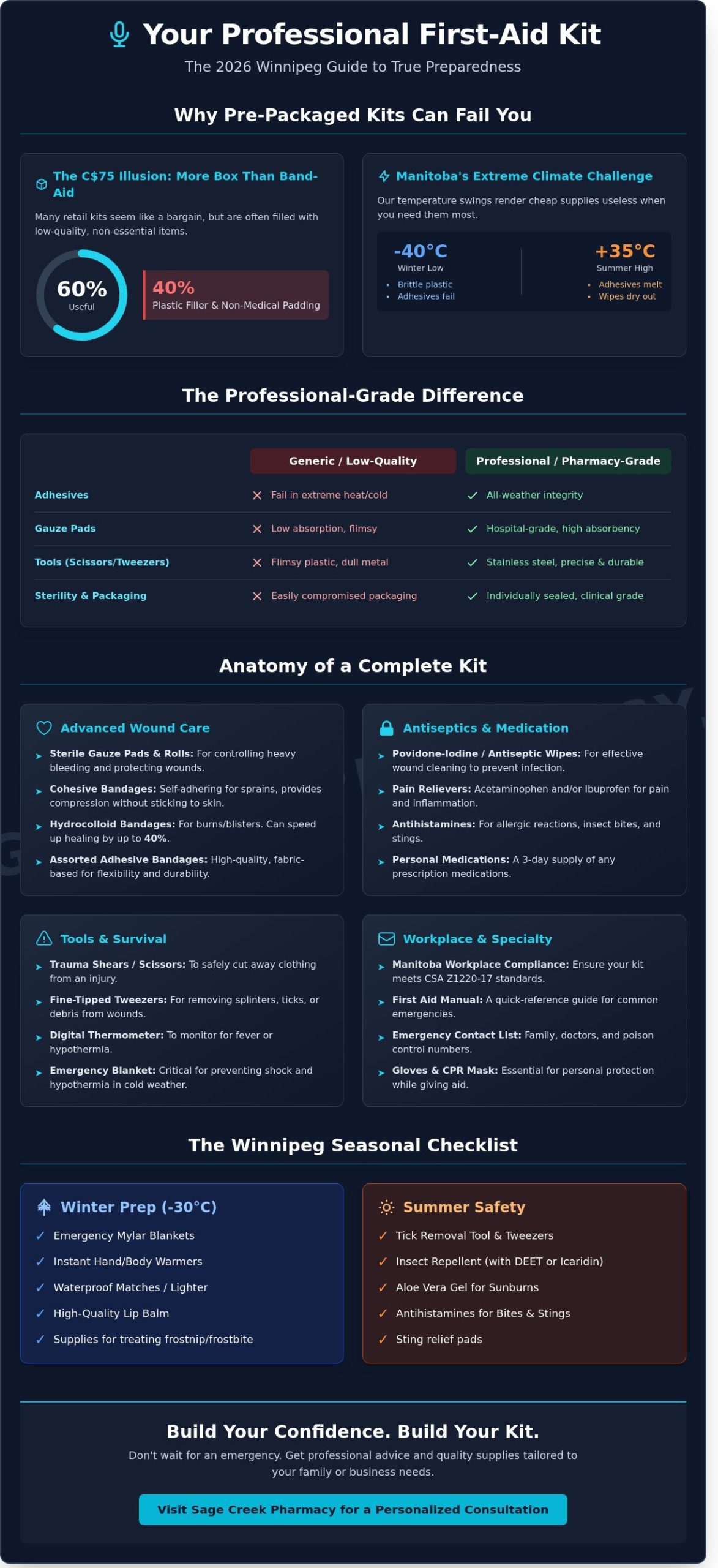
Winnipeg presents unique challenges for medical storage. Our city experiences extreme temperature swings, moving from -40°C in the deep winter to +35°C in the humid summer months. Generic dollar-store alternatives often use low-grade adhesives that fail in high humidity or become brittle and useless after a single cold snap in a vehicle’s glove box. At Sage Creek Pharmacy, we stock “drugstore pharmacy” grade supplies because they’re designed to maintain their integrity under these harsh conditions. You can trust that our bandages will stay put and our antiseptic wipes won’t be dried out when you actually need them.
Choosing professional supplies is also a matter of safety and efficiency. Hospital-grade gauze absorbs more fluid than discount versions, meaning you use less material and manage wounds more effectively. We see many neighbors who find that cheaper options actually cost more over time because they require frequent replacement. Investing in quality means your kit is ready to perform the moment a kitchen burn or a playground scrape happens.
The Local Context: First Aid in the Gateway to the West
Winnipeg’s geography makes self-sufficiency a necessity rather than a luxury. During major winter storms, like the historic blizzard of April 2022, emergency response times can increase due to road conditions. Having a robust set of first aid supplies at home ensures you can manage minor emergencies until help arrives or travel becomes safe. Statistics from Manitoba Health indicate that roughly 1 in 10 Manitobans visit an emergency department for unintentional injuries annually. Sage Creek Pharmacy serves as your neighborhood safety resource, providing the tools and advice needed to handle these common household incidents right here in our community.
Understanding Manitoba First Aid Regulations
If you’re a local entrepreneur or run a home-based business, you must look beyond personal use. Since January 2017, Manitoba has followed the CSA Z1220-17 standards for workplace first aid kits. These regulations categorize kits based on the number of employees and the level of risk in the environment. A personal kit for a family of four is quite different from a compliant kit for a small Sage Creek retail space. We help local business owners interpret these requirements to ensure they meet their legal and moral obligations to their staff. Our pharmacists provide customized solutions that bridge the gap between basic home care and strict provincial workplace compliance. Talk to our team to ensure your business or home is properly equipped for any situation.
The Anatomy of a Complete First Aid Kit: Essential Categories
Building a kit requires more than grabbing a pre-packaged box from a big-box store. We see many families in the Sage Creek area who realize their kits are expired or incomplete only when an emergency happens. A truly functional set of first aid supplies organizes items into four distinct categories to ensure you aren’t digging through loose plastic strips during a crisis. This structured approach helps you maintain a clear head when you need to act quickly.
Advanced Wound Care Essentials
Distinguishing between different types of gauze is vital for effective treatment. Sterile gauze pads are your primary choice for heavy bleeding because they absorb fluid without sticking to the wound. Rollers serve to secure those pads in place on limbs. Cohesive bandages, which stick only to themselves and not to skin or hair, provide excellent compression for sprains without the need for adhesive tape. We recommend hydrocolloid bandages for minor burns or blisters because they create a moist environment that can speed up skin cell regeneration by up to 40 percent compared to standard dry dressings. When cleaning a wound, use povidone-iodine for its broad-spectrum antimicrobial properties. Save the isopropyl alcohol for disinfecting your tools; it’s often too harsh for open tissue and can actually delay the healing process.
The “Must-Have” Tools for Winnipeg Families
Manitoba summers bring specific risks that require specialized tools. Precision tweezers are a non-negotiable item for every Winnipegger. In 2023, local health reports noted a steady presence of blacklegged ticks in the Red River Valley, making a fine-tipped tool essential for safe removal without squeezing the tick’s body. You should also swap standard craft scissors for trauma shears. These shears feature a blunt “duckbill” tip that slides under clothing without nicking the skin, providing enough leverage to cut through heavy denim or seatbelts. While most kits ignore lighting, a reliable penlight with at least 150 lumens is critical for checking pupil dilation after a fall or seeing splinters in low light. If you are managing a small office or local business, ensure your kit also meets the Canadian workplace first aid requirements to keep your team safe and compliant.
Medications to Keep in Your First Aid Station
Topical treatments provide the first line of defense against infection and discomfort. We recommend a triple antibiotic ointment for minor scrapes and a 1% hydrocortisone cream to manage the itch from our province’s notorious mosquitoes. Your kit also needs a small rotation of over-the-counter relief. We suggest keeping both Acetaminophen and Ibuprofen on hand. Acetaminophen works best for fever and general pain, while Ibuprofen targets inflammation from sprains or dental aches. Include a non-drowsy antihistamine like Cetirizine for seasonal allergies and a fast-acting diphenhydramine for sudden hives or insect bites. Oral rehydration salts serve as a concentrated electrolyte replacement to prevent dehydration during bouts of heat exhaustion or severe stomach flu. These first aid supplies bridge the gap between a minor injury and professional medical intervention. If you’re unsure which dosages are right for your children, chat with our pharmacy team for a personalized recommendation.
Pre-made vs. Custom First Aid Kits: Which is Right for You?
Choosing the right first aid supplies involves more than just picking a red box off a retail shelf. You face a choice between the immediate convenience of a pre-assembled kit and the long-term reliability of a customized setup. While a standard kit provides a basic safety net, it often lacks the specific tools required for the unique health profiles of Sage Creek families. We want to help you understand these differences so you can make an informed decision for your household’s safety.
The Pros and Cons of Retail Kits
Retail kits from major Canadian big-box stores offer undeniable convenience. They’re portable and ready for your car’s trunk immediately. However, these kits frequently prioritize quantity over quality to keep prices low. It’s common to find “filler” items that pad the piece count without adding real value. For example, a 150-piece kit might contain 100 tiny plastic bandages that won’t stay on a child’s knee for more than ten minutes. You might also find flimsy plastic tweezers that lack the grip strength to remove a stubborn splinter.
Winnipeg’s extreme climate creates another challenge for these generic kits. Local temperatures fluctuate from +35°C in the summer to -40°C in the winter. As of 2024, testing shows that the low-grade adhesives used in budget kits often degrade after just one season of being stored in a vehicle. This leaves you with useless tape when an actual emergency occurs. Furthermore, these basic kits rarely meet the standards of mandatory first-aid supplies required for more rigorous environments, leaving gaps in your preparedness.
Building Your Customized Kit at Sage Creek Pharmacy
We believe your first aid supplies should reflect your family’s specific lifestyle. A family with toddlers has different needs than a household managing chronic conditions like asthma or severe allergies. When you visit us, we help you select professional-grade materials. This includes fabric bandages with high-stress adhesive that stays put during a humid afternoon at the Sage Creek splash pad. We also ensure your kit includes high-quality stainless steel tools that won’t bend or break when you need them most.
Organization is just as vital as the supplies themselves. In a high-stress situation, you don’t want to dig through a cluttered bag. We help you arrange your kit logically. We often suggest clear, labeled pouches so you can find a pressure bandage or an antiseptic wipe in seconds. This tailored approach ensures that you aren’t paying for 50 items you’ll never use, but rather investing in the 20 items that will actually save the day.
How to Audit Your Current Kit:
- Check Expiry Dates: At least 25% of items in a typical home kit are expired by the time they’re needed. Check ointments and medications every six months.
- Test Your Adhesives: Open one bandage. If the wrapper is brittle or the bandage doesn’t stick to your skin, the entire batch needs replacing.
- Restock After Use: It’s easy to forget to replace that last roll of gauze after a minor injury. We recommend a “one out, one in” rule.
- Verify Liquid Integrity: Ensure eye washes and antiseptic liquids haven’t changed color or developed sediment.
We are here to help you review your current supplies or build a new kit from scratch. If you’re unsure if your current setup is sufficient, bring it into the pharmacy. We can look at it together and identify exactly what’s missing. Your safety is our priority, and we want to ensure you’re ready for whatever life throws your way.
The Winnipeg Seasonal First Aid Checklist: From Frostbite to Summer Scrapes
Winnipeg weather is famous for its dramatic shifts. We experience everything from -30°C wind chills in January to humid +30°C afternoons in July. These extremes mean your first aid supplies cannot stay the same all year. A kit that works for a July camping trip at Birds Hill Park won’t help you much if your car stalls on the Perimeter Highway in mid-February. We recommend a seasonal rotation to ensure your family stays safe regardless of the thermometer reading.
Winter Preparedness: The “Cold Weather” Add-ons
When the temperature drops below -20°C, frostnip can occur on exposed skin in less than 30 minutes. Your winter kit must prioritize heat retention. We suggest including at least two Mylar emergency blankets. These lightweight sheets reflect 90% of your body heat back to you. They’re most effective when wrapped tightly over clothing, creating a pocket of warm air.
- Instant chemical hand warmers: These are essential but require caution. These packets can reach temperatures of 57°C. You should never place them directly against a child’s skin, as their skin is thinner and burns more easily. Always tuck them between a glove and a liner.
- Skin protectants: For extreme wind chill, a thick, petroleum-based ointment provides a physical barrier. It helps prevent the painful windburn often seen during Winnipeg winters.
Summer in Manitoba: Ticks, Stings, and Sun
Manitoba’s “unofficial” mosquito season requires its own set of tools. Recent data shows blacklegged tick populations have expanded across Southern Manitoba, increasing the risk of Lyme disease. You need a dedicated tick removal tool in your kit. Don’t use matches or petroleum jelly to remove a tick. Instead, use the tool to grasp the tick’s head as close to the skin as possible and pull straight upward with steady pressure.
For the inevitable mosquito and wasp stings, we recommend keeping a small tube of 1% hydrocortisone cream ready. It reduces the inflammatory response and stops the “itch-scratch” cycle that leads to skin infections. If you’re dealing with a sunburn, aloe vera is excellent for cooling mild redness. However, if you notice blistering or if your child develops a fever after a day at the beach, it’s time to visit us. Our pharmacists can assess if the burn requires a specialized dressing or medical intervention.
Maintaining Your Kit Through Temperature Fluctuations
Extreme temperature swings are the enemy of medical integrity. When first aid supplies sit in a car through a Winnipeg summer, the heat can reach 50°C inside the cabin. This heat breaks down the adhesives on bandages, making them useless when you actually need them. Conversely, freezing temperatures can cause liquid medications, like children’s ibuprofen, to lose up to 20% of their potency or separate entirely.
- Adhesive check: Test one bandage from your kit every season. If it doesn’t stick firmly to your skin, the entire box likely needs replacing.
- Storage tips: At home, keep your primary kit in a temperature-stable location like a hallway closet. Avoid the bathroom, where high humidity from showers can degrade sterile packaging.
- Liquid meds: If a liquid medication has frozen and thawed, it’s safest to dispose of it and start fresh.
We want to help you stay prepared for every season our beautiful province throws at us. If you aren’t sure if your current supplies are still effective, talk to our pharmacists at Sage Creek Pharmacy for a professional kit review.
Why Sage Creek Pharmacy is Your Trusted Partner for First Aid in Winnipeg
We believe that safety starts with preparation, and preparation is most effective when it is personalized. Our team doesn’t just stock shelves; we act as your dedicated wellness partners to ensure your home is a sanctuary. We’ve spent years building relationships with families across South East Winnipeg, providing the medical authority you expect from a clinic with the neighborly care you deserve from a local shop. When you visit us, you aren’t just a customer; you’re a member of the Sage Creek community we are proud to serve.
Convenience is a cornerstone of our service model. We know that busy parents don’t always have the time to drive across the city for a single box of sterile gauze. That’s why we offer free city-wide delivery for all your health and safety needs. Whether you’re stuck at home with a sick child or simply prefer the ease of doorstep service, we ensure your first aid supplies arrive quickly and safely. Our location at 105-115 Sage Creek Blvd serves as a reliable hub where you can quickly refill expired items or consult with a professional about new additions to your emergency kit.
- Personalized Consultations: We help you navigate the aisles to find exactly what your family needs based on your specific health history.
- Community Roots: As an independent pharmacy, our focus remains entirely on the wellness of our Winnipeg neighbors.
- Efficient Refills: Our streamlined process ensures you never have to wait long to replace out-of-date medications or ointments.
- Accessible Delivery: We bring the pharmacy to you with our complimentary delivery service across the entire city.
Professional Guidance Beyond the Transaction
We don’t believe in simple transactions; we believe in informed care. Our pharmacists are available to demonstrate how to use specialized tools like digital thermometers, pulse oximeters, or advanced wound care dressings. We offer comprehensive medication reviews that include advice on emergency preparedness, ensuring your life-saving prescriptions are always integrated into your portable kits. Choosing an independent pharmacy means your healthcare dollars stay in Manitoba, supporting local jobs and community initiatives. We take pride in knowing your name and understanding your family’s unique medical requirements, which is a level of service corporate chains often struggle to provide.
Get Started with Your Home Safety Audit Today
Safety experts recommend auditing your medical kits every six months. Adhesive bandages can lose their stickiness over time, and antiseptic wipes eventually dry out. Visit us at 105-115 Sage Creek Blvd for a personalized checklist to help you identify these gaps. You can also use our convenient online system to order refills for your first aid supplies from the comfort of your living room. We’ll help you tailor your kit whether you’re preparing for a weekend at the lake or just managing the daily scrapes of backyard play. Don’t wait for an accident to happen before checking your inventory. Talk to our pharmacists about your first aid needs today and ensure your family remains protected and prepared for whatever life brings.
Build Your 2026 Safety Plan Today
Your safety depends on being ready before an emergency happens. Whether you’re managing a winter frostbite risk during a -35°C cold snap or a minor injury at a summer park, having professional-grade first aid supplies is essential. A complete kit isn’t just about stocking bandages; it’s about having the right tools tailored to your family’s specific health profile. Our team of 3 local Winnipeg pharmacists brings decades of combined clinical experience to help you navigate these choices with confidence.
As an independent, community-focused pharmacy, we prioritize your wellness over corporate targets. We’ve made it easier than ever to stay prepared by offering free city-wide delivery on all supplies and prescriptions across every Winnipeg neighborhood. You don’t have to guess which products are right for your home or workplace. We’re here to provide the expert, personalized guidance you deserve. Visit Sage Creek Pharmacy for a personalized first aid consultation. We’re ready to help you stay safe and protected all year long.
Frequently Asked Questions
What are the 10 most essential first aid supplies every home should have?
Your home kit needs ten core items: adhesive bandages of various sizes, sterile gauze pads, medical tape, antiseptic wipes, antibiotic ointment, scissors, tweezers, non-latex gloves, a digital thermometer, and pain relief medication like acetaminophen. We recommend keeping at least 20 bandages and 5 gauze pads on hand to handle minor household accidents. These essential first aid supplies ensure you can treat small cuts and scrapes immediately before they become a bigger health concern.
How often should I check and replace the items in my first aid kit?
You should inspect your kit every 6 months to ensure everything is ready for an emergency. We suggest setting a calendar reminder for the first day of spring and fall. During these checks, replace any used items and look for damaged packaging. Statistics from the Canadian Red Cross show that 40% of households forget to restock their kits after use, which can lead to unnecessary stress during a crisis.
Do first aid supplies like bandages and ointments actually expire?
Yes, most first aid items have expiration dates ranging from 2 to 5 years after manufacture. Ointments and wipes lose their potency over time, while the adhesive on bandages can dry out and fail to stick. Check the “EXP” date on every package; using expired sterile items increases the risk of infection. If you see a date that has passed, bring the items to Sage Creek Pharmacy for advice on fresh replacements.
What specific items should I add to a first aid kit for a toddler?
For a toddler, add liquid acetaminophen or ibuprofen with an oral syringe, a bulb syringe, and saline nasal drops. You should also include 10 to 12 character-themed bandages to provide comfort during minor scrapes. Since 60% of childhood injuries happen at home, having a digital rectal or ear thermometer provides the most accurate temperature readings for young children. We can help you select the right dosages for your child’s weight.
Is it better to buy a pre-made first aid kit or build my own?
Building your own kit is often better because it allows you to customize supplies to your family’s specific medical history and allergies. While a pre-made kit provides a 100% complete baseline, it may lack items like specific asthma inhalers or custom medications. We find that personalized kits are 30% more effective for families with unique health needs. You can start with a sturdy container and let us help you fill it with the right tools.
Where is the best place in my Winnipeg home to store a first aid kit?
The best place to store your kit is in a cool, dry, and easily accessible location like a high kitchen cupboard or a linen closet. Avoid the bathroom, where humidity levels can rise by 40% during showers and degrade the quality of your supplies. Ensure every adult in your Winnipeg home knows the exact location. We recommend keeping it at eye level for adults but well out of reach for curious children.
What first aid supplies are needed for a car kit in Manitoba winters?
A Manitoba winter car kit must include a Mylar thermal blanket, two 24-hour candles, waterproof matches, and extra wool socks. You should also pack chemical hand warmers that provide heat for up to 10 hours. Temperatures in Winnipeg can drop to -40°C, so these items are life-saving if your vehicle stalls. We suggest adding high-calorie energy bars with a 1-year shelf life to maintain your body heat while waiting for help.
Can Sage Creek Pharmacy help me customize a kit for my small business?
We can definitely help you customize a kit that meets Manitoba Workplace Safety and Health requirements for your small business. Whether you have 5 or 25 employees, our pharmacists will review your specific industry risks to recommend the right first aid supplies. We take pride in supporting our local Sage Creek entrepreneurs with personalized wellness solutions. Visit us today to ensure your workplace remains a safe environment for your entire team.