

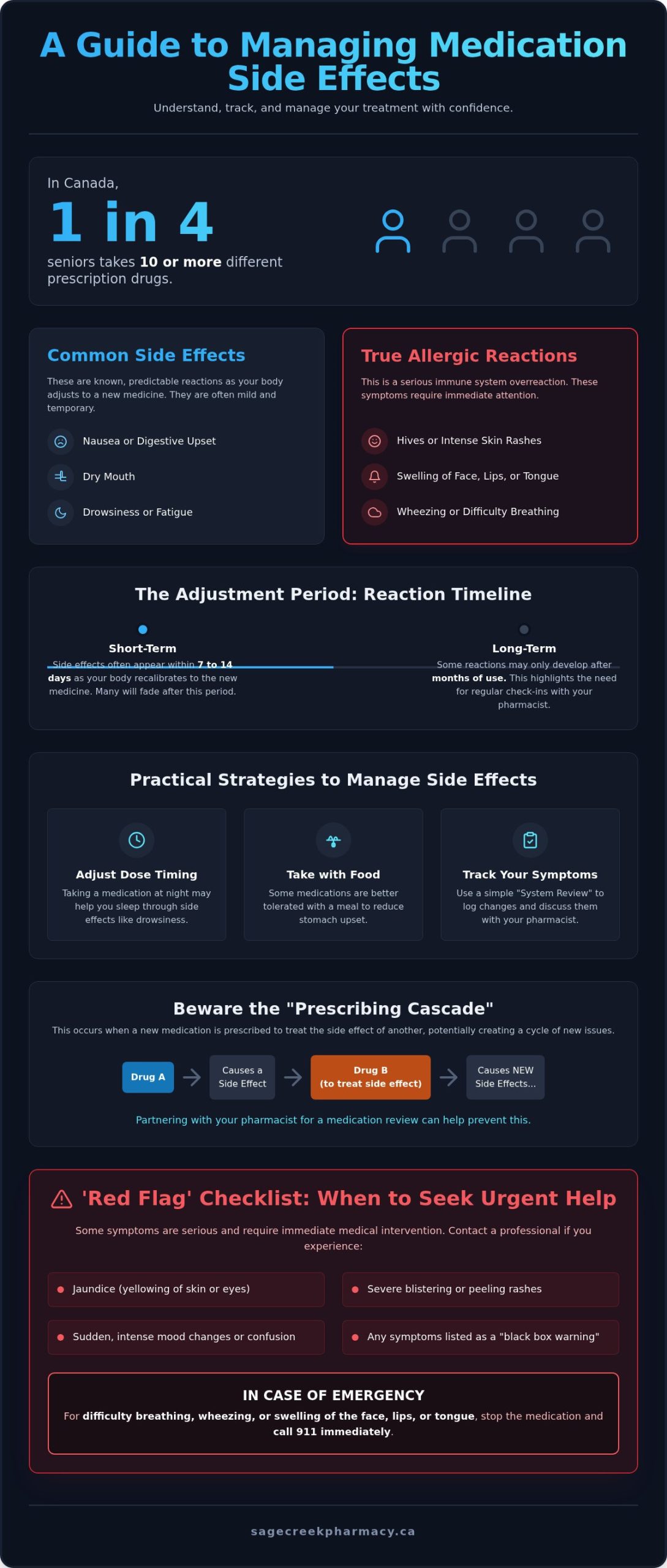
One in four seniors in Canada takes ten or more different prescription drugs, which often leads to questions about how to manage medication side effects. It is normal to feel a sense of dread when you notice sudden nausea or a lingering fog of fatigue after starting a new treatment. You might worry about long term damage or struggle to tell if you are feeling the illness itself or a reaction to the medicine. We understand these concerns because we see them every day in our community.
You don’t have to just tough it out. Managing these symptoms is a collaborative process between you and your healthcare team. Our goal is to help you find relief and feel certain that your treatment plan is working for you. This guide shows you how to identify and track common issues while providing clear steps to mitigate discomfort safely.
We will also outline a protocol for when to call us for a consultation. Whether you need a formal medication review or a quick chat with your local Winnipeg pharmacist, we are here to ensure your path to wellness is smooth and stress free. By the end of this guide, you will have the tools to navigate your prescriptions with confidence and clarity.
Key Takeaways
- Differentiate between common side effects and serious adverse reactions to gain clarity and peace of mind about your prescribed treatment.
- Discover how adjusting your dose timing or taking medication with food can help you feel better while staying on track with your health plan.
- Learn how to manage medication side effects more effectively by partnering with your pharmacist for a comprehensive clinical audit of your prescriptions.
- Use a simple “System Review” method to track changes in your physical and mental well-being, making every consultation more productive.
- Recognize the specific symptoms that signal a need for professional help from our Sage Creek team, ensuring your safety remains the top priority.
Understanding Medication Side Effects: Why They Happen
Starting a new treatment is a significant step toward feeling better, but it can be discouraging when you experience unexpected symptoms. We want you to know that these reactions are a common part of the healing journey. They don’t mean the drug is failing or that your body is rejecting the treatment. Most often, these effects happen because medications are designed to interact with specific receptors in your body. Sometimes, those same receptors are found in places other than the target area. For example, a pill meant to lower your blood pressure by relaxing blood vessels might also affect the lining of your stomach because similar receptors exist there. This is what clinicians call an off-target effect.
Every person’s body is unique, which is why your neighbor might have no issues with a drug while you feel quite different. Factors like your age, genetics, and even your daily diet play a huge role in how your system processes chemicals. Developing a baseline Understanding Adverse Effects helps clarify the difference between a standard side effect, which is a known and predictable reaction, and an adverse drug reaction (ADR), which is typically more unexpected. Knowing how to manage medication side effects begins with recognizing that your body is simply reacting to a new chemical baseline. Our team is always here to help you interpret these signals so you don’t feel alone in the process.
Side Effects vs. Allergic Reactions
It is vital to distinguish between a bothersome side effect and a true allergic reaction. While nausea or a dry mouth are common, an allergy involves your immune system overreacting to the substance. Signs of a true allergy include:
- Hives or intense skin rashes
- Swelling of the face, lips, or tongue
- Wheezing or persistent coughing
- Sudden difficulty breathing
If you experience these symptoms, especially difficulty breathing or a sudden drop in blood pressure, you must stop the medication and call 911 immediately. For less severe reactions, documenting the event in your prescription medication record is essential. This helps us ensure you are never prescribed a similar drug that could cause a more dangerous response in the future.
Short-term vs. Long-term Reactions
Many symptoms are temporary. Your body often needs an adjustment period of about 7 to 14 days to reach a state of homeostasis with the new medicine. During this window, you might feel a bit off as your system recalibrates. Most mild side effects are the body’s way of recalibrating to a new chemical baseline. However, some reactions only appear after months of consistent use. This is why regular check-ins and monitoring are so important. Understanding these timelines helps you stay patient and informed as you learn how to manage medication side effects over the long term.
Identifying Common Side Effects and Knowing When to Worry
Not every reaction requires an immediate call to the doctor. Many “nuisance” side effects are manageable and often fade as your body adjusts. These typically include mild digestive upset, a dry mouth, or slight drowsiness. We recommend using a “System Review” approach to monitor your health at home. Periodically check your skin for new spots or rashes, your gut for changes in digestion, and your mental clarity for any unusual fog. By tracking these patterns, you can learn how to manage medication side effects before they become overwhelming or interfere with your daily life.
Be wary of what clinicians call the “Prescribing Cascade.” This occurs when a doctor prescribes a second medication to treat a side effect caused by the first one, which then leads to its own set of complications. It is often safer to adjust the original treatment than to add more pills to the mix. Always review the patient information leaflet that accompanies your online prescription refills in Winnipeg. This document provides a foundational Understanding Drug Reactions specific to your medicine. If you feel confused by the fine print, speak with our team for a clear explanation tailored to your history.
The ‘Red Flag’ Checklist: When to Seek Urgent Care
Some symptoms require immediate medical intervention. Seek urgent care or contact the Manitoba Poison Centre if you notice jaundice (yellowing of the eyes or skin), severe blistering rashes like Stevens-Johnson syndrome, or sudden, intense mood changes. Pay close attention to “black box warnings” on your packaging. These are the most serious warnings issued by health authorities, indicating potential risks that require close monitoring. If you suspect toxicity or a severe adverse event, don’t wait for the symptoms to pass on their own.
Psychological and Cognitive Side Effects
Physical symptoms aren’t the only way a drug can impact you. Medications such as statins or beta-blockers can sometimes cause brain fog, irritability, or vivid, unusual dreams. These shifts can be subtle and hard to spot in yourself. We encourage you to ask family members if they’ve noticed any changes in your personality or memory since you started a new treatment. Your mental well-being is a critical part of your overall health, and these cognitive changes are just as valid as physical symptoms when evaluating your plan.
Practical Strategies to Manage Side Effects at Home
While you wait for your body to find its new balance, there are several practical ways you can take control of your comfort. One of the simplest methods for how to manage medication side effects is adjusting the timing of your dose. If a medication causes drowsiness or mild nausea, moving it to bedtime might allow you to sleep through the worst of the symptoms. Conversely, if a drug makes you feel overly energetic, taking it first thing in the morning can prevent insomnia. Always pair these adjustments with proper hydration and food when required; some pills need a full stomach to act as a buffer for your gastric lining.
To help us help you, we recommend keeping a “Side Effect Diary.” Instead of relying on memory during your next visit, record the exact time you took your medicine and when symptoms appeared. Note the severity on a scale of one to ten and how long the feeling lasted. This data turns a vague feeling into a clinical tool, allowing your pharmacist to spot patterns and suggest precise adjustments. If your medication causes photosensitivity, remember to wear extra sunscreen or stay in the shade during peak Winnipeg sun hours to avoid painful skin reactions.
Dietary Adjustments and Nutrient Depletion
Certain medications can act like a sponge, soaking up or blocking the absorption of essential nutrients. This is why we often discuss specific vitamins and supplements in Winnipeg with our patients. For instance, some drugs deplete B vitamins or magnesium, which can lead to fatigue or muscle cramps. You should also be aware of the “Grapefruit Rule.” Grapefruit juice interferes with enzymes that break down many common drugs, potentially leading to dangerously high levels in your blood. Similarly, dairy can prevent some antibiotics from working correctly. If you struggle with dry mouth, or xerostomia, focus on consistent hydration and use sugar-free lozenges to stimulate saliva production.
Lifestyle Tweaks for Physical Comfort
Physical comfort often comes down to small lifestyle shifts. If you feel dizzy when standing up, a condition called orthostatic hypotension, try moving slowly and dangling your feet off the bed for a minute before rising. While it is tempting to grab an over-the-counter fix for a headache or upset stomach, please consult us first. Adding an OTC product can sometimes mask a serious reaction or create a new interaction. Ensuring you can comfortably stick to your treatment plan, known as adherence, is the ultimate goal of effective side-effect management.
The Role of Medication Reviews in Winnipeg
When your medication list grows, it becomes harder to tell where one drug ends and another begins. A professional Medication Review is much more than a simple refill; it’s a holistic clinical audit of your entire health picture. If you’ve been searching for a pharmacy near me, you’re likely looking for someone who can help you untangle these complexities. Our team looks at how your various prescriptions interact with each other and your lifestyle, which is a key part of how to manage medication side effects effectively.
In our province, the Manitoba Pharmacare program and Manitoba Health place a high value on medication safety. As of March 2026, many residents are eligible for a fully funded “Medication Review-Standard.” This service is typically available for those taking five or more eligible prescription medications for chronic conditions, those diagnosed with Type 2 Diabetes, or individuals recently discharged from the hospital. These reviews are essential because they identify “drug-drug” and “drug-disease” interactions. Sometimes, a medication that is perfect for one condition might aggravate another health issue, creating symptoms that feel like side effects but are actually complex interactions.
What to Expect During a Consultation
We want you to feel completely comfortable during your visit. We suggest you bring in all your current medication bottles, including vitamins and over-the-counter supplements, along with your side effect diary. This is a no-judgment zone where we focus entirely on your wellness and comfort. The outcome of our talk might be a simplified regimen, a recommendation for a dose adjustment, or a suggestion for an alternative medication that we can share with your doctor. Our goal is to ensure you feel recognized as a person, not just a list of prescriptions.
Managing Multiple Medications (Polypharmacy)
Managing your health gets complicated when you’re dealing with polypharmacy. Statistics show that one in four seniors in Canada takes ten or more different types of prescription drugs. This high volume significantly increases the risk of errors and adverse reactions. Using blister pack medication, also known as compliance packaging, can reduce the stress of tracking multiple doses and prevent the errors that lead to side effects. We act as your central hub, coordinating between your various specialists to ensure your treatment plan is cohesive, safe, and tailored to your specific history.
Ready to gain more clarity on your prescriptions? Book a personalized medication review with our Sage Creek team today to ensure your treatment plan is working for you.
Personalized Support at Sage Creek Pharmacy
At Sage Creek Pharmacy, we believe that your health journey shouldn’t be a lonely one. We aren’t just a retail outlet; we are your dedicated wellness partners right here in Winnipeg. Our team combines clinical professionalism with the kind of neighborly empathy you expect from a local fixture. We understand that learning how to manage medication side effects can feel overwhelming, but you always have a seat at the table with us. We take the time to listen to your history and concerns, ensuring you feel recognized as a person rather than just a transaction number.
We are currently a pharmacy in Sage Creek Winnipeg accepting new patients. This independent status allows us to be more agile and attentive than large corporate entities. When you join our family, you get a stable, dependable team that understands your specific health history. This personal connection is the foundation of safety. It allows us to spot subtle changes in your well-being that a busier, less personal environment might miss. We pride ourselves on being a fixture of the neighborhood that you can rely on for honest, clear advice.
To make your care even more stress free, we offer free medication delivery in Winnipeg. If we need to make an adjustment to your regimen to help you mitigate a side effect, you don’t have to worry about the logistics of getting to the pharmacy. This service ensures you never miss a dose, which is critical for maintaining the chemical balance your body needs to heal. We want to remove every barrier between you and the relief you deserve.
Bespoke Care for the Sage Creek Community
Our location is a key part of how we serve you. Being situated near the Sage Creek Medical Center allows for seamless communication between your doctor and our pharmacists. If you are experiencing a bothersome symptom, we can quickly coordinate with your physician to find a solution. Whether you are a young family, a senior taking multiple prescriptions, or someone living with a chronic disease, we provide tailored advice that fits your life. We invite you to drop in for a “verbal handshake” and a consultation so you can experience our approach to care firsthand.
Next Steps: Taking Control of Your Health
The most important thing to remember is that you shouldn’t stop taking your medication on your own. Sudden stops can lead to withdrawal or a worsening of your condition. Instead, start a conversation with us. We can help you understand how to manage medication side effects safely while keeping your treatment goals on track. We are here to help you identify, track, and mitigate the issues that stand in the way of your wellness.
Contact Sage Creek Pharmacy today to discuss your prescriptions or to learn more about our personal health consultations. We are ready to help you navigate your health with confidence and clarity. Your comfort is just as important as your cure, and we are committed to supporting both every step of the way.
Empower Your Health Journey Today
You deserve to feel confident and comfortable with every prescription in your cabinet. Understanding the difference between a minor adjustment period and a serious reaction is the first step toward peace of mind. By using a side effect diary and making simple lifestyle shifts, you’ve already taken significant steps in learning how to manage medication side effects effectively. These tools help turn uncertainty into a clear, actionable plan for your long term wellness.
Our experienced, patient-first pharmacy team is here to act as your dedicated wellness partner. As a proudly independent and local Winnipeg pharmacy, we focus on providing the attentive care that larger corporate outlets often miss. We even offer free city-wide prescription delivery to make sure that any necessary changes to your regimen are handled without extra stress or travel. You’re more than a prescription number to us; you’re a valued member of our community.
Book a Personal Health Consultation at Sage Creek Pharmacy to discuss your medications in a supportive, no-judgment environment. We are ready to help you find the balance you need to feel your best every day.
Frequently Asked Questions
Can I stop taking my medication if the side effects are too much?
You should never stop taking your medication abruptly without consulting our team or your doctor. Stopping a treatment suddenly can lead to a rapid return of your illness or cause uncomfortable withdrawal symptoms. If your symptoms feel unbearable, we can help you coordinate with your physician to adjust the dosage or find an alternative that better suits your body. We are here to ensure your treatment remains both safe and effective.
How long do medication side effects typically last?
Most mild side effects last between 7 and 14 days as your body reaches a state of homeostasis with the new chemical baseline. This is often called an adjustment period. However, some reactions may persist or only appear after several months of consistent use. If your symptoms don’t begin to fade after the first two weeks, it’s a good idea to chat with us about your experience so we can monitor your progress.
What is the difference between a side effect and an allergy?
A side effect is a known, often predictable reaction to a drug, such as nausea or a dry mouth. An allergy is an immune system overreaction that can be much more dangerous. Signs of a true allergy include hives, swelling of the face or tongue, and difficulty breathing. While we can help you learn how to manage medication side effects, a true allergic reaction requires immediate medical attention and a permanent update to your records.
Can certain foods make my medication side effects worse?
Yes, food-drug interactions can significantly impact your comfort. For instance, grapefruit juice interferes with how your body breaks down many common drugs, potentially leading to toxic levels in your system. Dairy can prevent certain antibiotics from being absorbed correctly, while high-fat meals might increase the absorption of other pills. Understanding these interactions is a key part of how to manage medication side effects and ensure your treatment works as intended by your doctor.
Are there natural ways to manage common side effects like nausea?
There are several natural strategies to help with mild nausea, such as using ginger, staying hydrated, or eating smaller, more frequent meals. However, you should always consult us before adding any herbal remedies or supplements to your routine. Even natural products can interact with your prescriptions and potentially make your symptoms worse. We can help you identify which natural supports are safe to use alongside your specific medication plan for the best results.
How can a pharmacist help me with side effects better than a Google search?
A Google search provides general data, but it doesn’t understand your unique health history, genetics, or the specific way your different prescriptions interact. As your local Winnipeg pharmacists, we provide a personalized clinical perspective. We look at your entire health picture to give you tailored advice that a search engine simply cannot offer. We pride ourselves on being approachable advisors who value a person-to-person connection over a generic list of symptoms.
Does Manitoba Pharmacare cover medication reviews for side effect management?
Yes, Manitoba Health provides funded “Medication Review-Standard” services for eligible residents with a valid Manitoba Health card. As of March 2026, you may qualify if you take five or more prescription medications for chronic conditions, have a Type 2 Diabetes diagnosis, or were recently discharged from the hospital with new prescriptions. This service allows us to perform a comprehensive clinical audit of your health plan at no direct cost to many eligible individuals.
What should I bring to a medication review at Sage Creek Pharmacy?
When you visit us for a review, please bring all your current prescription bottles, over-the-counter medications, and any vitamins or herbal supplements you take. It is also incredibly helpful to bring your side effect diary. This allows us to see the exact timing and severity of your symptoms. Having all this information in one place helps our team provide the most accurate advice on how to manage medication side effects while ensuring your treatment plan is cohesive.